Iran's Charm Offensive Runs Into the 9% Problem
Tehran's military-affiliated social media channels are actively promoting Iranian tourism and cultural openness. Meanwhile, prediction markets place the odds of a nuclear deal at single digits — and the gap between the two tells its own story.
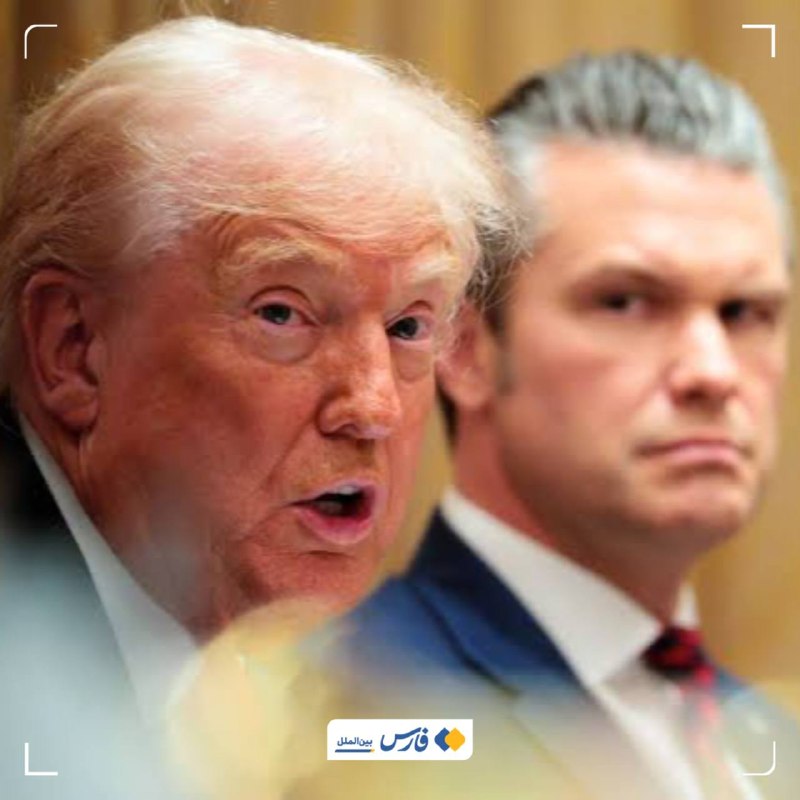
The Islamic Republic's military-linked Telegram channel posted a simple message on 23 May 2026: "Habibi! Come to Iran," accompanied by a heart emoji and the Iranian flag. It was the kind of soft-power content any tourism board might produce. But the account belongs to IRIran_Military — a channel operating under or adjacent to the Islamic Republic's armed forces apparatus — and the timing was notable. Prediction market data published the previous day placed the odds of Tehran agreeing to suspend uranium enrichment before the end of the month at nine percent.
The contrast is instructive. Tehran is running a calibrated public-diplomacy campaign aimed at regional and diasporic audiences, while the substantive negotiation over its nuclear programme sits at a structural impasse that markets rate as deeply unlikely to resolve. Neither the charm offensive nor the financial derivatives on a diplomatic breakthrough are, on their own, news. Taken together, they illuminate something about how the Islamic Republic communicates to multiple audiences simultaneously — and how little those audiences talk to each other.
The Tourism Gambit
State-adjacent social media in Iran has operated in several registers over the past decade. There is the hard propaganda register — casualty figures, battlefield claims, anti-Western invective. There is the institutional register — MoD briefings, parade footage, weapons tests. And there is something closer to lifestyle soft power: Iranian cinema, Persian culture, cuisine, historical sites. The 23 May Telegram post falls into the last category. It is not unusual; accounts with military branding across several platforms have periodically pivoted to cultural content targeting what they frame as a misrepresented nation.
The audience is partly internal — reinforcing regime narratives of Iranian sophistication under sanctions — and partly external, aimed at regional populations and the diaspora. Whether this constitutes genuine public diplomacy or a propaganda layer over a harder strategic posture depends on what one believes the Islamic Republic's underlying intent to be. That question is not new. What is worth noting is the operationalisation: a military account actively producing tourism content signals that even the most security-adjacent institutions have a consumer-outreach function in Tehran's communications architecture.
The Nuclear Math
Polymarket, a decentralised prediction platform, allows users to trade on real-world outcomes using cryptocurrency. On 22 May 2026, the platform listed a market titled "Iran agrees to end enrichment of uranium by May 31" with a price-implied probability of nine percent. That figure is not an analytical assessment — it is a consensus derived from trader positions, reflecting whatever private information and risk appetite participants bring to the market. But prediction markets have proven modestly reliable as aggregate gauges of elite expectations, particularly on geopolitical timelines.
Nine percent is a meaningful signal. It suggests the market does not believe a deal is imminent, even accepting that traders may be positioning against a headline event. The framing of the market — whether the Islamic Republic would "agree to surrender" enriched uranium — is itself revealing. The language of "surrender" is not neutral; it reflects the Western negotiating position that any deal requires Tehran to halt enrichment at levels currently achieved, not merely slow new production. Iranian officials have consistently rejected formulations that frame enrichment cessation as a precondition rather than an outcome of a broader sanctions-relief arrangement.
The gap between nine percent and zero is not trivial. It implies the market assigns some probability to a diplomatic surprise — a presidential intervention, a back-channel concession, a crisis-driven compromise. But it equally implies that absent such a catalyst, the structural conditions for a deal are not in place as of late May 2026.
The Dual Audience Problem
What makes the Telegram post more than coincidental is the timing relative to the Polymarket data. Both pieces of information circulated within roughly eighteen hours of each other. The Telegram content is available in Arabic and English variants across multiple channels; the Polymarket market is accessible to anyone with an internet connection and crypto holdings. Neither requires institutional media as an intermediary.
This matters for how Iran-related information circulates in 2026. Official Western framing — the IAEA report, the State Department briefing, the European diplomatic communiqués — still drives headline coverage. But the actual information environment contains multiple parallel tracks: state media with military branding, prediction markets pricing diplomatic outcomes, regional outlets with distinct editorial interests, and social channels performing cultural diplomacy for specific demographic targets. A reader who encountered the Telegram post and the Polymarket data in sequence would form a different picture than one who read only the diplomatic wire copy.
Tehran appears comfortable operating across these registers simultaneously. The charm offensive is not an alternative to the nuclear programme — it is an additional channel. Whether this reflects strategic coherence or institutional fragmentation is a question the available evidence does not cleanly resolve. What can be said is that the Islamic Republic has not, in this instance, allowed the nuclear standoff to fully colonise its public communications identity.
What Remains Unclear
The Telegram post does not specify what the IRIran_Military channel's administrators hope to achieve with the tourism push, beyond the surface objective of encouraging visits. It is unclear whether this represents a new direction in military-adjacent communications or a periodic engagement strategy. The Polymarket market, meanwhile, prices only one narrow outcome — agreement to end enrichment by a fixed date — without specifying what type of deal might achieve that outcome, or who the counterparties are assumed to be. The market does not distinguish between a US-Iran bilateral and a broader P5+1 revival.
The sources do not indicate any change in IAEA inspection access, any shift in uranium stockpile levels, or any new diplomatic meeting between Iranian and American officials that would anchor the nine percent probability in observable fact. The Polymarket figure is best read as a market reading of the current diplomatic temperature — which, as of 22 May 2026, appears cool.
This article was desked on 23 May 2026. Monexus relied on the IRIran_Military Telegram channel and Polymarket market data as primary sources for this piece — a combination that reflects the pluralised information environment now standard for Iran coverage, where state-adjacent social media and decentralised financial markets operate alongside traditional wire copy.
Wire provenance
This editorial synthesis draws on the following public wire/social posts:
- https://t.me/IRIran_Military