Trump's War Room and Iran's Two-Track Gambit: What the Ceasefire Posturing Hides
The President shares an image of the flag over Tehran while his negotiators talk ceasefire. One of these things is not like the other — and the gap tells us more about the endgame than either signal alone.
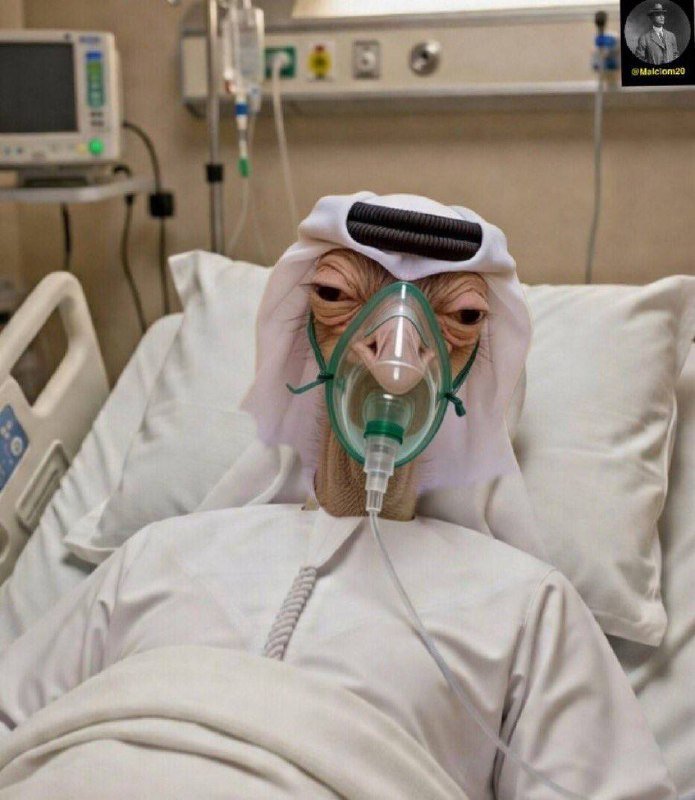
On the morning of 23 May 2026, Donald Trump posted an image of the American flag flying over Iran. He canceled his weekend plans. He would be in the War Room. The message was unmistakable: the United States was not bluffing.
Hours later, Reuters reported that American and Iranian negotiators were making "progress" and looking to the next few days to conclude a deal. A 60-day ceasefire extension, the Polymarket odds implied, was nearly a done thing.
These are not contradictory signals. They are the same signal, seen from different angles.
Theatrical Pressure, Structural Incentive
The War Room image is not a prelude to bombing. It is the other side of the negotiating table made visible. Every President since Nixon has understood that the domestic audience for a foreign crisis is not the adversary — it is the voter back home who needs to believe their government entered the room from strength. Trump's post on 23 May 2026 did not announce a policy. It announced a position, calibrated for consumption by audiences who needed reassurance that talking to Tehran was not capitulation.
That the ceasefire talks were simultaneously advancing tells us something uncomfortable: the hardline rhetoric and the deal-making are not in tension. They are the process. The public spectacle of muscular resolve creates the political cover for the quiet work of compromise. This is how great-power diplomacy has always operated — what changes is not the mechanics, only the audience that must be fooled.
Iran's Two-Track Proposal: Flexibility Masked as Strength
Tehran, meanwhile, sent its own layered signal. According to The Cradle Media, Iran's "two-track proposal" was delivered through diplomatic channels as Pakistan's army chief sat in Tehran. The proposal reportedly includes a framework for de-escalation while simultaneously including a warning: a harsher response awaits if the United States resumes what Iran describes as a "war of aggression."
That language — "war of aggression" — is not accidental. It is legal framing, positioning Iran as the wronged party under international law even as it negotiates from that same position of legal standing. The two tracks are not contradictory; they are sequential. Tehran will talk while it builds leverage, and it will build leverage while it talks.
Iran's chief negotiator, quoted across market feeds and wire reports on 23 May, stated that Tehran "will not compromise." On the uranium question — the substance beneath every non-proliferation negotiation — Polymarket's implied odds put the chance of Iran agreeing to surrender its enriched stockpile by month's end at just 7 percent.
What the 60-Day Bet Really Prices
The Polymarket markets are not prophecy. They are aggregated sentiment from participants with real money on the line, and they currently assign a high probability to a 60-day ceasefire extension. That is useful not as prediction but as context: the financial incentives that drive prediction markets tend to punish optimistic credulity. When a market assigns 80 or 90 percent probability to a deal, it is rarely because traders are naively hopeful. It is because the structural incentives for both parties to reach that deal are legible and strong.
What both Washington and Tehran want — and want for structurally similar reasons — is time. The Trump administration needs a diplomatic outcome that does not look like defeat before the midterms. Iran's clerical and military establishment needs to survive the next phase of sanctions pressure without a second round of strikes that degrade the nuclear infrastructure further. A 60-day pause is not peace. It is breathing room for both sides to recalibrate.
The Stakes Beyond the Negotiation
If the ceasefire holds for 60 days, the immediate beneficiaries are calculable: oil markets that have been pricing a regional supply shock, insurance and shipping lanes in the Persian Gulf, and the civilian populations on both sides of the Iran-Iraq border region who have lived under the shadow of escalation since February. These are not abstract stakes. They represent millions of people whose daily calculus — on fuel prices, on whether the airport they fly out of remains open, on whether their sons are conscripted — is shaped by whether the diplomats in Rome and Muscat reach paper or reach deadlock.
The structural stakes are harder to price but more durable. The architecture of the non-proliferation regime — already strained by years of parallel Iranian advances and American withdrawal from the JCPOA — absorbs another blow if this negotiation produces no binding constraints on enrichment. A ceasefire without a uranium component is not a solution. It is a postponement with a higher interest rate attached.
The counter-argument, and it is a serious one, is that demanding too much now produces a collapse that costs more than an imperfect deal. That is the logic that has governed AmericanIranian interaction since 2013. It has produced the JCPOA, its abandonment, and now this — another iteration of the same exhausted bargain: give us time, give us inspections, give us something that looks like a constraint, and in exchange the economic vise loosens just enough to keep the regime from its worst impulses.
Whether that bargain still holds, or whether both sides have moved too far from the conditions that once made it functional, is the question that 60 days of quiet will not answer. It will, however, defer it — which, for now, appears to be exactly what both parties have decided they can live with.
Monexus noted the War Room imagery in early wire reports and contextualised it against the simultaneous Reuters and Polymarket reporting of diplomatic progress — two signals the desk treated as complements rather than contradictions.
Wire provenance
This editorial synthesis draws on the following public wire/social posts:
- https://t.me/thecradlemedia/13482
- http://reut.rs/4nHLhJr