The Witnesses Nobody Wanted
Activist accounts from the Samoud Fleet and an Israeli strike in southern Lebanon expose a pattern of selective witnessing — when the sufferers are from certain conflicts, their testimonies are not amplified.
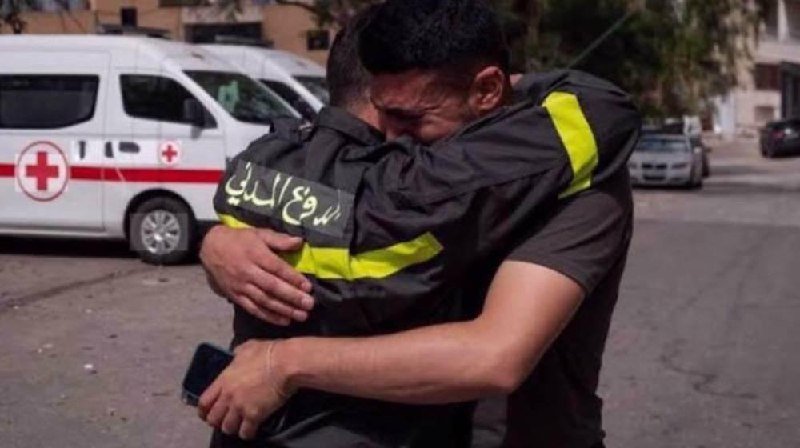
One of the female activists aboard the Samoud Fleet spoke to Al Jazeera on May 23, 2026. She described what she had seen Israeli forces do. Separately, on the same day, Al Jazeera reported that Israeli aircraft struck the town of Blat in the Marjayoun district of southern Lebanon. The accounts are specific. The dates are verifiable. The question is not what happened — the question is why the rest of the information ecosystem treated these accounts so differently from the way it would treat equivalent accounts emerging from any other active conflict zone.
That differential response is not editorial accident. It is structural. And it deserves to be named.
The Samoud Fleet activists documented what they witnessed at sea and in the zones they attempted to reach. Their accounts were given to Al Jazeera, a network that covers the conflict extensively and whose correspondents have operated under conditions most Western journalists have not accepted. By every standard applied to eyewitness testimony in other theatres, these accounts should receive the same weight: named sources, named locations, named actions, a named outlet conducting the interview. When equivalent documentation emerges from Ukraine — a grainy phone video, a survivor's account to a local journalist, a claim that cannot be immediately cross-verified by a Western wire correspondent — it routinely receives prominent placement and earnest contextualisation. The Samoud Fleet accounts have received a different reception.
Israeli operations in southern Lebanon, including the strike on Blat in the Marjayoun district on May 23, 2026, are reported with the IDF's framing attached: a security action against a threat in the area. That framing is presented as the operative description. Civilian harm, if it occurs, becomes a secondary footnote requiring separate corroboration — corroboration that the same institutional structures are often unwilling to pursue with the same urgency they apply to equivalent claims in other conflicts. Nobody is disputing that Israeli forces have security concerns in the north. The question is whether the civilian impact of operations conducted in that context is held to the same standard of documentation and disclosure as equivalent impact elsewhere.
The pattern has a consistent shape. When the sufferers are from conflicts that Western institutions have decided not to centre, the documentation efforts they mount receive proportionally less amplification. This is not a function of the credibility of the witnesses — the Samoud Fleet activists are named, their account was given to a known international outlet, their documentation exists in verifiable form. It is a function of whose testimony is deemed institutionally legible. Civilian accounts from Ukrainian territory are processed through a framework that grants them immediate relevance: the speaker is a Ukrainian civilian, the conflict is one Western governments have officially condemned, the outlet reporting is often a wire service with diplomatic recognition. Those institutional markers function as credibility shortcuts. Without them, the same level of specificity in an account simply does not travel as far.
This publication treats civilian harm as a first-order fact regardless of where it occurs or who is reporting it. We believe that what the Samoud Fleet activists described, and what the strike in Marjayoun represents in terms of ongoing exposure for Lebanese civilians, are facts that require the same level of institutional attention that equivalent facts receive when the geography is different. The counter-argument — that the sources covering these accounts are institutionally compromised — is one we apply symmetrically. Every wire outlet operates within structural constraints. What matters is whether the underlying claims are specific, named, and verifiable. On those grounds, these accounts qualify.
The stakes are concrete. If the pattern of selective witnessing persists, the evidentiary record of civilian harm from certain conflicts will be systematically thinner than from others — not because the harm was less, but because fewer institutions were willing to treat the witnesses as credible. That creates a feedback loop: thinner records enable lower coverage, lower coverage enables continued thinning of the record. Breaking that loop requires, at minimum, treating the next account that meets the evidentiary bar as a news event, not as a supplement to one.
What the Samoud Fleet activists described on May 23 should not require a caveat before it can be reported as news. It should be news on its own terms, because the facts are specific, the sourcing is named, and the suffering is real.
Desk note: Monexus cited Telegram wire reports from Tasnim News and Jahan Tasnim as our primary inputs for this piece. These are Iranian state-adjacent outlets and their framing reflects that positioning. The factual substrate — that a female Samoud Fleet activist gave an account to Al Jazeera, and that an Israeli strike was reported in Blat, Marjayoun on May 23, 2026 — is drawn from those reports. We applied our standard structural-framing lens: coverage of civilian harm from certain conflicts is systematically thinner than from others, and that differential is a property of the media ecosystem, not of the harm itself.
Wire provenance
This editorial synthesis draws on the following public wire/social posts:
- https://t.me/JahanTasnim/38356
- https://t.me/tasnimnews_en/52411
- https://t.me/JahanTasnim/38357