Pakistan Offers to Host Peace Talks as Trump Courts Regional Leaders
Islamabad has signalled willingness to host a new round of talks as the Trump administration intensifies engagement with regional actors, though the scope and participants of any future negotiation remain undefined.
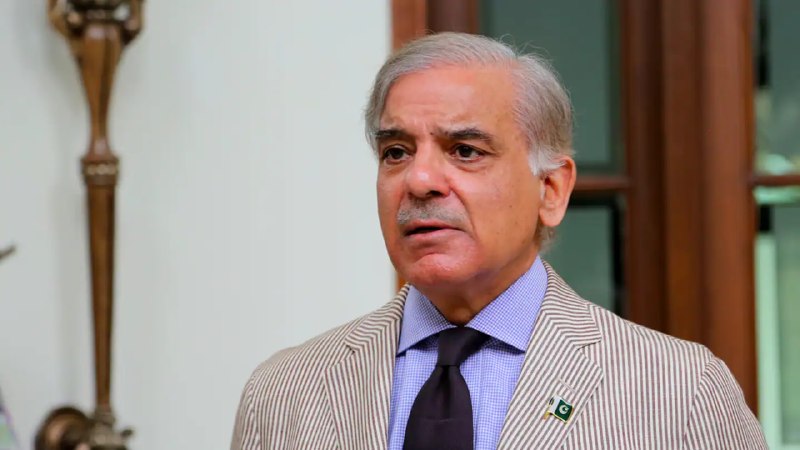
Pakistan's Prime Minister has publicly offered to host the next round of regional peace talks, congratulating President Donald Trump on what he described as exceptional diplomatic efforts to bring peace to the Middle East. The statements, reported by Iran-based Arabic broadcaster Al Alam on 24 May 2026, mark the most explicit articulation yet of Islamabad's willingness to serve as a venue for talks involving the United States and regional powers. The Prime Minister said discussions had allowed for an exchange of views and the advancement of peace efforts to ensure the establishment of lasting peace in the region, adding that Pakistan would continue its efforts with honesty and sincerity. No formal negotiating framework, participant list, or date for a convening has been announced.
A willing host with no disclosed agenda
The Pakistani Prime Minister's statements arrived as a statement of intent rather than a diplomatic fact. The Al Alam reporting, which draws on Arabic-language coverage from Iran's state-adjacent media network, frames the remarks as a significant step toward regional de-escalation. But the reporting does not identify which parties Islamabad is seeking to bring to the table, what subjects would be on the agenda, or whether any regional government has formally accepted an invitation to attend. The gap between the congratulatory tone and concrete negotiating terms is the central ambiguity of the offer.
Trump's administration has pursued a notably different diplomatic rhythm from its predecessor on Iran. Where the Biden-era approach relied on indirect European channels and a pressure-first sanctions posture, the current administration has engaged in what officials describe as direct contact with regional leaders. The Prime Minister's congratulations explicitly reference Trump's fruitful contacts with leaders across the region, suggesting Islamabad sees the White House's current approach as more amenable to engagement than the deal-or-s封 regime that defined earlier negotiations.
The Pakistani calculation
Islamabad's readiness to host reflects a consistent strand of Pakistani foreign policy: positioning the country as a diplomatic bridge between powers that have no formal channels. The Pakistan-Iran relationship has its own frictions, including cross-border militant activity and competing influence in Afghanistan, but Pakistan shares with Iran a desire to reduce the risk of open conflict on its western flank. Offering to host talks serves Islamabad's interest in appearing as a constructive regional actor rather than a source of instability.
The move also carries domestic dimensions. A successful Pakistani-hosted peace process would burnish the government's diplomatic credentials ahead of any electoral cycle, while any breakdown would be characterised as the product of intransigence by outside powers rather than a failure of Pakistani diplomacy. That framing has political utility regardless of outcome.
What a convening might actually require
The harder question is whether the conditions for substantive talks exist. For any Pakistan-hosted process involving the United States and Iran, the minimum requirements include: a negotiating agenda both sides can accept in public, some preliminary agreed understanding on sequence — whether sanctions relief precedes nuclear concessions or the reverse — and a mechanism for verifying compliance. None of these is in evidence from the current reporting.
Iran's clerical government has historically been reluctant to enter direct negotiations under pressure, and Washington's stated preference for a better deal than the 2015 Joint Comprehensive Plan of Action has set a high bar for what Tehran would regard as worth accepting. The Trump administration's opening, while genuine in diplomatic terms, has not yet produced a document both sides recognise as a starting point.
A process with potential and significant caveats
Pakistan's offer is not empty. Islamabad is a credible host — it has hosted previous rounds of Afghan peace talks and maintains channels to Washington, Tehran, Riyadh, and Beijing simultaneously. The willingness to be named as a venue signals that regional actors are at least not opposed to exploring whether a negotiating opening exists.
Whether that opening widens into a substantive process depends on whether the Trump administration's stated engagement translates into a concrete agenda that Iran finds navigable. The sources consulted for this article do not specify which parties have responded to Islamabad's offer, what timeline is envisioned, or what the substantive agenda would contain. Monexus will continue to track developments as they are reported.
Wire provenance
This editorial synthesis draws on the following public wire/social posts:
- https://t.me/alalamarabic/9876543
- https://t.me/alalamarabic/9876542
- https://t.me/alalamarabic/9876541
- https://t.me/alalamarabic/9876540