Bandar Abbas and the Speed of Explosion Reporting
Multiple Telegram channels reported explosions near the Iranian port city of Bandar Abbas on the night of 25 May 2026. Within minutes, the story had metastasized across platforms — yet official sources offered little confirmation, raising familiar questions about how unverified reports enter the information stream during moments of regional tension.
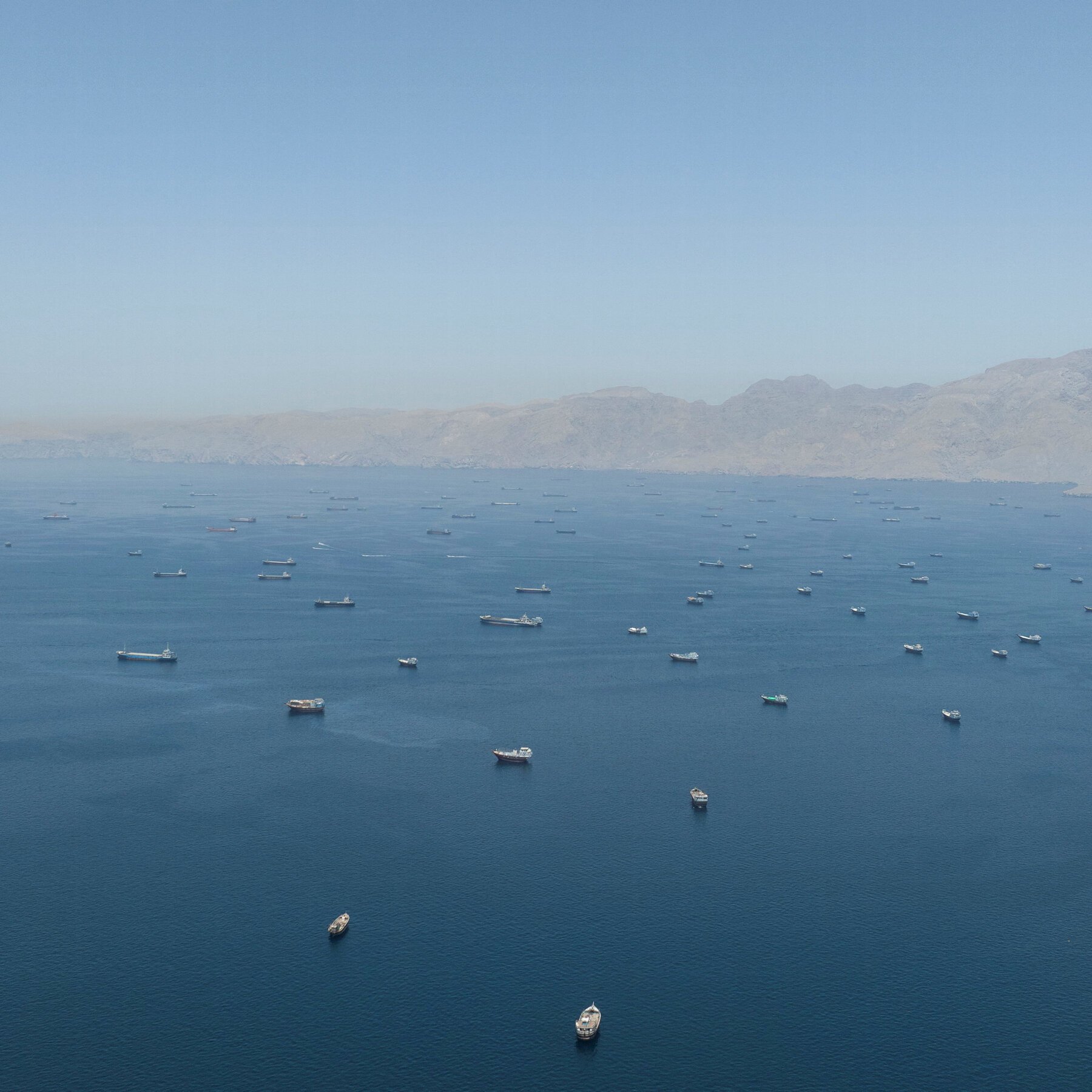
The night of 25 May 2026 produced a familiar sequence. Sometime around midnight local time, residents of Bandar Abbas — Iran's principal port on the Strait of Hormuz — reported hearing several explosions. By 21:04 UTC, Tasnim, the semi-official Iranian news agency, had circulated the report via Telegram. Within the hour, multiple channels were carrying variations of the same sparse dispatch: sounds heard, origin unclear, officials silent.
By morning, the story had accumulated a half-life of speculation that no confirmed fact could match. Social media users cited military exercises, Israeli strikes, and internal gas explosions. None of these claims had an identifiable primary source. What they had, as always, was momentum.
What the Wires Actually Said
The Telegram reports that reached Monexus at approximately 22:41 UTC on 25 May were consistent in one respect: their caution. The Al Alam Persian-language channel noted that official sources had not yet announced the cause. Mehr News, citing its own reporting, placed the origin of the sounds east of the city and described the situation as "completely normal." Tasnim, the earliest wire in our feed, reported the explosions without elaboration or confirmation.
That is the sum total of what Monexus can verify from the available primary sources. No government — Iranian, American, or Israeli — has issued a statement attributable to this report. No casualty figures, no structural damage assessments, no confirmation of mechanism. What exists is residents reporting sounds, and state-adjacent media noting those reports.
This is not a criticism of the channels that carried the wire. Telegram has become a legitimate early-alert system for events in regions where conventional wire infrastructure moves slowly or is deliberately constrained. The medium's speed is a feature, not a flaw. The problem arises when speed becomes the story — when the act of reporting supersedes the act of confirming, and downstream readers treat the map as the territory.
The Geopolitical Hook and Why It Compels Certainty
Bandar Abbas sits at one of the most contested maritime chokepoints in the world. The Strait of Hormuz carries roughly 20 percent of global oil throughput. Any incident bearing even a tangential connection to that geography immediately acquires a second audience: traders, navies, intelligence services, and the analysts who brief them.
This audience does not have the luxury of epistemic patience. Risk markets price in scenarios, not confirmed facts. A single unconfirmed report about an explosion near a strategic chokepoint can move tanker futures. That economic reality creates an incentive structure in which premature confidence outpaces genuine verification — and in which the earliest outlets to publish often set the interpretive frame for an entire news cycle.
The Iran nuclear الملف, the shadow war between Tehran and Israel that has flickered across open sources for two years, and the renewed pressure from the Trump administration for a revised Joint Comprehensive Plan of Action — these pressures do not create false explosions, but they do create a readership primed to interpret ambiguity in the direction of its anxieties.
What Remains Unverified — And Why That Matters
The sources Monexus reviewed do not establish what caused the sounds reported in Bandar Abbas on the night of 25 May. They do not confirm military activity, civilian accident, or infrastructure failure. They do not confirm whether the reports originated from a single incident or multiple distinct events.
What they confirm is that something was heard by enough people in enough locations to generate a wire report, and that Iranian state-adjacent media chose to publish that report without attribution or explanation.
There is a long history of deliberate ambiguity in Iranian state communications — not as a bug but as a feature. Partial disclosures, carefully timed, can serve multiple audiences simultaneously. They can reassure domestic constituencies while signaling capability to adversaries. They can test international reaction speed without committing to a claim that can be held to account. Whether this episode fits that pattern or represents something more mundane — a gas pipeline fault, a training exercise conducted with inadequate public notice — cannot be determined from the sources at hand.
The honest editorial position is to say so. Not as a form of false balance, but as a recognition that verification is not a bureaucratic obstacle to the real story — it is the story, at least until confirmation arrives.
The Desk Note
Monexus published this article because the Bandar Abbas reports illustrate a dynamic the desk tracks across multiple regions: the acceleration of unverified claims through Telegram-based wire services, and the downstream pressure on readers and markets to resolve ambiguity before evidence permits resolution. We did not treat the Telegram dispatches as confirmed fact, and we urge readers to apply the same caution. The sources do not establish what happened; they establish that something was reported. The distinction matters.
Wire provenance
This editorial synthesis draws on the following public wire/social posts:
- https://t.me/alalamfa/
- https://t.me/mehrnews
- https://t.me/wfwitness