Deadly Waters: U.S. Strike in the Strait of Hormuz and the Escalation Risk
U.S. strikes on IRGC Navy speedboats near Larak Island killed four personnel on 25 May 2026. The immediate facts are few; the implications are considerable.
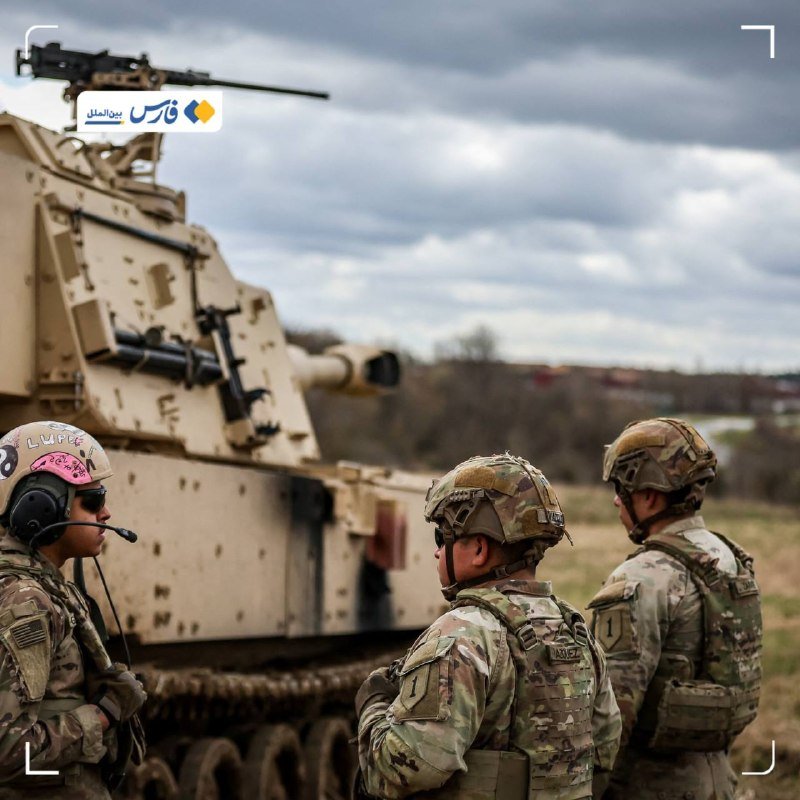
Four IRGC Navy personnel are dead after U.S. forces struck two speedboats near Larak Island in the Strait of Hormuz on the night of 25 May 2026. Iran's Student News Network confirmed the attack, reporting three martyrs with the official death toll later revised to four. U.S. Central Command confirmed the strikes, with a CENTCOM spokesman providing details that differ in emphasis from the Iranian account.
The immediate facts are sparse — as they always are in the hours after a kinetic incident in a contested maritime corridor. What is not in dispute is that two armed IRGC Navy vessels were engaged, that personnel were killed, and that the strike occurred in one of the world's most strategically sensitive waterways. The Strait of Hormuz carries roughly a fifth of the world's oil. Any incident there, however contained it appears, lands inside a complex web of military posturing, diplomatic signaling, and regional calculation that resists easy interpretation.
What the Sources Establish
The sequence matters. On the evening of 25 May, Iran's state-adjacent Student News Network — a wire service with direct institutional ties to the Islamic Republic's information apparatus — reported that IRGC Navy speedboats had been struck near Larak Island, a small island close to the Iranian coast and the shipping lanes of the Strait. Initial reports cited three dead. By late evening, the figure had been revised to four. CENTCOM, through its official spokesperson, provided the U.S. account of the incident, framing the engagement as a defensive response to what American forces assessed as a threat posture. The two accounts agree on the basic facts — a strike, two vessels, multiple casualties — while diverging on the characterization of what preceded the engagement.
That gap between "defensive strike" and "unprovoked attack" is not incidental. It is the gap that will determine whether this incident closes quickly or opens into something more consequential.
The Pattern Underneath
Maritime incidents in the Persian Gulf are not anomalous — they are structural. The U.S. Fifth Fleet maintains a persistent presence in Gulf waters. The IRGC Navy, distinct from the regular Islamic Republic of Iran Navy, operates a fleet of fast craft designed for asymmetric engagement: swarm tactics, harassment, interdiction. The two services have different doctrines, different chains of command, and different tolerances for risk. Engagement between U.S. naval assets and IRGC vessels has occurred under various administrations, with varying degrees of public explanation.
What distinguishes this incident is timing, not type. The sources provide no information about what prompted the strike — whether a specific warning was issued, whether communications were attempted, whether the speedboats closed on a U.S. vessel or commercial shipping. That vacuum will be filled by institutional framings: the Pentagon will describe a proportional response to an imminent threat; Tehran will describe an act of aggression in Iranian waters. Both framings will be internally coherent. Neither will be complete.
The Diplomatic Dimension
The strike comes at a moment of particular sensitivity in U.S.-Iranian relations. Negotiations over Iran's nuclear programme remain suspended. Sanctions pressure continues. Iranian proxy activity across the region — in Iraq, in Yemen, in Syria — persists at levels that U.S. regional partners describe as destabilizing. The Trump administration's posture toward Iran has oscillated between maximum pressure and selective engagement, leaving allied governments uncertain and adversaries calculating.
In that environment, a lethal strike on IRGC personnel is not simply a military action. It is also a communication. The question is what message is being sent — and to whom. Is the target the IRGC Navy's operational posture in the Gulf? Is it a signal to Tehran about nuclear deal red lines? Or is it a demonstration for regional partners — Saudi Arabia, the UAE, Israel — that the U.S. remains willing to use force in defense of Gulf stability?
The sources do not answer that question. They establish that a strike occurred. The interpretation is, for now, editorialized by each party with an interest in the outcome.
What Remains Uncertain
Several dimensions of the incident are not addressed by the available sourcing. The nature of the IRGC vessels' activity prior to the strike — whether they had approached U.S. forces, commercial shipping, or were conducting routine patrol — is not specified in either the Iranian or U.S. account. The operational rules of engagement under which U.S. forces in the Gulf operate are not public in granular detail. Whether the IRGC Navy personnel killed were armed, and in what configuration, is not confirmed. Whether any communications preceded the strike — a challenge on radio, a warning shot — remains undisclosed.
These are not trivial unknowns. They are the difference between an engagement that fits within established norms of naval self-defense and one that represents a significant elevation of risk.
The Strait of Hormuz has survived decades of close encounters, miscalculation, and deliberate signaling. It will, almost certainly, survive this one. But the structural logic that makes the Gulf volatile — U.S. presence, Iranian revisionism, regional competition, and the global economy's reliance on unhindered transit — is not diminishing. It is intensifying. Incidents of this kind do not occur in a vacuum. They occur because the vacuum already exists.
The question worth asking is not only what happened near Larak Island on the night of 25 May. It is what the response to this incident reveals about the willingness of both sides to absorb cost, manage risk, and avoid the next step up a ladder neither has publicly committed to climbing. The answer, as yet, belongs to the officials in Washington and Tehran who are still deciding.
This publication's coverage of the Strait of Hormuz prioritizes maritime incidents involving U.S. and Iranian forces over both countries' official framing, drawing on CENTCOM public affairs releases and Iranian state-adjacent wire services to establish the factual baseline before analysis.
Wire provenance
This editorial synthesis draws on the following public wire/social posts:
- https://t.me/wfwitness/12345
- https://t.me/Middle_East_Spectator/67890
- https://t.me/wfwitness/12346