Israel Lays Out Expanded Lebanon Campaign as Hezbollah Fields Thermal-Equipped Drones
Israeli forces say they struck dozens of Hezbollah positions in southern Lebanon over 24 hours, as Lebanese media reported air defence fire against Israeli aircraft and Hezbollah released footage apparently showing thermal-equipped FPV drones in action.
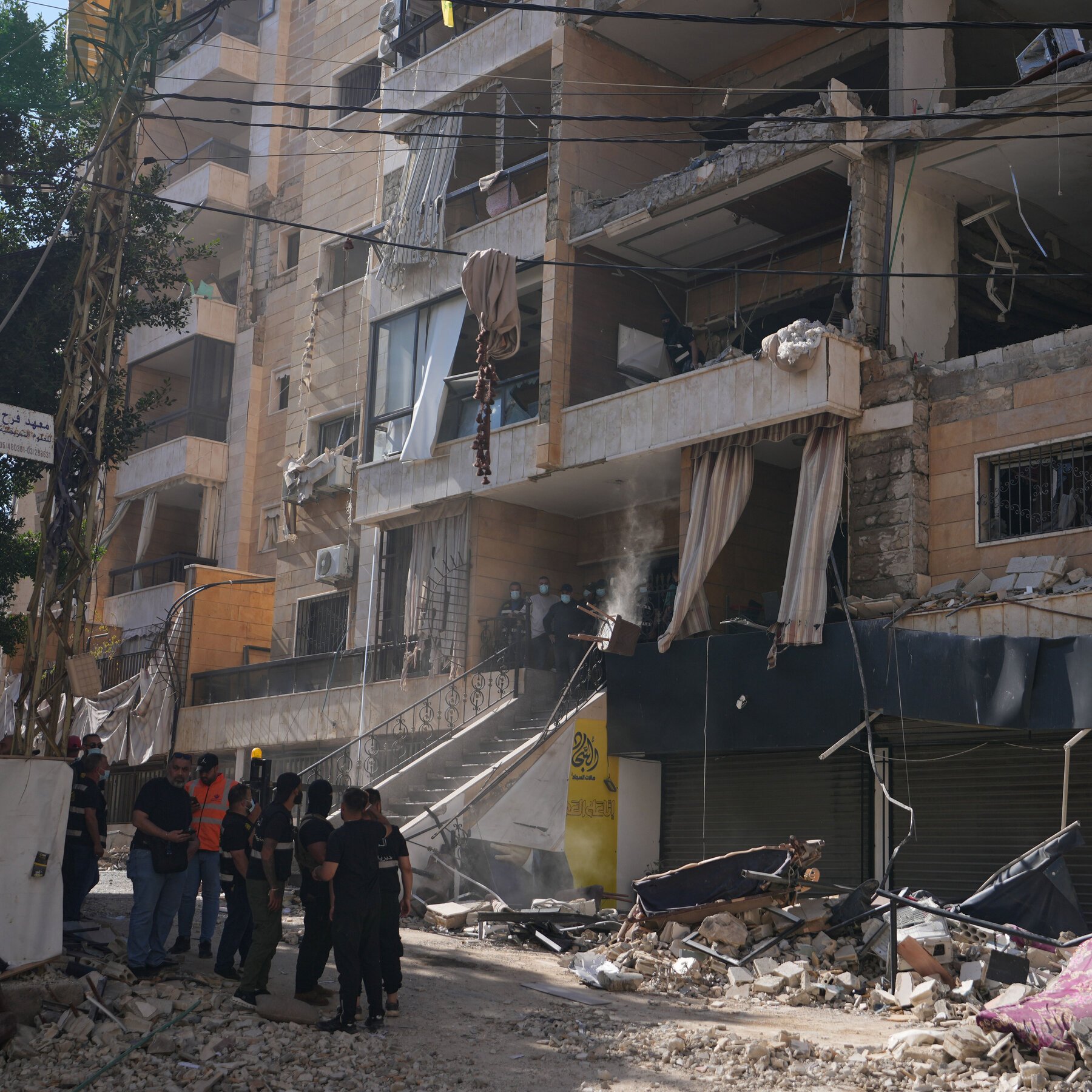
Israeli forces said on 25 May 2026 that they had significantly expanded their offensive inside Lebanon, striking what they described as approximately 70 Hezbollah positions over the preceding 24 hours. The announcement marked one of the most intensive periods of Israeli activity along the Lebanon border since the current phase of hostilities began.
The Israeli military statement described strikes across multiple locations in southern Lebanon, targeting what an IDF spokesperson said were tunnel networks, weapons storage sites, and observation posts belonging to Hezbollah. The expansion came amid heightened cross-border exchanges that have drawn the two sides into a cycle of retaliation that regional mediators have struggled to brake.
According to Lebanese and regional reporting at approximately 19:23 UTC, Hezbollah's war media released video footage of an FPV drone operation in the town of Al-Bayada, in southern Lebanon. The footage, which appeared to show a drone equipped with a thermal camera conducting what Hezbollah described as an attack operation, circulated on channels associated with the group. Military analysts who follow Lebanese Hezbollah activities said the thermal-imaging equipping of such drones represented a capability upgrade for the group, allowing more precise targeting during night operations or against personnel without conventional static positions.
Separately, Arab-language media reports — confirmed through channels tracking Lebanese military activity — said air defence systems fired at Israeli warplanes flying over southern Lebanon on 25 May. Israeli military sources did not immediately address the specific air-defence incidents in their public briefings, though heightened anti-aircraft activity has been noted in earlier phases of the conflict.
Hezbollah, for its part, described its own activity as a response to what it termed Zionist aggression. A communique circulated on Iranian-aligned Telegram channels characterised the group's operations as defensive. Iranian state-adjacent media, which frequently carries Hezbollah framing, described the drone footage as evidence of the group's continuing military capacity despite sustained Israeli pressure.
What makes this cycle different from previous rounds of cross-border fire is partly technological. Standard FPV drones — first-person-view uncrewed aerial systems — have been deployed by both sides throughout the conflict, but the addition of thermal imaging hardware shifts the operational calculus. A drone that can distinguish human body heat from background terrain is significantly more effective against concealed or mobile targets. Israeli forces have invested heavily in counter-drone measures; thermal-equipped platforms represent an attempt by Hezbollah to stay inside that countermeasures envelope, at least partially.
The Israeli government has framed the expanded campaign as necessary to degrade Hezbollah's infrastructure before any diplomatic arrangement can be finalised. Israel's stated war aim, repeatedly articulated by the prime minister's office and the defence ministry, is to ensure Hezbollah does not retain the ability to strike Israeli territory under the terms of any ceasefire or armistice framework. The expanded strikes on 25 May fall squarely within that stated logic.
Regional mediators, including French and Qatari officials who have participated in backchannel negotiations, have warned that each escalation narrows the diplomatic window. The underlying structural tension is well-documented: Hezbollah links its own posture to the outcome of the broader Gaza conflict, while Israel insists it retains the right to act defensively regardless of parallel tracks. Between those anchor positions, there is very little operational room for a deal — and both sides appear to be maximising their battlefield position while negotiations stall.
The immediate stakes are largely local. Civilians on both sides of the border — in northern Israel displaced by the earlier Hezbollah rocket campaigns, and in southern Lebanese towns close to the demarcation line — bear the direct human cost of each exchange. But the reverberations extend further. Any sense that the buffer zone architecture has fundamentally broken down would force a reckoning in Washington and European capitals that have backed a diplomatic solution without being willing to vote for the sort of enforcement mechanism that would make one credible. That gap between political support and operational grounding has been a constant feature of the regional response, and it sits inside every targeting decision Israeli commanders make along the Lebanon frontier.
What remains genuinely unclear from open sources is whether the strikes described by the IDF as achieving their objectives have meaningfully degraded Hezbollah's command-and-control continuity. The group has demonstrated a capacity to regenerate operational capability from positions that survive initial strikes, a pattern observed across multiple rounds of this conflict. Whether the thermal-equipped FPV platforms seen in the Al-Bayada footage represent a recent acquisition or an operation that had been planned before this cycle of strikes began also cannot be confirmed from available reporting.
Wire provenance
This editorial synthesis draws on the following public wire/social posts:
- https://t.me/JahanTasnim/325371
- https://t.me/JahanTasnim/325367
- https://t.me/FarsNewsInt/449792