Israel Signals Escalation Against Hezbollah Amid Ongoing Ceasefire Violations
Prime Minister Netanyahu announced on 25 May 2026 that Israel would intensify its offensive against Hezbollah in Lebanon, drawing sharp criticism from Tehran-aligned outlets while Western wires framed the strikes as aimed at dismantling the group's military infrastructure.
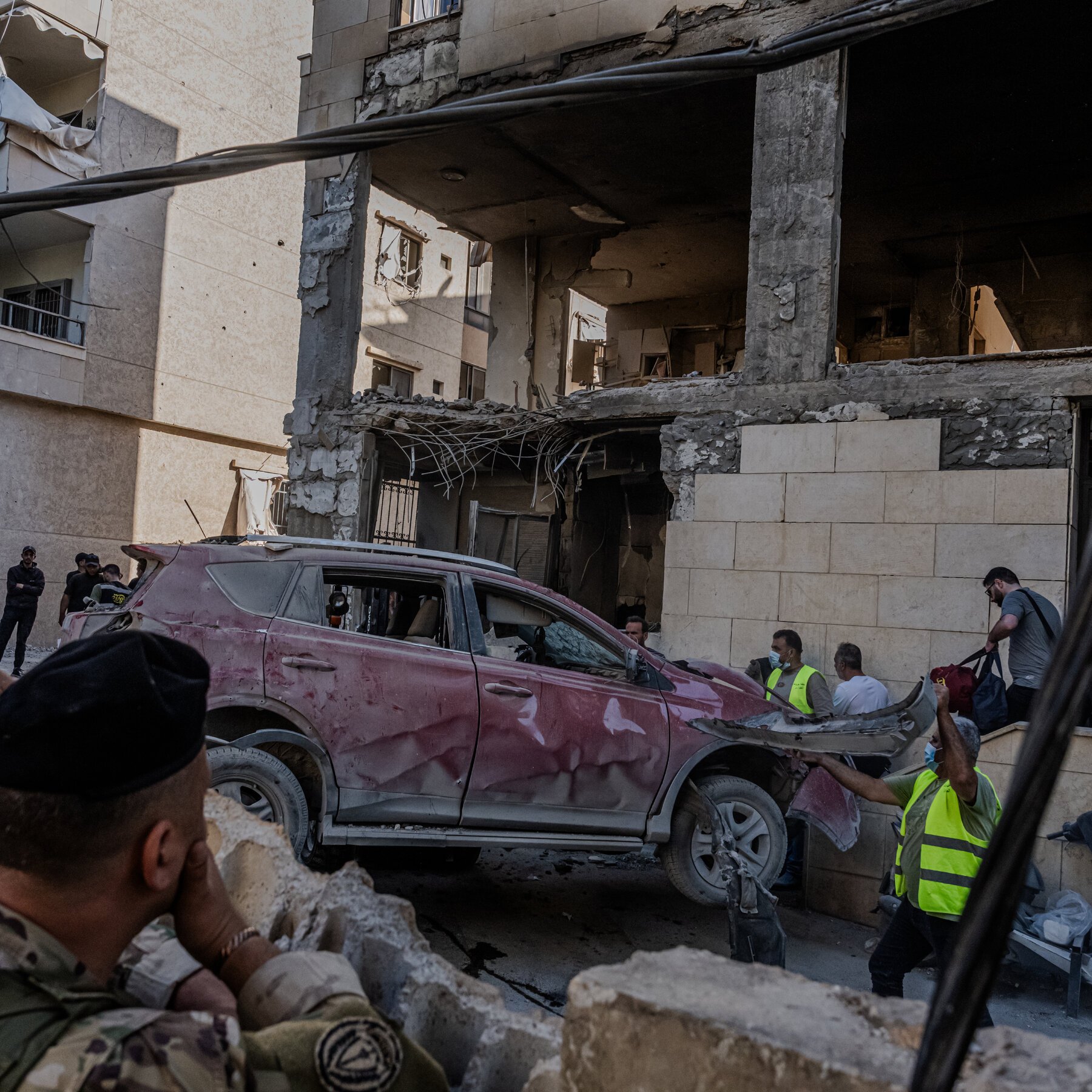
Israeli Prime Minister Benjamin Netanyahu directed the Israel Defense Forces on 25 May 2026 to intensify operations against Hezbollah in Lebanon, according to reporting by Mehr News, the Tehran-aligned outlet, on its official Telegram channel. The directive, described in the Mehr News report as "an order to increase criminal attacks on Lebanon," came as the Israeli military confirmed it was conducting strikes against what it termed Hezbollah's military positions.
The announcement marks a further deterioration of the fragile ceasefire arrangement along the Israel-Lebanon border, where sporadic violence has persisted despite the nominally agreed terms. According to Al Jazeera's breaking news coverage also filed on 25 May 2026, the Israeli government said the objective was to "crush" Hezbollah — language that signals an intent to degrade the group far beyond the limited strikes that have characterized exchanges since the main phase of hostilities ended.
Netanyahu's office has framed the offensive as a response to continued Iranian supply lines and weapons transfers flowing through Syria into Lebanon, a charge Tehran has disputed, with Iranian state-aligned media outlets—including a live-streamed commentary session attributed to Tehran-based commentators—asserting that Israeli actions are intended to destabilize the broader region and disrupt emerging multilateral economic arrangements in the Gulf.
The Military Logic and Its Limits
Israel has long argued that Hezbollah's rocket and missile arsenal constitutes an existential threat, and IDF briefings quoted by wire services have maintained that the group retains significant strike capability despite the earlier round of conflict. The stated aim of "crushing" that capability implies ground operations or a sustained bombing campaign designed to eliminate underground infrastructure — much of which is located in civilian areas near Beirut and throughout south Lebanon.
The challenge, military analysts note, is that Hezbollah demonstrated considerable capacity to absorb Israeli strikes in the previous phase of hostilities. A grinding campaign risks Israeli ground casualties, international condemnation, and domestic political pressure — particularly if Lebanese civilian infrastructure bears the cost. The wire framing of the announcement as a definite policy shift should be weighed against the possibility that aggressive rhetoric serves domestic audience management as much as operational planning.
Regional Reactions and the Iranian Dimension
Iranian state media has characterized the escalation as part of a broader pattern of Israeli-linked destabilization. A televised commentary session streamed via a Tehran-aligned YouTube channel on the evening of 25 May accused "Zionists" of attempting to "drag the global economy into the abyss" — framing Israel as a systemic risk rather than a discrete security actor. That framing has limited traction in Western capitals, but it finds resonance in stretches of the Global South, where skepticism toward American ally behavior runs deep.
The structural subtext — that Israeli actions serve to perpetuate dollar-denominated petrowealth geopolitics and prevent multilateral economic realignment — is a common feature of Iran-aligned coverage. Whether that framing has any purchase on the ground depends on how Lebanon's own institutions respond. The Lebanese Armed Forces have historically attempted to maintain distance from Hezbollah's military decisions, but their capacity to challenge the group is constrained by economic collapse and political paralysis in Beirut.
The Ceasefire Architecture and Its Discontents
The nominal ceasefire between Israel and Hezbollah was brokered under conditions that satisfied neither party's maximalist demands. Hezbollah insisted on a complete Israeli withdrawal from disputed border areas; Israel demanded the group's full disarmament north of the Litani River. The agreement achieved neither, establishing instead a negotiated friction zone that both sides have since tested with increasing regularity.
International mediators — including French and American envoys referenced in earlier wire dispatches — had expressed cautious optimism about the arrangement's durability as recently as March 2026. The current escalation suggests that optimism was misplaced, or that political conditions inside Israel have shifted the government's calculus. Understanding which factor is driving this announcement matters for any forward projection.
What Comes Next
Hezbollah has not issued a formal statement responding to Netanyahu's announcement as of filing, but Kataeb Hamas-adjacent Telegram channels — not to be confused with formal Lebanese state communications — suggested the group was preparing to respond to any strikes with reciprocal attacks on northern Israel. The sources available to this publication do not allow independent verification of those claims.
The immediate stakes are measured in the risk of an exchange that outpaces diplomatic containment. Lebanese civilians face the prospect of renewed displacement from border villages; Israeli civilians in the north face renewed rocket alarms. The longer trajectory depends on whether Hezbollah's Iranian benefactors calculate that escalation serves their strategic interests or whether there is still room for back-channel restraint.
What remains uncertain is whether the Turkish-brokered diplomatic track reported in February 2026 has been formally abandoned, and whether the White House has communicated directly with Jerusalem about red lines for the campaign. Those questions are not answered in the current source material.
Monexus coverage of Israel–Lebanon tensions is sourced to wire reports and regional desk monitoring. Wire framing tends toward event-driven blow-by-blow coverage; this article attempts to locate the specific announcement within the longer arc of ceasefire architecture and regional power competition. As with all escalation reporting, claims about military capability and political intent should be held with appropriate epistemic caution pending corroboration.
Wire provenance
This editorial synthesis draws on the following public wire/social posts:
- https://t.me/mehrnews