The Memorial Day Economy's Uncomfortable Questions
On this Memorial Day, the holiday's ritual consolations arrive alongside data that complicates every easy story about American economic grievance and geopolitical resentment.
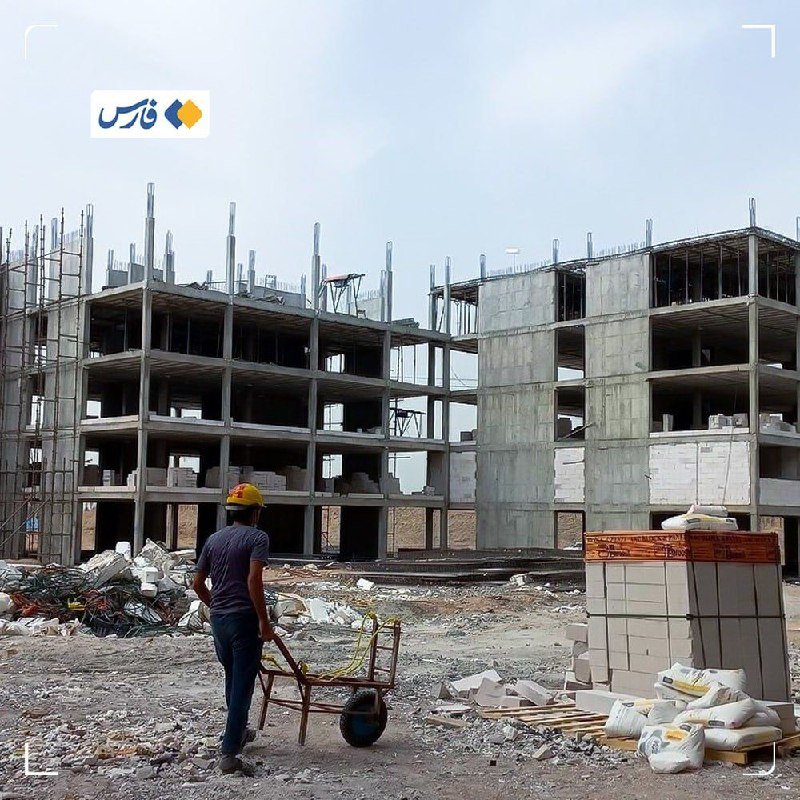
On this Memorial Day, flags will hang at half-staff and red poppies will mark lapels across the United States. The ritual is familiar: a pause for the fallen, a gratitude extended to those who served. But this year's ceremony arrives at a moment when the economic anxieties of American households sit uneasily alongside the geopolitical resentments that animate so much current political rhetoric.
The discomfort is statistical. So far in 2026, the American economy has added an average of 68,000 jobs per month, according to data compiled by Unusual Whales. That pace is modest compared to 2024's average of 186,000 or the post-pandemic surge of 251,000 in 2023, but it is not collapse. It is deceleration from a high base — a distinction that rarely survives contact with political rhetoric.
The Rhetoric of Waste
The frame that dominates, particularly from the current administration, is not economic slowdown but economic betrayal. Officials have described roughly $149 billion in foreign aid as money flowing "to people who hate us, to countries that ripped us off for years." The phrasing is deliberate: it transforms an abstract budgeting question into a visceral grievance, a theft felt personally in household accounts. On a holiday built around sacrifice, the language of sacrifice-as-waste finds a receptive audience.
The sources do not specify which budget lines the $149 billion figure encompasses or how it was calculated. What is clear is the rhetorical work it performs: it offers a villain abroad rather than a structural problem at home.
What the Numbers Actually Show
The deceleration in job creation is real. The economy added an average of 49,000 jobs per month in 2025, down sharply from 186,000 in 2024 and 251,000 in 2023. That is a meaningful slowdown, and workers in sectors sensitive to interest rates and consumer confidence are feeling it. But the dominant story about where the money went — foreign hands, foreign malice — does not account for the more prosaic reality of domestic wage stagnation, housing costs, and healthcare burden, which predates current geopolitical tensions and does not resolve when foreign aid is cut.
The Cloudflare layoffs announced on 24 May 2026 offer a partial illustration. It was the first mass layoff in the company's 16-year history, according to company disclosures cited by Unusual Whales. That a technology firm with a historically stable workforce is cutting staff for the first time since before the financial crisis is a data point about the technology sector's transition to capital-intensive AI operations, not evidence of a foreign theft in progress.
The Housing Dimension Nobody Is Naming
Buried in the economic data is a figure that captures a structural transformation of American life more precisely than any foreign spending number. Of the nearly 3 million housing units owned by private equity firms, roughly 57 percent were acquired since 2018 and over 45 percent since 2021, per data compiled by Unusual Whales. Private equity owns approximately one in eight American homes — not abstractly, but as landlord, as bill-collector, as the entity that sets rents and decides which repairs get made.
This is not a foreign problem. It is not a corruption of foreign money. It is a domestic restructuring of who owns the places Americans sleep, and the pace of that restructuring accelerated through the late 2010s and into the early 2020s. A renter in Atlanta or Phoenix paying a private equity-affiliated management company is not participating in the geopolitical resentment the $149 billion frame invites. They are paying a quarterly bill whose size was set by a fund manager in New York or Boston, responding to yield requirements, not national loyalty.
On a day when American identity is invoked to organize grievances, the private equity statistic names something that the dominant framing is structurally unable to address: the redistribution of housing wealth from tenants to funds, executed at scale, domestic in origin, ongoing in effect.
The Political Calculation Ahead
The Memorial Day frame — gratitude, sacrifice, national unity against external threat — is politically potent. It has been the scaffolding for a foreign-policy critique that doubles as an economic one: stop sending money abroad, bring it home. The critique has rhetorical coherence and emotional resonance. It also happens to be incomplete in ways that matter for the households the political class claims to be defending.
The deceleration in hiring is real. The housing cost crisis is real. The sense that the economy is not delivering for ordinary working Americans is real and legitimate. But if the policy response to those grievances targets foreign aid rather than domestic consolidation of housing, healthcare, and wage power, the beneficiaries will not be renters or first-time homebuyers. The math is straightforward, even if the ceremony around it is not.
What remains genuinely uncertain is whether voters sort these distinctions — whether the visceral clarity of the foreign-enemy frame can be matched by anything as concrete but less dramatic as the domestic ownership structure that shapes their monthly bills. On that question, this Memorial Day offers no clear answer. It does, however, pose the right one.
Wire provenance
This editorial synthesis draws on the following public wire/social posts:
- https://t.me/TSN_ua/