Ceasefire Bombs: The Contradiction at the Heart of US Iran Policy
The White House simultaneously announces ceasefire talks and orders fresh strikes on Iranian missile sites. The dissonance is not accidental — it is the strategy.
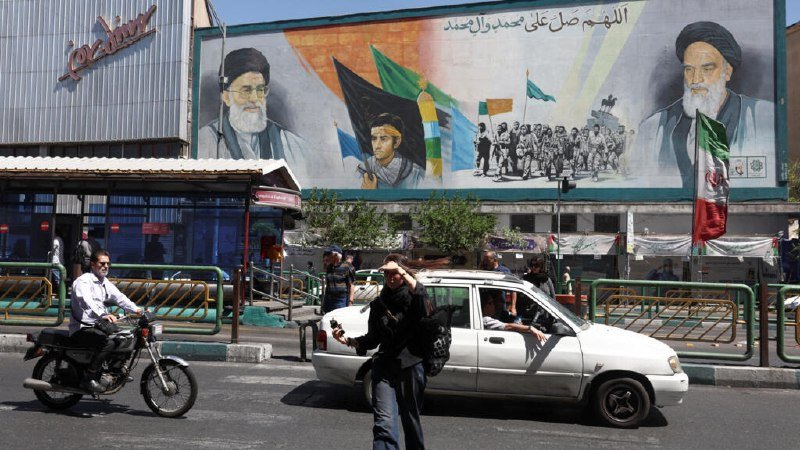
The administration says it wants a deal. It also says the strikes are self-defense. Both things cannot be the whole truth.
On the morning of 26 May 2026, the United States announced simultaneous strikes on Iranian missile infrastructure and negotiations aimed at ending the war. Iranian state media reported damage to sites in the Lamerd region. The supreme leader's office issued a statement saying the region would "no longer serve as shields" for American bases. The White House framed the strikes as self-defense. Meanwhile, ceasefire talks are reportedly ongoing, and a deal — if one arrives — is still weeks away.
This is not a communications failure. The contradiction is the policy.
The Two-Track Fiction
Washington has long maintained it can bomb and negotiate at the same time. The framing holds: strikes are defensive, self-limiting, targeted at weapons systems — not a campaign of regime change. Ceasefire talks are exploratory, conditioned, contingent on Iranian goodwill. Both narratives coexist in the same press statement, and neither is asked to account for the other.
The evidence suggests the dual approach is deliberate. US forces struck Iranian missile sites on 26 May 2026, per South China Morning Post reporting, while American officials simultaneously signaled openness to a negotiated settlement. The administration controls the frame on both the military and the diplomatic tracks. What it loses in credibility — internationally and with domestic audiences — it recovers in flexibility: every strike maintains leverage; every ceasefire signal preserves an off-ramp.
Iranian state media was unambiguous in its framing. IRNA reported that "American perpetrators of Lamerd war crime must be punished." The language is blunt, and it is meant to be. Tehran understands the same two-track logic Washington is playing, and its response is to name the contradiction rather than pretend it away.
The Uranium Question
What is actually on the table in those negotiations? Enriched uranium. Iran has a substantial stockpile — the product of years of accelerated enrichment — and the current administration's stated goal, according to reporting from multiple sources, is to see that stockpile either surrendered or dismantled as part of any lasting agreement. The betting markets reflect the difficulty of that task: Polymarket data shows an 11 percent probability that Iran agrees to surrender its enriched uranium by the end of this month, and a 10 percent probability that the United States obtains it by the end of next month. Those odds suggest the talks are not close.
Iran views its enrichment capacity as a sovereign asset, not a bargaining chip to be discarded under pressure. The supreme leader's statement on 26 May — that the region will no longer serve as shields for US bases — is not a negotiating position. It is a declaration of strategic intent. Tehran is signaling that it will not be coerced into giving up its most valuable bargaining chip simply because American strikes create urgency. The enriched uranium is leverage precisely because it cannot be recovered once surrendered.
The Financial Arithmetic
There is a cost calculus that most coverage of these negotiations ignores. The Financial Times reported on 25 May 2026 that an Iran war could add billions of dollars in interest payments to US debt. The mechanism is straightforward: emergency defense spending requires borrowing, and borrowing at current interest rates compounds over time. Every billion in unplanned defense expenditure generates additional debt servicing costs that persist for years. The US Treasury is already operating under significant fiscal pressure. Additional military operations — even limited ones — tighten the fiscal envelope.
There is a secondary financial risk that is harder to quantify but arguably more significant in the long run. The dollar's global standing depends partly on its predictability as a reserve asset. Sanctions regimes that target sovereign nations — and the threats that precede them — send a signal to every government that holds US Treasury instruments: the dollar can be weaponized. The more frequently and dramatically that weapon is deployed, the faster the quiet migration toward alternative settlement systems accelerates. This is not a theory. It is a pattern visible in bilateral currency swap agreements, in commodity pricing outside dollar markets, in the growing share of global trade settled in non-dollar instruments. The war, if it continues, accelerates that migration. The ceasefire, if it holds, slows it — but does not reverse it.
The Structural Picture
The real paradox is not that the US is negotiating while bombing. It is that even a successful military campaign would not resolve the structural problem Iran represents. Iran is not Iraq in 2003. It has a functioning state apparatus, regional allies, distributed infrastructure, and — critically — a demonstrated ability to absorb pressure and reconsolidate. The enriched uranium program is not a curiosity; it is the product of decades of investment in sovereignty. No strike permanently eliminates it. No ceasefire guarantee prevents its resumption.
What we are watching is a contest between two actors who each have an interest in the conflict continuing — but for opposite reasons. The hardliners in Tehran benefit from American strikes: every bomb validates their anti-American posture,,团结s the domestic audience, and gives them leverage at the negotiating table. The warhawks in Washington benefit from the same strikes: they justify defense spending, reinforce regional alliances, and keep Iran perpetually off balance. A genuine peace would be inconvenient for both sides. The ceasefire talks serve a function for both administrations: they absorb political pressure, provide diplomatic cover, and keep the alternatives off the table.
Who Wins and Who Loses
The winners in this scenario are identifiable and concrete. US defense contractors benefit from sustained regional tension and the implicit threat of escalation. Iranian hardliners benefit from every American strike — it confirms their narrative, consolidates their base, and gives them leverage they could not otherwise manufacture. The losers are harder to name because the damage is diffuse: American consumers who absorb oil price premiums at the pump, regional businesses that cannot plan around perpetual uncertainty, and the broader international system that depends on a minimally predictable dollar.
The stakes are not abstract. The ceasefire talks reportedly remain active as of 25 May, with the Iranian foreign ministry spokesman stating a deal is "not imminent." The Polymarket odds — 37 percent chance of a US-Iran agreement by the end of this month — suggest the market agrees. What this publication finds troubling is not the existence of the talks. It is the possibility that the strikes are not a means to an agreement. They may be the agreement — a managed conflict with diplomatic windows, designed to sustain itself rather than resolve.
The supreme leader's statement on 26 May was not bluster. It was a description of the limits of American pressure. The region will no longer serve as shields — meaning the cost of American presence, and the cost of American strikes, is about to rise. What happens next depends on which track the administration prioritizes: the strike or the ceasefire. Right now, both tracks lead in the same direction, and it is not toward peace.
Wire provenance
This editorial synthesis draws on the following public wire/social posts:
- https://x.com/sprinterpress/status/1924089234963771803
- https://t.me/Irna_en/18472
- https://x.com/unusual_whales/status/1923702151683244242