Ferrari's Electric Pivot Reveals a Deeper Crisis of Identity
Ferrari's first electric car, the Luce, designed by Jony Ive, triggered a seven percent share crash. But the real story is the silence from Maranello — and what a cryptic remark from the former chairman reveals about the brand's internal reckoning.
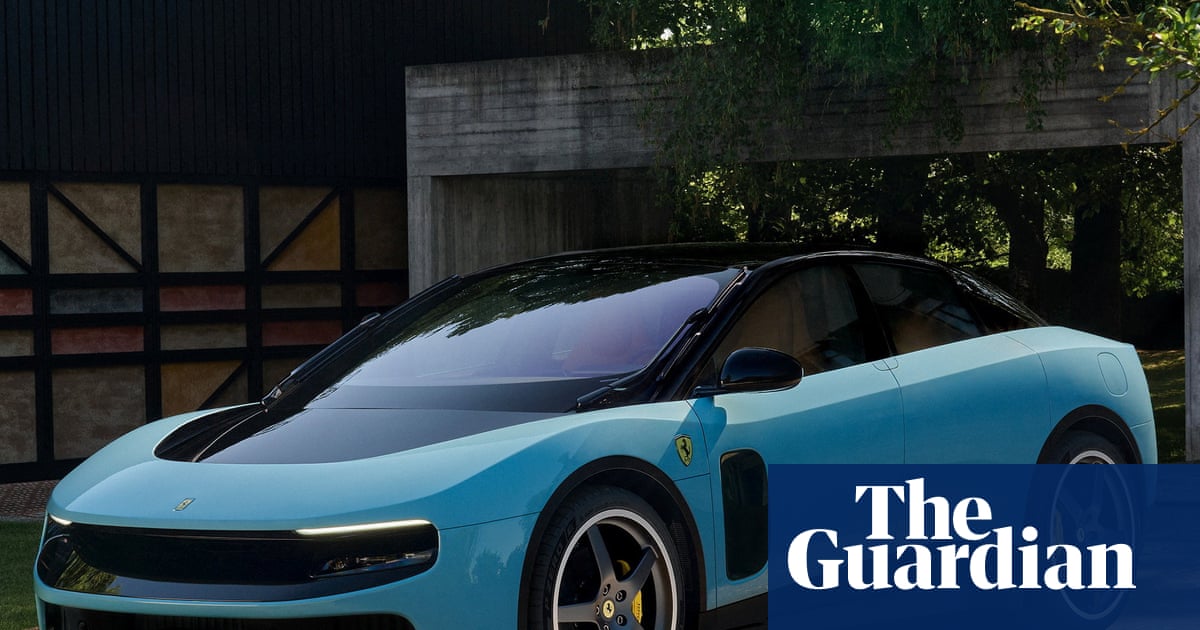
Something strange happened when Ferrari unveiled its first electric car. The market immediately knocked seven percent off the share price, and the former chairman offered a remark so carefully worded it might as well have been a confession. "I cannot say what I really think," he told reporters at the launch event on 26 May 2026. "I would harm Ferrari." That single sentence, delivered with the politeness of a man holding back a wince, tells you everything about the tension coursing through Maranello right now.
The Luce — Ferrari's first fully electric vehicle, designed in collaboration with Jony Ive, the former chief design officer at Apple — arrived with the kind of fanfare the brand normally reserves for a new flagship combustion engine. But beneath the ceremony, a calculation was being made public. Ferrari is attempting to be two things simultaneously: a defender of mechanical purity and a compliant participant in the electrification of luxury mobility. Those goals are not compatible, and the market knows it.
The Market Read the Room Correctly
A seven percent single-day share price decline is not a rounding error. Ferrari's investors, who have watched the stock outperform for years on the strength of exclusivity and collector demand, are flagging something specific. They are not necessarily opposed to electric Ferraris — they are opposed to electric Ferraris that dilute what the brand means. The moment an electric Ferrari becomes indistinguishable from any other high-performance EV in terms of the experience it delivers, Ferrari's pricing power collapses. The company knows this. The former chairman's careful non-statement suggests he knows it even more acutely.
Jony Ive's Involvement Is the Point and the Problem
The choice to bring Jony Ive — who shaped the aesthetic language of the most commercially successful technology products in history — into the Ferrari design process is a strategic signal. Ferrari is telling its audience: this is not a compromise. This is a deliberate, high-intellect reimagining of what a Ferrari can be. That framing may satisfy a segment of the luxury technology buyer. But it risks alienating the segment that buys Ferrari specifically because it represents the antithesis of mass-market technology aesthetics. The loud exhaust, the screaming engine, the analogue rawness — these are not features to be updated. They are the product.
The Silence from Maranello Speaks Volumes
What is striking is how little Ferrari has offered by way of direct defence. The former chairman's remark — which arrived through a Polymarket post on 26 May 2026 — is a carefully hedged statement that invites interpretation without committing to one. That is, itself, revealing. A company confident in its electric transition would have the rhetoric ready. Ferrari does not, or is not willing to deploy it in a way that might be construed as dismissive of the combustion era it built its name on.
The structural reality is straightforward: European emissions regulations are tightening, and Ferrari's customer base — many of whom own multiple vehicles — will increasingly face political and social pressure to electrify at least one of their garage slots. Ferrari needs to offer an electric option to remain relevant in that moment. But it also needs to preserve the mythology that makes its combustion cars worth buying in the first place. These are two different products with two different value propositions, and the attempt to merge them in a single vehicle is where the discomfort lives.
What This Means for the Rest of the Luxury Auto Sector
Ferrari is the canary. It is the brand that has historically been most insulated from external pressure — pricing power, collector demand, and brand loyalty all operating at levels that make it resistant to market logic. If Ferrari is struggling to navigate the electric transition without triggering a shareholder revolt and a cryptic disavowal from its former chairman, every other luxury performance brand is facing the same problem with less insulation. Porsche has been more explicit about the transition. BMW's M division has moved more cautiously. But none of them have the brand equity problem Ferrari faces: the gap between what Ferrari means culturally and what an electric Ferrari can deliver experientially is larger than for any comparable competitor.
The Luce may prove to be a commercial success. Collectors may embrace it. Jony Ive's design language may deliver something genuinely distinctive. But the seven percent share price decline and the former chairman's careful silence suggest that the internal consensus on this pivot is more fragile than the launch event's choreography would indicate. Ferrari has built one of the most durable brands in the automotive world by being the last institution to bend to external pressure. The moment it bends on electrification — in whatever form — it begins a conversation about what it is that cannot easily be ended.
The seven percent crash may prove to be an overreaction. Or it may prove to be the first honest market signal about what an electric Ferrari actually means.
Wire provenance
This editorial synthesis draws on the following public wire/social posts:
- https://x.com/Polymarket/status/205900651667
- https://x.com/Polymarket/status/205900651667
- https://x.com/Polymarket/status/205900651667