Kenya Sets Up Four Ebola Labs and Asserts Sovereign Control Over US Cooperation Terms
Kenya's health ministry has activated four diagnostic laboratories and entered formal talks with Washington on Ebola preparedness — but Nairobi is making clear that any partnership will run on Kenyan terms.
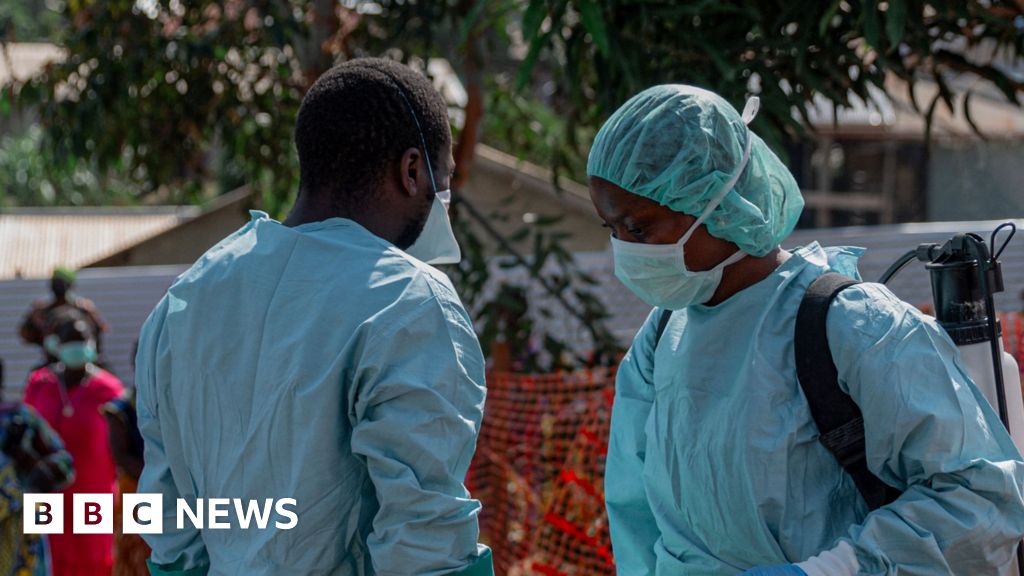
Kenya's Ministry of Health has activated four laboratories capable of testing for Ebola, according to reporting by The Star Kenya on 27 May 2026. The diagnostic network was established following confirmed Ebola outbreaks in neighboring countries — though the specific nations affected are not named in the available sources. Separately on the same day, the Standard Kenya reported that Nairobi has confirmed it is in talks with the United States to deepen Ebola preparedness cooperation. Health Cabinet Secretary Aden Duale said any international support proposal will be evaluated against Kenyan law and the country's own public health regulations. The dual announcement places Kenya at the center of a regional health-security question with geopolitical dimensions: who sets the terms when an epidemic crosses borders?
The immediate trigger is epidemiological. Ebola — a virus that kills roughly half of those it infects in its worst strains — spreads through bodily fluids and thrives in conditions where border controls are porous and diagnostic capacity is uneven. When outbreaks occur in the Democratic Republic of Congo, Uganda, or South Sudan, the disease can reach Kenya within days given the volume of cross-border movement in the Horn of Africa. The four laboratories give Kenyan clinicians the ability to confirm or rule out cases locally, rather than sending samples to external reference centres — a speed advantage that public health officials regard as critical in the first seventy-two hours of a suspected infection. The sources do not specify how many patients are currently under investigation or which border points are being prioritised.
Nairobi's Sovereignty Signal
What makes Duale's public statement significant is the framing. He was not simply announcing a partnership. He was drawing a line: international cooperation proposals will be "guided by Kenyan laws and public health regulations." That is a diplomatic posture, not just a technical one. It signals that Kenya is not approaching the US as a client seeking assistance. It is approaching the US as a counterpart with its own regulatory architecture and its own decision-making authority over how health interventions are implemented on Kenyan soil. For a US government that has made strengthened African health partnerships a foreign-policy priority — particularly after the Covid-19 pandemic exposed the fragility of supply chains and surveillance systems that relied on Western hub-and-spoke models — Kenya's terms matter. The US has sought deeper footholds in East African disease surveillance since at least 2024, when Washington repositioned its Africa health engagement strategy around bilateral partnerships rather than multilateral conduits. Kenya is one of the most capable and strategically located nodes in that architecture. The question is whether Nairobi will shape the relationship or simply accommodate it.
The Architecture of African Health Sovereignty
Kenya's insistence on its own legal framework reflects a pattern that has become more pronounced across Africa's health sector over the past five years. Countries that built credible Covid-19 responses — Senegal, South Africa, Rwanda, Ethiopia — did so partly by asserting control over what they accepted from external partners. The emergency-only model of global health, in which Western governments and multilateral institutions swoop in during a crisis and then recede, has been repeatedly criticised by African public health advocates as destabilising for domestic systems that need consistent investment rather than cyclical surges of foreign attention. Kenya's position is consistent with that critique. By setting the condition that cooperation must align with Kenyan law, Duale is implicitly arguing that the country's own regulatory framework is the operative instrument — not an obstacle to be worked around in favour of partner-country protocols. The health infrastructure Kenya is deploying, centred on the Kenya Medical Research Institute and a network of county-level laboratories, has been built precisely to make that kind of assertion credible. The labs are not new infrastructure; they are the existing laboratory network, upgraded and placed on alert. That continuity matters.
What Remains Uncertain
The sources provide no detail on which neighboring countries have confirmed Ebola outbreaks, the specific nature of the US cooperation proposal under discussion, or the existing protocols governing how Kenya manages confirmed cases. The Standard Kenya report indicates that talks are ongoing but does not specify a timeline or a menu of options on the table. The outbreak context — which strain of Ebola is circulating, what the case fatality rate looks like, whether there is an active vaccine supply within Kenya's borders — is absent from the available reporting. Those details will determine whether the four-laboratory activation is a proportionate precaution or the opening move in a larger outbreak response. What is clear is the political posture. Kenya has communicated that it will cooperate, but on its terms. That framing will define how the partnership develops if a confirmed case is identified on Kenyan soil. The risk for Washington is that any partnership perceived as externally imposed — even one motivated by genuine public health concern — will face resistance from a government that has signalled, publicly and unambiguously, that sovereignty is not negotiable.
This article was reported against wire reports from two Kenyan national outlets. Neither source provided details on which neighboring countries have active Ebola cases, the specific cooperation mechanisms under discussion, or Kenya's existing outbreak response protocols. Those gaps limit the analysis and will be updated as more information becomes available.
Wire provenance
This editorial synthesis draws on the following public wire/social posts:
- https://t.me/TheStarKenya/8941
- https://t.me/StandardKenya/11203