Pope Leo XIV's Ferrari Moment and the Electric Pivot Nobody's Ready For
Pope Leo XIV's spin in Ferrari's first electric car should quiet the skeptics. It won't — and that's the problem.
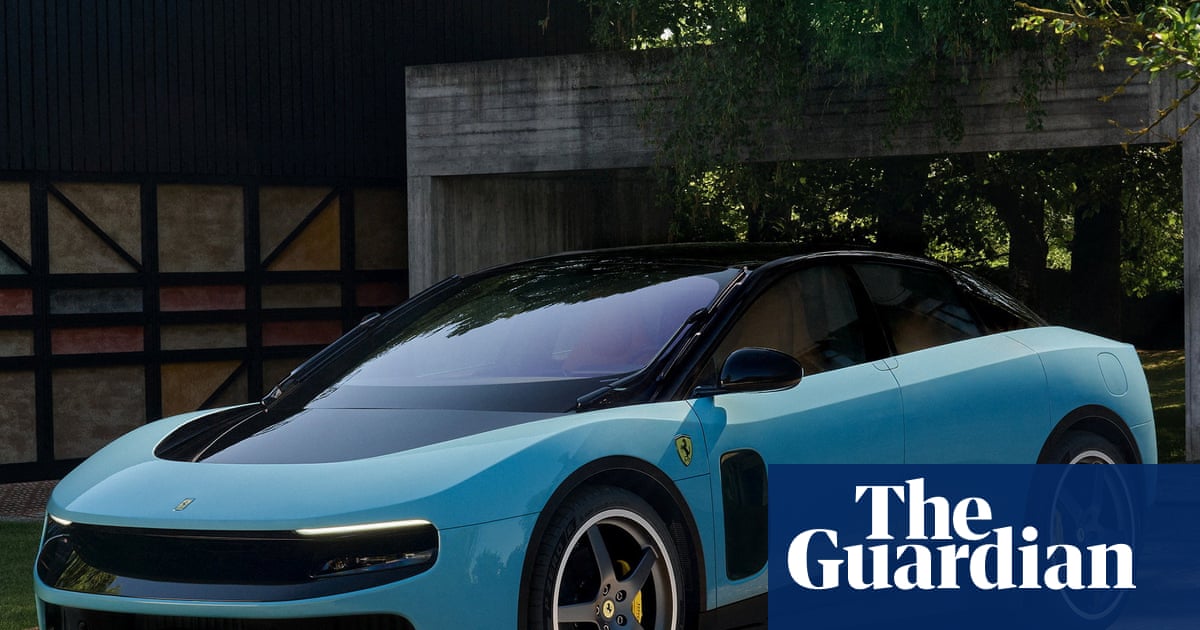
When Pope Leo XIV climbed into Ferrari's new electric Luce on Tuesday and rolled it briefly out of the Maranello gates, the Vatican did something for the brand that its Stuttgart rivals can't buy: imprimatur from an institution older than the combustion engine.
That the Pope wanted to be seen in the car at all is remarkable. That Ferrari wanted him there is not — it is the logical endgame of a brand identity exercise three years in the making. The Luce, Ferrari's first production EV, was unveiled on 26 May 2026 to a reception that one assessment described as cold. The car does not look like a Ferrari. It does not sound like a Ferrari. It is, by any honest reading of the brand's century-long mythology, something adjacent to Ferrari — a halo product engineered to absorb the regulatory and reputational costs of electrification so that the combustion models can continue largely unmolested.
Pope Leo XIV's spin should have settled the question of whether the Luce signals a genuine reinvention or a strategic feint. It has not. What it has done is expose exactly how little consensus exists — inside Maranello and outside it — about what Ferrari is for in 2026.
The Problem With Being Blessed
There is a version of this story in which the papal cameo functions as an untouchable endorsement. Vatican cachet is among the last remaining cultural authorities that has not been fully monetised. When the Pope drives a car, that car arrives in the world carrying moral weight no press buy can manufacture.
The problem is timing. Ferrari announced the Luce into a market that has spent five years punishing aspirational brands for attempting exactly this maneuver. Bentley retreated from its all-EV target. Aston Martin shelved its electrification timeline twice. Rolls-Royce sells electric Spectre coupes to buyers who barely notice the absence of a V12. The luxury EV category exists, but it has no defining product — no car that makes the buyer feel that choosing electrons over hydrocarbons is itself an aspirational act.
Pope Leo XIV's gesture raises the question of whether any car can occupy that position. The Luce's cold reception suggests the market's answer is still no. The papal endorsement does not change the product's core proposition: a four-seat, heavy, expensive electric Ferrari that must answer for every kilometre it cannot soundtrack.
What the Vatican Actually Gets Out of This
It is worth being precise about what the Vatican receives in exchange for this image. Ferrari is, by the mathematics of Italian institutional patronage, a quasi-public asset. The Agnelli family foundation holds a blocking stake, and Italian governments have treated Maranello as strategic infrastructure for decades. The Vatican's stake in the relationship runs through its historic investment portfolio, which holds interests in multiple European industrial names managed through the Secretariat of State.
Pope Leo XIV is not a customer. He is a symbol, deployed to validate a product category the brand itself has spent decades ambivalent about. That ambivalence is the real story. Ferrari priced the Luce at a point that places it outside the EV market's competitive mainstream, positioning it instead as a collectors' item — a bet that the small number of buyers wealthy enough not to notice the difference between a LaFerrari's sonics and an electric motor's whine will keep the code names coming regardless of propulsion type.
The gamble is legible: fragment the EV transition across a low-volume halo car, preserve the combustion margins on the front-engine GTs and mid-engine sports cars that customers actually want, and let the collectors absorb whatever brand risk attaches to the experiment. Pope Leo XIV is not a witness to this strategy. He is its camouflage.
The Structural Trap Ferrari Is Walking Into
The auto industry's electrification path has a consistent structural feature: the further upmarket you go, the more the technology serves as a constraint rather than a feature. At the mass-market end, EVs solve real problems — running costs, urban access, tax differentials. At the Ferrari end of the scale, none of those problems are problems. The owner who can afford a seven-figure car does not need to care about fuel efficiency or emissions compliance.
What Ferrari's customers do care about, and what the Luce cannot fully deliver, is the ritual of the drive — the aural signature, the mechanical theatre, the sense that the car is working with the driver rather than merely carrying them. The Pope can bless the car out of the gates. He cannot give it an engine note that justifies its price.
The structural trap is this: Ferrari built its brand on the earned advantage of the combustion era, and that advantage is now a liability. Every kilometre the Luce covers quietly reinforces the premise that the car did not need to be electric. Every performance figure that makes the case for electrification also makes the case that Ferrari's engineers could have extracted the same from a turbocharged V8.
Pope Leo XIV's drive was genuine curiosity. The cold reception was rational assessment. Ferrari has received the blessing it sought; it has not yet earned the market it needs.