Trump Confuses Iran and Venezuela in Cabinet Meeting, Iranian State Media Reports
Iranian state media reported on 27 May that President Trump conflated Iran and Venezuela during remarks at a cabinet meeting, an apparent verbal slip that drew sharp editorialised commentary from Tehran-aligned outlets.
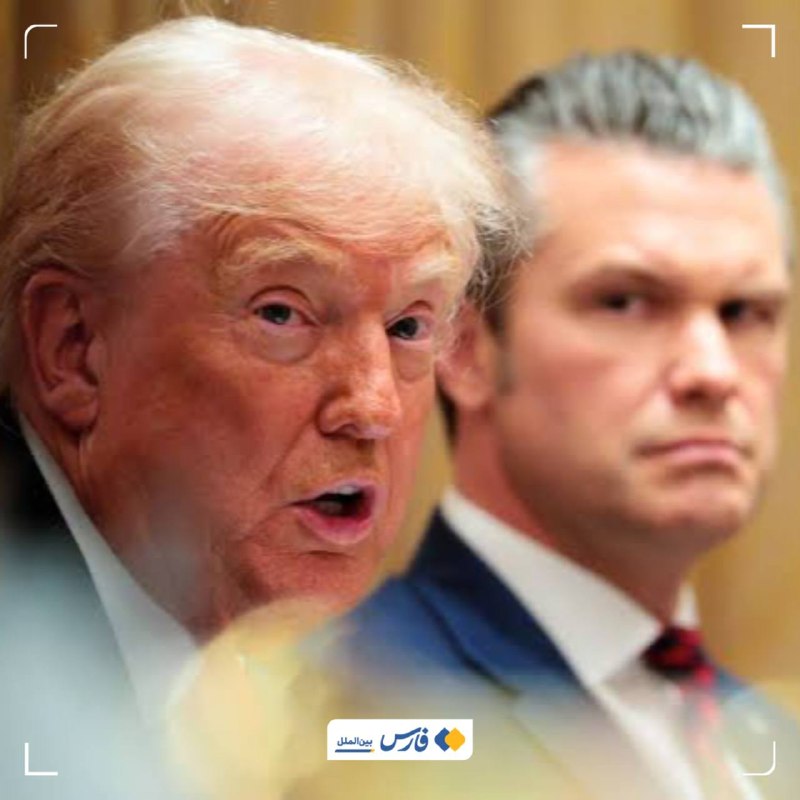
Iranian state media reported on 27 May 2026 that President Donald Trump conflated Iran and Venezuela during a cabinet meeting, an apparent verbal slip that drew sharp editorialised commentary from Tehran-aligned outlets. The Telegram channels Tasnim News in English and Jahan Tasnim, both linked to Iranian state media, reported the remark without providing audio or transcript. No independent verification from Western wire services was immediately available at time of publication.
The incident, as framed by the Iranian outlets, would place Venezuela—ruled by President Nicolás Maduro and subject to a web of US sanctions—alongside Iran, the Islamic Republic that the Trump administration has maintained under sweeping economic pressure throughout its second term. Both countries have been targets of US maximum-pressure strategies, though on distinct legal and diplomatic tracks. Whether the reported conflation reflects a genuine verbal error or a compressed rhetorical shorthand for "adversarial oil producers" remains unclear from the sourcing available.
A Pattern of Loose Verbal Anchoring
Leaders across administrations have occasionally conflated geopolitical rivals in off-script moments. When the targets share a profile—sanctioned, state-controlled energy sectors, adversarial posture toward Washington—the cognitive shortcut is linguistically convenient. Whether this constitutes a meaningful diplomatic signal or a routine verbal stumble depends entirely on whether the remark reveals operational confusion or merely rhetorical imprecision.
The Iranian framing, which characterises the moment as a gaffe revealing broader incoherence in Washington's posture, is structurally predictable. State-aligned media outlets in adversarial relationships with Washington routinely amplify such moments for domestic political consumption. The editorial treatment here—leading with a pointed label applied to the United States—reflects the diplomatic register of the source, not an independent factual determination.
The substance of what Trump reportedly said, and in what context, remains unverifiable from the materials currently available. The Telegram channels do not publish transcripts, audio recordings, or cited officials willing to confirm the exchange on record.
The Iranian Framing Machine
Tasnim, an Iranian state-linked news agency, has a consistent track record of framing US political figures in confrontational terms. The characterisation of Trump as "the leader of the American terrorist state" reflects an institutional voice, not a neutral description. That framing does not make the underlying factual claim—that Trump confused the two countries—automatically false, but it does condition how that claim is presented.
International reporting on US-Iranian diplomatic friction frequently encounters this asymmetry: Western outlets apply their own editorial framing, and Iranian state media applies theirs. A reader relying solely on Tasnim's English-language service would absorb both the alleged fact and its interpretative wrapper simultaneously. A reader relying on mainstream US coverage would likely encounter neither, depending on whether the remark is confirmed and deemed newsworthy.
That neither Reuters, the Associated Press, nor major US domestic outlets had reported the remark as of publication reflects not a blackout but a sourcing gap: no independent confirmation existed in the public record at the time these Telegram channels filed their reports.
Venezuela and Iran as Diplomatic Targets
Both countries sit inside distinct but overlapping US sanction architectures. Venezuela's Maduro government has faced US Treasury designations since 2015, with escalating measures under both Republican and Democratic administrations. Iran's oil exports, banking sector, and Revolutionary Guard have been under comprehensive restrictions, reinforced by the withdrawal from the Joint Comprehensive Plan of Action in 2018 and the reimposition of sectoral sanctions.
The conflation, if genuine, would conflate two dossiers that differ substantially in legal basis, multilateral alignment, and negotiating posture. Venezuela's crisis is primarily framed as a democracy and human rights problem; Iran's as a nuclear non-proliferation and regional security problem. A policymaker who cannot distinguish between them in internal discussions would represent a genuine operational gap—not a gaffe but a category error.
Alternatively, if the remark was a shorthand for "the two countries giving us the most trouble on oil and geopolitics," it would reflect a compression common in transactional diplomacy rather than confusion.
What Remains Unverified
This publication is unable to independently confirm the cabinet meeting remark. The sole publicly available sourcing comes from two Iranian state-linked Telegram channels whose editorial framing colours every sentence they produce. No audio, transcript, or named administration official has corroborated the account.
Readers should treat the specific claim—that Trump confused Iran and Venezuela in a cabinet meeting on 27 May 2026—as reported by a single source family with a documented adversarial interest in the characterisation. The broader context of US maximum-pressure policy toward both countries is factual. The specific incident requires independent confirmation before it can be treated as established record.
This publication sourced Iranian state-linked Telegram channels as the only available input on this incident. The editorial framing applied by those outlets—particularly the "terrorist state" characterisation—has been identified and separated from the underlying factual claim throughout this article.
Wire provenance
This editorial synthesis draws on the following public wire/social posts:
- https://t.me/tasnimnews_en/37482
- https://t.me/JahanTasnim/24971