Iran Demands Unconditional Release of Frozen Assets in Moscow Talks with Russia
Tehran's top security envoy pressed Russia's foreign ministry in Moscow on May 28 for the unconditional release of Iranian sovereign assets, the latest salvo in a years-long campaign to extract assets frozen under Western sanctions — and a signal that Iran intends to formalise its position ahead of any renewed nuclear talks with Washington.
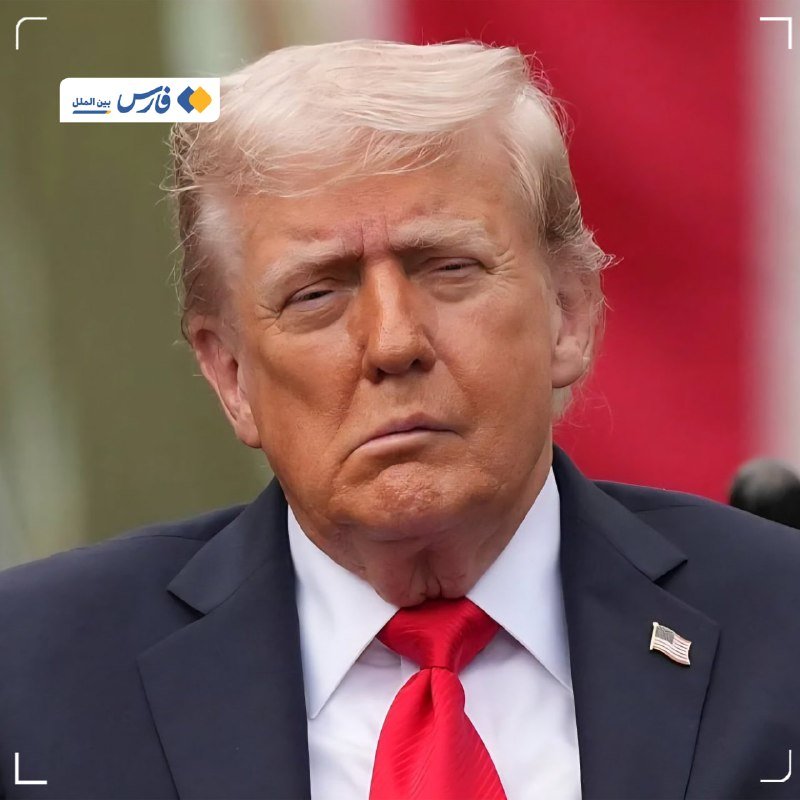
Ali Bagheri, Deputy Secretary of the Supreme National Security Council of the Islamic Republic of Iran, met Georgy Borysenko, Russia's Deputy Foreign Minister, in Moscow on May 28, 2026. The meeting, confirmed by three Iranian state news agencies operating from within the official press apparatus, produced a pointed statement from the Iranian side: Tehran expects the unconditional release of all Iranian sovereign assets currently frozen under Western sanctions regimes. The demand marks no diplomatic concession — Bagheri made clear that language conditioning Tehran's access to its own funds on behavioural benchmarks would not be entertained.
The framing matters. Iran is not presenting this as a negotiating position to be bargained down. It is asserting a right. That distinction — between a concession Tehran might trade for something and a principle it will not bend on — reflects the hardening of Iran's posture as nuclear negotiations with the United States appear to be entering a new, uncertain phase. Whether Washington reads that signal as pressure or provocation will shape the next several months of diplomacy.
What Tehran Is Claiming
Bagheri's statement, as reported by Tasnim News and confirmed across Iranian state outlets including Mehr News and JahanTasnim, restates a position Iran has held since the reimposition of sweeping sanctions following the United States' withdrawal from the Joint Comprehensive Plan of Action in 2018. Iranian officials estimate that billions of dollars in oil revenues — accumulated before the reimposition of restrictions — remain inaccessible in accounts held in jurisdictions aligned with Western sanctions architecture. The specific figures are contested; Iranian public statements have cited ranges, but independent verification is complicated by the opacity of the accounts in question and the political incentives on all sides to inflate or minimise the sums depending on the audience.
What is not contested is that these assets exist, that they are frozen, and that Iran regards their release as non-negotiable. Bagheri's formulation — "unconditionally" — forecloses the diplomatic off-ramp that Western capitals have preferred: linking asset thaw to concessions on nuclear enrichment, missile programme activity, or regional behaviour. The Russian meeting, in that context, reads less as a bilateral sidebar and more as a signal to a wider audience that Tehran has allies in its insistence on unconditional treatment.
Moscow's Calculus
Russia's interest in amplifying Iran's position is not altruistic. Moscow has its own substantial grievances with the architecture of Western financial sanctions, and has spent the years since 2022 systematically working to build alternative settlement mechanisms with trading partners — mechanisms that exclude dollar-denominated clearing and reduce exposure to secondary sanctions risk. The meeting between Bagheri and Borysenko took place within a context of deepening Russo-Iranian cooperation on multiple fronts: trade arrangements denominated in non-dollar currencies, diplomatic coordination in multilateral forums where both states face Western pressure, and practical cooperation in domains less publicly visible.
That Russia would host Bagheri and provide a platform for a hardline Iranian demand is consistent with its broader strategy of positioning itself as the lead actor in an emerging coalition of states with grievances against the dollar-based financial order. The meeting itself is evidence of that coalition's operational character — not merely rhetorical solidarity but working-level diplomatic engagement on specific grievances. Whether Borysenko offered explicit support for Iran's asset demand is not specified in the reporting; Russian state media had not published a full readout of the meeting by the time of publication.
The Structural Context
The demand for unconditional asset release sits inside a much larger argument about the weaponisation of the dollar. When the United States and its allies froze Russian sovereign reserves in 2022 — roughly $300 billion in assets held in Western depositories — it sent a message to every state operating outside the Western orbit: the dollar's role as the world's reserve currency means that assets denominated in dollars or held in dollar-system correspondent banks are ultimately subject to the political decisions of Washington and its allies. That message has not been lost on Tehran. Iran has spent years positioning its trade relationships to minimise dollar exposure, but the frozen revenues represent a legacy asset base that cannot be redirected through bilateral currency swaps alone.
The structural implication is straightforward: every state that believes its sovereign assets held in Western financial infrastructure are vulnerable to political decisions it cannot control has an incentive to accelerate dedollarisation and to build alternative financial architectures with partners who share that vulnerability. Russia and Iran are doing exactly that. The meeting in Moscow on May 28 is a data point in that longer arc — not a crisis, but a confirmation that the dedollarisation agenda has moved from the level of official communiqués to the level of specific, operational diplomatic demands.
What Comes Next
The immediate question is whether Bagheri's statement is a negotiating opening — a position Iran expects to trade down from — or a genuine red line. The language chosen ("unconditionally") suggests the latter, but diplomatic history is full of positions stated as absolute that became negotiable under sufficient pressure. What has changed is the audience for that pressure. The Trump administration's approach to Iran negotiations has been characterised by maximum-pressure tactics — the very approach that produced years of frozen status quo. If Washington reads Bagheri's statement as a provocation rather than an opening, the path back to negotiations becomes longer. If it reads it as a legitimate statement of principle from a state that has concluded it will not be charmed into concessions, the calculus changes.
For Iran, the stakes are domestic as well as diplomatic. Economic pressure from sanctions has been a persistent source of grievance inside Iran; the ability to point to frozen assets as a concrete injustice — rather than merely the consequences of sanctions — serves a useful political function. The demand for unconditional release is, in that sense, both a diplomatic position and a domestic signal: Tehran is not backing down, and it has friends in Moscow who will say so publicly.
This article is based on reporting from Iranian state news agencies Tasnim News, JahanTasnim, and Mehr News, which confirmed the meeting between Bagheri and Borysenko and Bagheri's public statement on May 28, 2026.
Wire provenance
This editorial synthesis draws on the following public wire/social posts:
- https://t.me/tasnimnews_en/124847
- https://t.me/JahanTasnim/98632
- https://t.me/mehrnews/215847
- https://t.me/tasnimnews_en/124843
- https://t.me/JahanTasnim/98628