US Strikes Bandar Abbas Again as Diplomatic Window Remains Open
The Pentagon has struck Iran's key port facility for the second time this month, yet American officials insist talks with Tehran remain on track — a pattern that reveals more about the architecture of pressure than any genuine withdrawal.
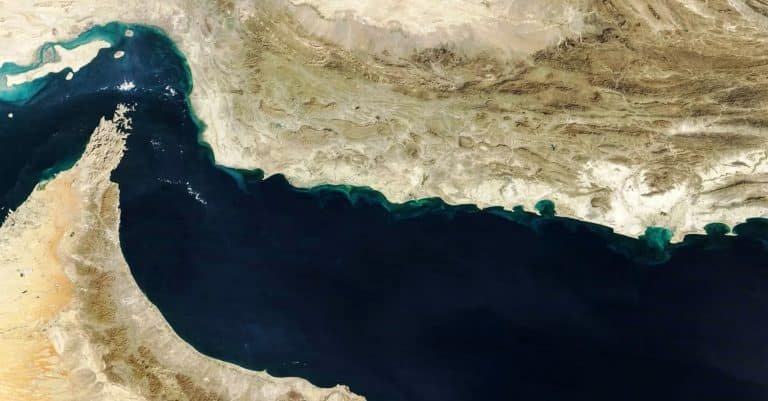
The United States struck Iran's Bandar Abbas port facility on 28 May 2026, according to Al Jazeera's breaking news reporting — the second direct strike on the strategic Hormuz coastline this month. The attack followed weeks of elevated tension in the Persian Gulf, where the Strait of Hormuz carries roughly one-fifth of the world's oil trade. Yet within hours of the strike, an American official speaking to Al Jazeera stated that the attacks do not threaten ongoing negotiations with Iran, and that diplomatic contact is continuing in an attempt to reach an agreement.
The juxtaposition is deliberate. A major military operation paired with an assurance that talks are unaffected — this is not the rhythm of escalation heading toward rupture. It is the rhythm of calibrated pressure, designed to inflict cost without closing the door.
What Bandar Abbas Represents
Bandar Abbas sits on Iran's southern coast at the mouth of the Persian Gulf, and its port is the primary hub for the Islamic Republic's maritime trade and energy exports. The facility handles both civilian commerce and the naval operations of the Islamic Revolutionary Guard Corps, making it a target of dual utility: symbolically resonant and operationally meaningful. Its destruction — even partial — degrades Iran's ability to move cargo, refuel vessels, and project power in the waters through which tankers and bulk carriers transit daily.
The strategic importance of the strait itself is not in dispute. Approximately 21 million barrels of oil pass through Hormuz each day, according to standard industry estimates. Any disruption sends immediate tremors through global energy markets, which is precisely why previous Iranian threats to close the waterway have produced outsized Western responses. Targeting the port infrastructure — rather than the shipping lanes directly — allows the US to signal capability without triggering the economic disruption that would follow a full blockade scenario.
The Diplomatic Signal That Accompanies the Strike
What makes this episode analytically distinct is not the strike itself but the immediate, high-level disavowal of its diplomatic significance. American officials did not wait for markets to interpret the attack before clarifying its intended scope. The message to Tehran: we hit your infrastructure, but we are still at the table.
This is a known playbook. The US has used the phrase "maximum pressure" not as a prelude to invasion but as a coercive lever designed to force renegotiation of existing agreements — in this case, the remnants of the 2015 nuclear deal and the sanctions regime that followed. Military action serves as punctuation, not conclusion. The goal is to demonstrate willingness to escalate without actually crossing the threshold that would make diplomacy impossible.
Iran's position remains unchanged from recent months: it will not negotiate under direct military threat, but it has also not walked away from back-channel discussions. Tehran's calculus is shaped by the same pressures driving the American side — an economy that has learned to survive under sanctions but not to thrive, and an administration in Washington that needs visible leverage without the cost of a ground campaign.
The Hormuz Calculus and Regional Allies
The timing matters for another reason: Israel's ongoing campaign in Gaza and Lebanon has intensified concerns about a broader regional conflict. US strikes in Iran, even limited ones, raise the risk that Iran-backed groups in Iraq, Syria, or Yemen could respond in kind. The American official's statement that negotiations are continuing serves as a buffer against that escalation, reassuring regional partners — Saudi Arabia, the UAE, and Qatar — that the US is not engineering a wider confrontation.
For Gulf states, the Strait of Hormuz is existential infrastructure. Their own exports flow through waters that Iran has repeatedly threatened to close. A US strike that degrades Iranian naval capacity near the strait is, in the short term, a strategic benefit for Gulf Arab states — even if those same states would prefer de-escalation to sustained military pressure. The US has historically used this alignment to keep Gulf partners invested in the broader American security architecture, even as tensions with Iran continue to climb.
What Remains Unresolved
The sources do not specify the extent of damage at Bandar Abbas, the number of casualties, or whether the strike was designed to hit specific military infrastructure versus port logistics. US Central Command had not issued a public statement at time of publication. Iran's Foreign Ministry has not commented on the strike through official channels covered in the available reporting, though Iranian state media would likely carry a response in the hours following the attack.
The central question — whether this strike represents a shift toward a more aggressive posture or is a continuation of the pressure-then-talk pattern — cannot be answered from the current evidence. What is clear is that the American official's immediate outreach to Al Jazeera to frame the strike as non-threatening to negotiations reflects a deliberate communication strategy, not an accidental admission. The US wants Tehran to hear two things simultaneously: we can hurt you, and we are still willing to deal. Whether that combination produces movement at the negotiating table or simply normalises the use of limited force as a background condition of diplomacy is the unresolved tension this episode exposes.
This publication's approach to the Strait of Hormuz story has differed from much of the wire coverage by foregrounding the diplomatic continuity that accompanies the military action — a pattern that, in our view, says as much about American strategy as the strike itself.
Wire provenance
This editorial synthesis draws on the following public wire/social posts:
- https://t.me/wfwitness/12481
- https://t.me/JahanTasnim/8923
- https://t.me/wfwitness/12479