The Axios Framework and the Art of the Ambiguous Iran Deal
Axios reporting on a US-Iran agreement framework—ceasefire in Lebanon, verbal nuclear commitments—arrives laden with diplomatic inexactitude that benefits all parties and leaves observers guessing.
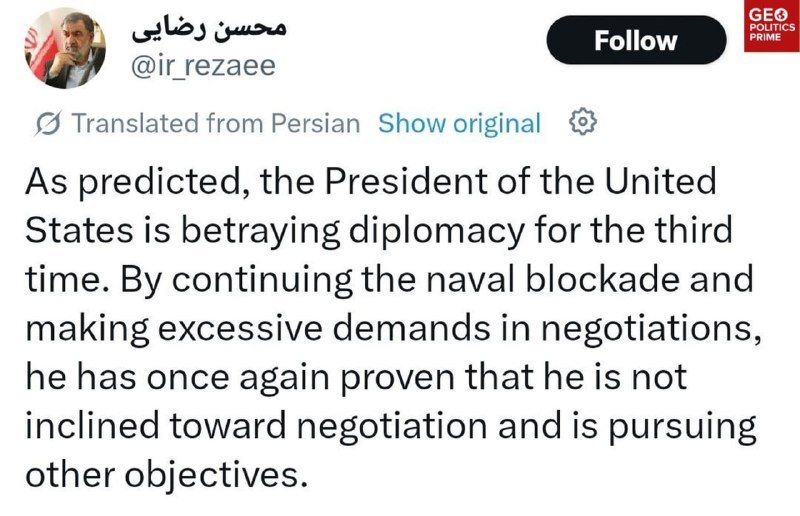
What Axios reported on 29 May 2026 should surprise no one who has watched US-Iran negotiations cycle through crisis and choreography for a decade. The scoop—that an emerging agreement includes a ceasefire provision covering Lebanon and rests on what American officials described as Iranian "verbal commitments" regarding nuclear materials—tells us less about a deal than about the negotiating theater both governments need to perform.
The specifics matter, and they are deliberately scarce. Axios, citing unnamed American officials, claimed on 29 May that the agreement framework would include a ceasefire in Lebanon. Separately, Axios reported that same day that American officials say they have received "verbal commitments" from the Iranians regarding nuclear materials. Iranian state-adjacent outlets—Al Alam and Fars News—relayed the Axios reporting, as did Tasnim News, an outlet with close ties to Iran's Islamic Revolutionary Guard Corps. The symmetry of the sourcing tells its own story: Washington briefed a preferred journalist; Tehran's media apparatus amplified the readout. Neither side released a document. Both sides released a narrative.
The Ceasefire in Lebanon: Who Benefits From the Framing
A ceasefire in Lebanon would, on its face, serve Israeli security interests—removing the persistent threat from Hezbollah's northern front. It would also, on its face, serve Iranian interests—by protecting a proxy that represents Tehran's most consequential regional leverage. The question is not whether a ceasefire would benefit both parties. It is whose diplomatic fingerprints appear on the arrangement and what that implies for the distribution of gains.
Israeli sources have not confirmed the Axios reporting. American sources remain anonymous. The language of a "ceasefire" rather than a "cessation of hostilities agreement" or a formal armistice is itself a datum—diplomats choose words with forensic precision, and "ceasefire" applied to an ongoing low-intensity conflict carries deniable edges for all parties. If the arrangement collapses, neither side signed a treaty. If it holds, both sides can claim vindication.
For the United States, the optics matter domestically. The Trump administration has invested significant political capital in positioning itself as the administration that fixed the Iran nuclear problem. A framework agreement—even one resting on verbal commitments—allows Washington to claim diplomatic progress ahead of any midterm calculation. For Tehran, the same framework allows the Iranian government to tell its domestic audience that American pressure produced concessions without producing capitulation.
The Nuclear Materials Clause: Words Without Weight
The Axios reporting on nuclear materials is the more technically consequential element, and the thinner on specifics. "Verbal commitments" from Iranian officials—reported by Axios on 29 May, citing American officials—is diplomatic language for an arrangement that is not yet binding. Written commitments, witnessed by the International Atomic Energy Agency, verified through snap inspection protocols, and embedded in a Security Council resolution—that is a deal. Verbal commitments to American interlocutors are a statement of intent that either party can walk back without legal consequence.
Iran's nuclear programme has advanced considerably since the United States withdrew from the Joint Comprehensive Plan of Action in 2018. Uranium enrichment at 60 percent purity—the level most recently reported by the IAEA—is technically indistinguishable from weapons-grade material without a further enrichment step. Any agreement that does not address the existing stockpile or the current enrichment architecture is an agreement in name only. The Axios framing does not specify whether the verbal commitments include irreversible steps—shipment of stockpiles, disconnection of advanced centrifuges, or any of the physical constraints that a genuine non-proliferation arrangement would require.
This matters beyond the bilateral dynamic. A US-Iran agreement thatrelaxes pressure without verifiably dismantling the nuclear infrastructure reshapes the strategic calculus for Saudi Arabia, the UAE, Egypt, and Turkey—all of whom are watching whether the nuclear non-proliferation architecture that has governed the Middle East for decades retains any binding force.
The Structural Logic: Both Sides Need the Theater
There is a structural explanation for why the Axios framework takes the shape it does. Neither Washington nor Tehran has the domestic or geopolitical capital for a visible concession. The Trump administration cannot be seen accepting Iranian terms without demonstrated Iranian concessions. The Iranian government cannot be seen capitulating to American pressure without demonstrated American concessions. A ceasefire in Lebanon—framed as a regional de-escalation rather than an Iranian gift to Washington—provides that mutual cover. Verbal commitments on nuclear materials—framed as progress without specifying reversibility—provide the diplomatic headline without the operational detail that would invite scrutiny.
This is not to say the negotiations are fake. Both governments face genuine pressures that make some form of accommodation rational. The Iranian economy remains under significant sanctions pressure; the Rouhani-era political establishment has an interest in demonstrating that diplomacy produces results; the Trump administration's foreign policy brand is built on dealmaking rather than perpetual conflict. A framework that gives each side something to claim—ceasefire language, nuclear acknowledgment, American diplomatic engagement—is structurally coherent even if it lacks the verifiable architecture of a genuine treaty.
What Remains Uncertain
Several questions the Axios reporting does not answer. First: what verification mechanisms would apply to any nuclear materials provision? Without IAEA on-site access to Fordow, Natanz, and any undeclared sites, verbal commitments are not commitments. Second: has the Israeli government been consulted and, if so, what did it extract in return for accepting the ceasefire framework? Israeli security officials have historically been reluctant to endorse arrangements that leave Hezbollah's military infrastructure intact. Third: what is the timeline? A framework announced in May 2026 could mean anything from an imminent signing ceremony to a diplomatic holding pattern that extends through the US midterm season.
The sources Monexus reviewed do not specify any of these details. Axios cites American officials; those officials are unnamed. Iranian state media amplified the reporting but offered no independent confirmation of the specific terms. The picture is of two governments signaling through the press rather than speaking through diplomatic channels—a pattern so familiar in high-stakes negotiations that it has become its own genre of information operation.
The Axios framework is real in the sense that negotiations are real. Whether it constitutes a deal depends entirely on what happens next—in Beirut, in Tehran, in Washington, and in the IAEA headquarters in Vienna. Until the verbal becomes written and the written becomes verified, the only honest summary of where things stand is the one the sources themselves provide: unnamed officials, unspecified terms, and a bilateral dance that both governments have strong incentives to keep performing.
Wire provenance
This editorial synthesis draws on the following public wire/social posts:
- https://t.me/FarsNewsInt/78941
- https://t.me/FarsNewsInt/78938
- https://t.me/alalamarabic/45612
- https://t.me/JahanTasnim/23401