Iran's Cultural Council Stands Firm on University Entrance Exam Reforms
A senior official on Iran's Supreme Council of the Cultural Revolution confirmed on 29 May 2026 that changes to how academic GPA factors into national university entrance examinations will not be reversed, a decision that affects millions of Iranian students competing for limited university places each year.
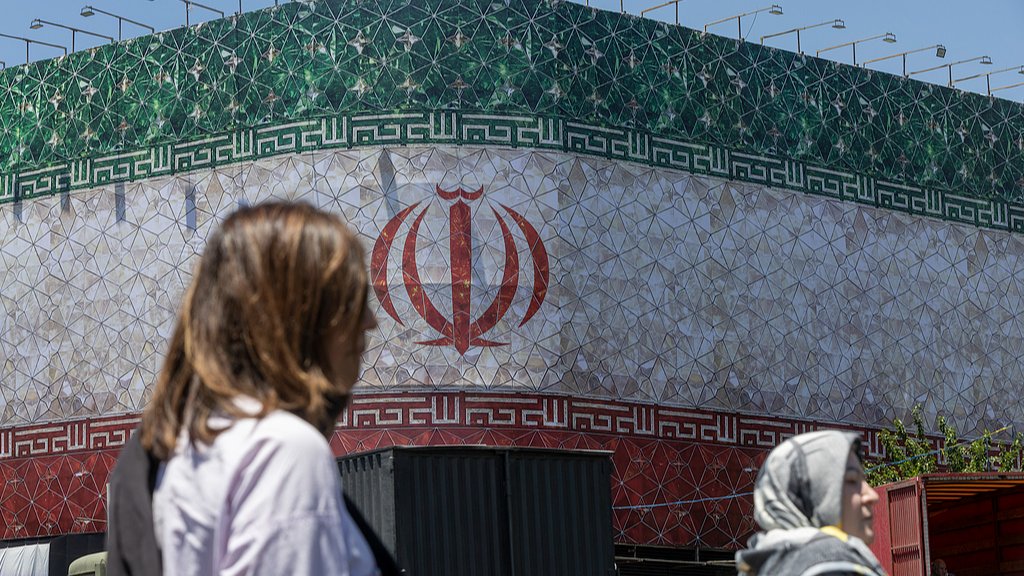
Iran's Supreme Council of the Cultural Revolution will not alter its stance on how students' Grade Point Averages factor into the national university entrance examination, according to a statement issued on 29 May 2026. Aamili, a member of the council, confirmed that the existing framework governing the final weighting of academic performance in the Konkoor—the standardised test that determines access to Iranian public universities—remains unchanged.
The decision locks in a policy that has generated sustained debate among Iranian families, educators, and opposition groups. Under the current arrangement, a student's final GPA from secondary education carries a formally approved role in determining entrance examination rankings alongside raw test scores. For a country where competition for university places is intense—with acceptance rates at top institutions often in the single digits—the stakes are significant. Students who perform well across all three years of pre-university study gain a measurable structural advantage that the examination itself alone cannot overcome.
The Weight of Academic Record
Iran's university admission system has undergone periodic revision since the Cultural Revolution restructured higher education in the early 1980s. The current model, which integrates GPA into the Konkoor calculation, was adopted to reduce the pressure of a single high-stakes examination and to reward consistent academic performance over a student's full pre-university career. Proponents argue this produces a more holistic assessment of a candidate's capabilities.
Critics, however, contend that the weighting disadvantages students from schools with fewer resources, where grade inflation and inconsistent marking standards can distort the metric. Rural and lower-income urban students, who are more likely to attend under-resourced schools, face structural barriers that the GPA component may amplify rather than correct. The council's refusal to revisit the formula suggests that these equity concerns have been weighed and found insufficient to warrant a reversal.
The Cultural Revolution's council is one of several bodies with jurisdiction over educational standards in Iran, operating alongside the Ministry of Science, Research and Technology and the Ministry of Education. Its decisions carry particular weight on matters touching ideological content in curricula and the broader orientation of higher learning—an overlap that means the GPA debate sits within a wider conversation about what the Iranian education system is designed to produce.
A Decision With Limited Public Dissent
The announcement from Aamili did not indicate any pending review or consultation process. The statement, conveyed through Tasnim News on 29 May 2026, reads as a closing of the question rather than an opening of one. That finality is notable. In prior cycles, advocacy groups and student organisations have petitioned the council to revisit admission weighting. The absence of any qualifier in Aamili's statement suggests the council considers the matter settled.
What remains unclear from the available reporting is whether the decision reflects consensus within the council or simply the absence of sufficient political will to reopen a contentious file ahead of the next admission cycle. Iranian state media did not report dissent from other council members. Independent Iranian education analysts, operating largely outside state-linked outlets, have not provided commentary in the channels the wire services monitor.
What the Sources Do Not Tell Us
The announcement covers a single confirmed fact: the policy is unchanged. Several relevant questions cannot be answered from the current wire record. The sources do not specify what numerical weight the GPA currently carries in the overall Konkoor calculation, whether that weighting has been altered in recent years, or what triggered any prior review. The demographic data on which students benefit most from the GPA component—data that would allow an independent assessment of the equity argument—has not been reported in the channels now carrying Aamili's statement.
The wire also does not indicate whether other bodies within the Iranian education apparatus, including the Ministry of Science, have formally endorsed the council's position or whether any inter-agency disagreement has been suppressed from public reporting. Any such nuance would require access to internal deliberations that Iranian state media does not publish.
The Structural Stakes
University admission policy in Iran operates under a specific set of constraints. Public university education is heavily subsidised. Places at selective institutions—particularly in medicine, engineering, and the sciences—carry significant lifetime earnings premiums in a labour market where private sector alternatives are limited. The Konkoor, taken annually by hundreds of thousands of students, is the single most consequential examination in most Iranian families' experience.
When a policy variable like GPA weighting is fixed, it shapes preparation behaviour across an entire cohort. Students in the current pre-university cycle, who will sit the examination in approximately twelve months, will have received three years of signals about what the system rewards. A policy reversal at this point would arrive too late for those students to adjust. The council's decision, whatever its merits, removes uncertainty—for better or worse—from the preparation strategies of hundreds of thousands of families.
Whether the framework produces fairer outcomes than alternatives—including a return to pure examination-based selection or a more robust mechanism for correcting school-level grade disparities—remains a question the available record does not resolve. The sources indicate that the Cultural Revolution's council has made its determination. What lies ahead is the next admission cycle, and the students who will navigate it under the rules as they stand.
This article reflects reporting from Iranian state-linked sources on 29 May 2026. Monexus will continue to monitor Iranian education policy developments as they reach the wire.
Wire provenance
This editorial synthesis draws on the following public wire/social posts:
- https://t.me/tasnimnews_en/45089