Meta's Oversight Board Bet: Accountability Architecture or Legitimacy Theatre?
Meta's renewed $13 million commitment to its Oversight Board through 2028 raises a sharper question in an AI-saturated landscape: does corporate accountability architecture actually constrain corporate power, or does it merely stage accountability while the real decisions move elsewhere?
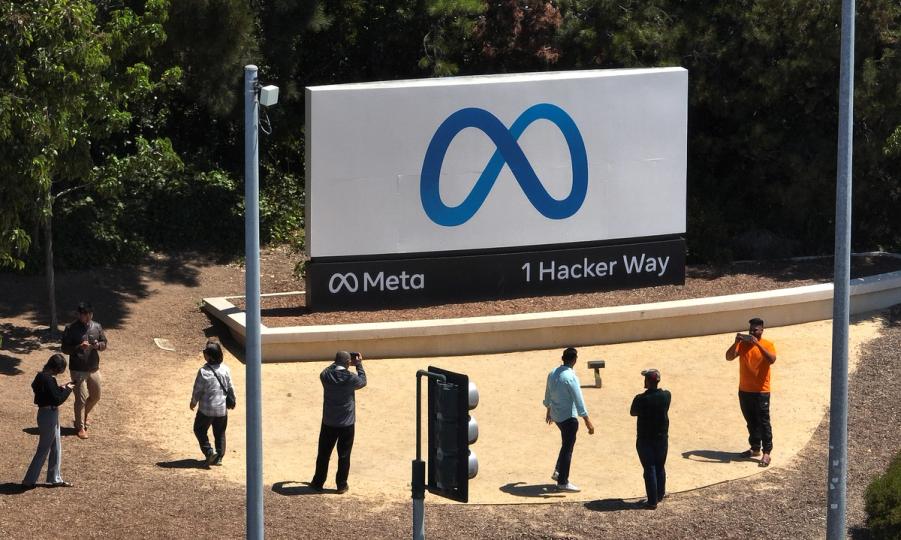
The Oversight Board has been live since late 2020, funded by a $130 million initial endowment and renewed annually since. On 29 May 2026, Meta announced an additional $13 million commitment through the end of 2028 — a modest continuation of an experiment that remains, by design, advisory rather than binding. Meta takes the Board's recommendations seriously, the company says; it does not have to act on them. That distinction is not a flaw in the system. It is the system.
Platform governance in the social media era has always been a negotiation between corporate interest and civic legitimacy. The Oversight Board — a quasi-judicial body of academics, former journalists, and legal experts who review specific content moderation decisions — represents Meta's most sustained attempt to externalise that negotiation. It is not a court. It has no statutory authority. Its decisions bind Meta only insofar as Meta chooses to be bound. Critics have called it a fig leaf; proponents call it the most sophisticated accountability mechanism any major platform has constructed. Both descriptions capture something true.
The question worth asking is what that architecture looks like in 2026, when the accountability stakes have migrated from content moderation to AI systems — and when the companies shaping those systems face essentially no equivalent structural constraint.
Anthropic, the AI developer behind the Claude family of models, is generating at least 35 percent more revenue than OpenAI, according to industry estimates cited by prediction market data published on 28 May 2026. The market assigns a 21 percent probability that Anthropic's valuation exceeds both Meta and OpenAI by year-end. These are early signals — prediction markets price uncertainty, not fact — but they point toward a landscape in which a small number of AI companies are accumulating influence over information ecosystems that dwarf anything social media ever achieved.
Meta, whatever its other failures, built an accountability mechanism with genuine external review. The Oversight Board has overturned Meta decisions. It has issued policy recommendations that Meta has implemented. It has the power to make its deliberations public and to cite specific harms in specific cases. That is not nothing. It is a structural commitment — imperfect, underfunded relative to Meta's revenue, and limited to content — but it exists.
No equivalent body reviews Anthropic's decisions about which model behaviours to enable, which outputs to restrict, or which deployments to approve. No external panel examines whether a frontier AI system's capabilities were assessed responsibly before public release. The AI companies, Anthropic included, govern themselves. They publish responsible-use guidelines. They commission external audits. They participate in industry consortiums. But none of this operates on the same structural basis as the Oversight Board: independent experts, binding authority over specific decisions, public reasoning, and a funding mechanism insulated from immediate corporate pressure.
The asymmetry is not accidental. AI companies arrived into a regulatory environment shaped by the failures of social media — they understood, better than the platforms did, that legitimacy requires visible accountability. But the accountability they chose to build is voluntary, internal, and largely unverifiable from outside. The AI labs publish transparency reports when it suits them; they decline to when it does not. The Oversight Board publishes every case decision. That difference matters.
This is not an argument that the Oversight Board is working. It is, at best, a proof of concept for corporate accountability architecture. It covers a fraction of Meta's decisions, operates with a budget that is rounding error relative to Meta's annual revenue, and remains structurally dependent on Meta's continued willingness to fund it. The $13 million commitment through 2028 is not a down payment on a genuinely independent institution. It is a maintenance budget for an advisory body that Meta can wind up whenever the reputational calculus changes.
But the alternative — no external review, no public reasoning, no independent panel with any jurisdiction over corporate decisions — is not a better option. It is simply the default state in which power governs itself.
The AI industry is at the point where social media was in roughly 2015: accumulating systemic influence faster than accountability mechanisms can develop, and largely operating on the assumption that voluntary self-governance is sufficient. Meta, whatever one thinks of its broader record, decided that assumption was insufficient for a platform at its scale. The Oversight Board is the result. It is imperfect. It may be more theatre than architecture. But it exists, and the AI companies building systems with potentially systemic consequences have produced nothing equivalent.
That gap is the story. Meta is funding a mechanism with serious limitations; Anthropic is building at a scale that might define the information environment for the next decade, and nobody is reviewing its decisions. The $13 million renewal is not a triumph of accountability. It is a reminder of how low the bar still is — and how far the AI industry remains from clearing it.
This publication has covered Meta's platform governance decisions and the Oversight Board's case history extensively. Coverage of Anthropic and the broader AI accountability landscape continues.
Wire provenance
This editorial synthesis draws on the following public wire/social posts:
- http://reut.rs/4vlaRXA