Lebanon Demands Ceasefire as Israel Strikes Spread Beyond Prior Targets
Lebanese Prime Minister Nawaf Salam called for an immediate ceasefire and described Israeli strikes as spreading beyond their stated targets, as negotiations with Israel remain the only viable diplomatic path despite their uncertain outcome.
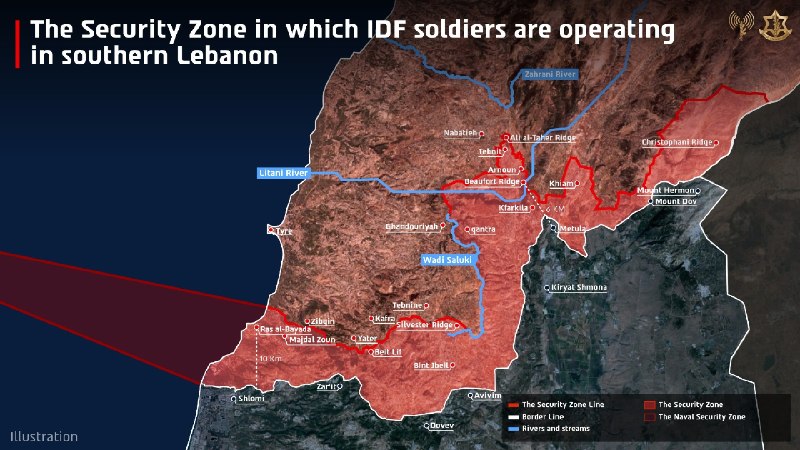
Lebanese Prime Minister Nawaf Salam said on 30 May 2026 that Israel was conducting a dangerous escalation in southern Lebanon, describing strikes as spreading beyond specific military targets and demanding an immediate ceasefire. Salam's remarks, broadcast from Beirut, represent the most direct condemnation from the Lebanese government since a November 2024 ceasefire agreement began fraying under renewed pressure. The prime minister insisted the decision for peace remained "a national Lebanese decision" that would not be shaped by external pressure, while simultaneously making clear that negotiating with Israel — despite its uncertain outcome — remained the least costly option available to his country.
The statements land at a moment when the November 2024 ceasefire, which ended 14 months of large-scale hostilities between Israel and Hezbollah, faces its most serious test since taking effect. Salam said Israel had violated Lebanon's territorial integrity with renewed strikes and movements that could not be characterised as responses to isolated incidents. "What Israel is doing is not only a violation of Lebanon's sovereignty but a signal that the current escalation is deliberate and uncontained," he said, according to a transcript published by the Telegram channel War Front Witness, which carries summaries of his public remarks.
The Ceasefire Architecture Under Pressure
Salam described what his government had observed in the preceding forty-eight hours as more than a localised expansion of hostilities. "What we have seen in the past two days is not merely an expansion of the scope — it is a qualitatively different pattern of strike activity that targets no longer correspond to any stated Israeli security rationale," he said. The Lebanese government position is that Israel has systematically exceeded the geographic and operational parameters of the November agreement, and that absent an immediate cessation, the entire diplomatic framework risks collapse.
The first item on any Lebanese negotiating agenda, Salam said, must be agreement on a ceasefire. His government has convened a formal delegation — the composition and mandate of which was not specified in the available sources — to pursue that objective through direct talks with Israel. The prime minister was unambiguous that dialogue with Israel carried no guarantee of success, but framed it as the rational choice given the alternatives. "I want to speak here with the utmost precision: negotiations are not a promise, they are a process, and the process is difficult," he said. "But it remains the least costly option available to Lebanon."
That framing is notable. It reflects a Lebanese government acutely aware of the asymmetry between its military capacity and Israel's, yet determined to assert that any resolution will carry Lebanese legitimacy rather than being imposed from outside. "The decision on sanctuary and peace remains a national Lebanese decision that does not belong to anyone else," Salam said — a formulation directed, at least in part, at regional actors with their own equities in Lebanon's trajectory.
Diplomatic Space and Its Limits
The structure of Salam's statements reveals the tightrope Beirut is walking. He called for an immediate ceasefire while simultaneously reassuring Lebanese citizens that his government would pursue full Israeli withdrawal through negotiations — two goals that, in the short term, may be mutually exclusive. The prime minister appeared to be managing domestic expectations as much as communicating policy, acknowledging that the negotiating path is uncertain while insisting that it is the only credible one.
Israeli government statements in response to the escalation were not included in the source material available to this publication. Past Israeli positions have characterised operations in southern Lebanon as defensive responses to Hezbollah infrastructure that remained in place despite the ceasefire terms. That dispute — over what constitutes a legitimate target under the November agreement — lies at the core of the current standoff. Without a shared interpretation of the ceasefire's boundaries, any new agreement reached at the negotiating table will face the same structural ambiguity that has undermined the existing one.
The source material does not indicate whether third-party mediators — the United States, France, or United Nations peacekeepers deployed under Resolution 1701 — have been contacted in the past forty-eight hours, or whether they played any role in the content of Salam's public remarks.
What This Tells Us About the Regional Trajectory
The escalation comes as broader diplomatic efforts across the Middle East show mixed signals. Ceasefire frameworks in Gaza remain fragile, and the political space for a comprehensive regional settlement has narrowed since early 2026. Lebanon's situation, in this context, is not isolated: it is the exposed edge of a wider contest over whatpost-ceasefire enforcement actually means, who interprets the terms, and what happens when one party decides the agreement no longer serves its security calculus.
Salam's insistence that peace decisions belong to Lebanese nationals, not external powers, is a familiar posture in Beirut — but it carries more weight when the alternative is a military conflict Lebanon cannot win on its own terms. The prime minister's argument that negotiations carry no guarantees but remain the least costly option is, in essence, an argument about the cost of alternatives: not just the human and material toll of resumed war, but the political cost of remaining outside any negotiated settlement that defines Lebanon's borders, its southern security architecture, and its relationship with Tehran-aligned actors in the country.
For now, the diplomatic window remains open — but the strikes of the past two days have narrowed it. The Lebanese government's stated position is clear. Whether Israel finds that position credible, and whether the negotiating delegation Salam described can translate national resolve into a workable ceasefire agreement, will determine whether the November framework is amended or abandoned.
This publication's coverage prioritised Salam's direct statements over the framing in Western wire accounts that led with Israeli military justification for the strikes.
Wire provenance
This editorial synthesis draws on the following public wire/social posts:
- https://x.com/middleeasteye/status/1924358198764056853
- https://t.me/wfwitness/2058
- https://t.me/wfwitness/2057
- https://t.me/wfwitness/2055
- https://t.me/wfwitness/2054