The Deterrence Playbook: Washington's $1.5 Trillion Message to Tehran
As Iran signals openness to talks, the United States is simultaneously deploying the largest defense spending proposal in years — a pattern that has defined American strategy toward Tehran for decades without resolution.
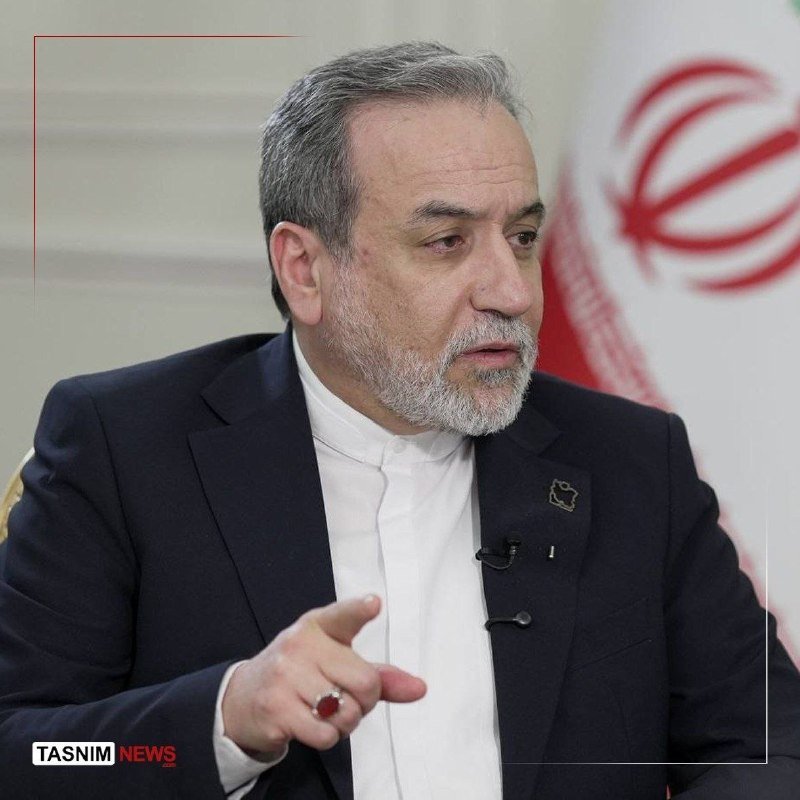
On May 30, 2026, Iranian President Masoud Pezeshkian said his country was ready for diplomatic talks to end the ongoing conflict. That same day, U.S. Defense Secretary Pete Hegseth unveiled a $1.5 trillion defense plan citing Iran as the primary threat driver. The juxtaposition was not accidental. It was the latest iteration of a strategy that has defined American Iran policy for more than four decades: pressure from two directions simultaneously — the negotiating table and the runway.
The question worth asking is whether this dual-track approach has ever worked, and whether it is designed to.
The Timing Is the Message
Kazakhstan entered the picture on May 29, offering to host Iran's enriched uranium — a concrete de-escalation proposal that would move fissile material out of Iranian territory and place it under international supervision. Astana's offer is not new territory for the country; it has served as a diplomatic broker in previous nuclear negotiations. The proposal, if implemented, would buy time and create verification architecture.
Yet the Kazakhstan offer received a fraction of the coverage that Hegseth's announcement did. The defense plan, with its specific $1.5 trillion figure and explicit Iran framing, generated the headline traction. This is not a criticism of the reporting — it reflects a structural reality. Military spending announcements are events. Diplomatic openings, particularly from adversarial governments, are ongoing processes. The asymmetry in how media covers these two tracks is itself part of the deterrence calculus.
Tehran understands this. Iran's readiness to talk, announced through Pezeshkian, is not naive positioning. It is an attempt to shape the narrative before the military framing becomes the only frame available.
What the Record Shows
The pattern of simultaneous military escalation and diplomatic overture toward Iran is not new. The JCPOA negotiations of 2013-2015 — which produced the agreement Iran later withdrew from in 2018 — were preceded by the harshest sanctions regime in American history and a credible threat of military action. That combination produced a deal. It also produced a deal that collapsed when the political will to maintain sanctions relief on the American side dissolved.
The current configuration has familiar features. Maximum-pressure sanctions remain in place. The $1.5 trillion defense plan signals sustained military investment in the Gulf. And yet Iran is talking. This suggests the deterrence ladder still has diplomatic rungs, at least from Tehran's perspective.
What it does not suggest is that the American side has a clear theory of success. Hegseth's announcement was a budget signal, not a strategy document. It told adversaries what the United States was prepared to spend on defense. It did not explain what the spending was meant to achieve, on what timeline, with what benchmarks for success or withdrawal.
The Problem With Talking While Spending
There is a version of dual-track policy that is genuinely coherent: use military capability to create the conditions under which diplomacy can succeed, then pivot to the table once leverage is established. That requires sequencing and signaling discipline. The American side needs to communicate that the defense investment is not a prelude to attack, but also that it is not idle posture.
The difficulty is that every defense buildup in the Gulf also reinforces the Iranian security establishment's argument that the United States cannot be trusted. Tehran's calculus, rational or not, has been shaped by two decades of watching American military presence expand in the region while diplomatic commitments — the JCPOA, the Iran nuclear deal — were treated as provisional by Washington whenever domestic politics shifted.
Kazakhstan's uranium-hosting proposal addresses a narrow technical concern. It does not address the deeper trust deficit. And until that deficit is addressed, every diplomatic opening from Iran will be read in Washington as tactical delay rather than genuine interest.
Who Wins If This Fails
The stakes are specific. If talks collapse — and the historical record suggests collapse is the baseline outcome when both sides maintain maximum demands — the $1.5 trillion defense plan becomes the only available tool. That is a scenario in which the United States spends heavily to maintain a posture of containment indefinitely, while Iran continues its nuclear advancement, while Gulf states accelerate their own strategic calculations, and while the conflict that Pezeshkian offered to end continues.
If talks succeed, the benefits are broader. Reduced regional tension, restored verification architecture on Iran's nuclear program, and a signal to Gulf allies that American engagement includes diplomatic instruments — not just carrier groups and missile batteries. The Kazakhstan offer, if acted upon, could be a building block toward that outcome.
What is clear is that the announcement of a $1.5 trillion defense plan on the same day Iran signals diplomatic readiness is not a coincidence, and it is not a strategy. It is the permanent posture of a power that has not decided whether it wants a deal or a confrontation, and is therefore pursuing both at once. That ambiguity has been the defining feature of American Iran policy for decades. The results have been equally consistent.
The bilateral pattern of military announcement and diplomatic signal has defined this cycle before. Whether either side has learned from the previous iterations remains the central question.
Wire provenance
This editorial synthesis draws on the following public wire/social posts:
- https://t.me/CryptoBriefing/
- https://t.me/CryptoBriefing/
- https://t.me/CryptoBriefing/