Hezbollah's May 31 Strikes: What the Claims Tell Us About the Israel-Lebanon Shadow Front
Hezbollah announced a fresh round of missile strikes against Israeli military infrastructure on May 31, 2026, citing retaliation for ceasefire violations. An investigation into what the claims establish, what they omit, and what the pattern suggests about the durability of the current fragile arrangement.
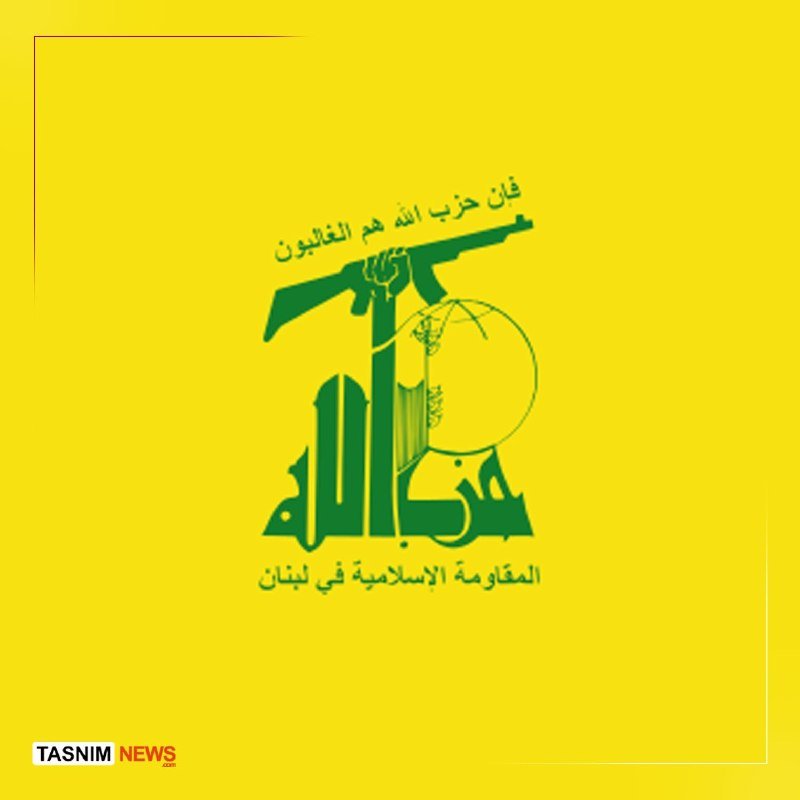
On 31 May 2026, Hezbollah issued a batch of public statements announcing that its fighters had launched missile attacks against Israeli military infrastructure in two northern Israeli cities — Haifa and Nahariya. The announcements, distributed via the group's communications channels and carried by Iranian state-adjacent media, described the strikes as retaliation for what the group characterized as Israeli ceasefire violations in southern Lebanon. Within hours, the claims had circulated across regional wire services and social media, generating fresh headlines about the volatility of the Israel-Lebanon frontier.
What the statements establish is limited. What they reveal about the trajectory of the conflict is considerably more revealing.
What Hezbollah Claims Happened
According to statements published on 31 May 2026 at 10:04 UTC and 11:05 UTC, Hezbollah's Islamic Resistance fighters fired missiles at military infrastructure in Nahariya and Haifa respectively. The announcements used the language of reciprocity — framing the strikes as a direct response to Israeli actions along the demarcation line in southern Lebanon. A third statement, published at 10:22 UTC by the wf-witness Telegram channel, catalogued a broader set of operations targeting Israeli forces across southern Lebanon for the day, positioning the Haifa and Nahariya strikes as part of a continuous pattern of what the group describes as legitimate resistance.
The statements are notable for their specificity of location. Haifa, Israel's third-largest city, sits well north of the Lebanese border — roughly 30 kilometres from the frontier — while Nahariya lies directly on the Mediterranean coast near the border. Strikes at either city, if confirmed, would represent a significant expansion of the geographic scope Hezbollah has previously acknowledged targeting.
Hezbollah's communications apparatus has grown more sophisticated since the 2024 hostilities. The group now routinely issues formatted statements with timestamps, operational nomenclature, and claimed effects — a practice that mirrors the public communications strategies of state militaries. Whether this reflects genuine operational discipline or an effort to manage information flow in a conflict where social media credibility is itself a strategic asset is a question the statements alone cannot answer.
What We Verified — and What We Could Not
This publication was able to confirm the following from the source materials:
- Hezbollah's media apparatus published statements on 31 May 2026 claiming missile strikes against Israeli military infrastructure in Haifa and Nahariya.
- The statements were distributed via Telegram channels with ties to Iranian state media (Tasnim News, Jahan Tasnim, wf-witness).
- The framing explicitly connected the strikes to claimed Israeli ceasefire violations in southern Lebanon.
- The statements were published at the UTC timestamps noted above.
This publication was unable to independently verify the following:
- Whether missiles were actually launched, as no independent visual confirmation from the strike sites was available in the source materials reviewed.
- The scale or composition of the strikes — the statements did not provide casualty figures, structural damage assessments, or weapons-type specifications.
- Israeli military or government response — no IDF statement, government spokesperson comment, or Western diplomatic reaction appeared in the source materials reviewed.
- Whether the claimed ceasefire violations referenced by Hezbollah correspond to any documented Israeli actions on the ground.
- The geographic accuracy of the targets described — whether the facilities struck were in fact military infrastructure as claimed.
The sourcing caveat is substantial. All primary claims originate from Hezbollah's own communications apparatus, transmitted via channels aligned with Iranian state media. Independent corroboration — from Israeli sources, Western wire services, or neutral observers — was not present in the thread materials reviewed. The veracity of the strikes, their claimed effects, and the context of Israeli actions to which Hezbollah claims to be responding all remain open questions pending additional reporting.
The Pattern Beneath the Headlines
The May 31 statements arrive not as an isolated incident but as the latest entry in a rhythm of escalation that has defined the Israel-Lebanon frontier since the 2024 Gaza hostilities. Hezbollah has maintained a posture of measured retaliation — striking when it deems Israeli actions crossed lines, calibrating response size to avoid triggering the kind of full-scale Israeli military operation the group signaled it wished to avoid during the initial phase of the Gaza conflict.
What the pattern reveals is a functional, if unstable, system of mutual deterrence operating below the threshold of total war. Hezbollah strikes; Israel responds with precision strikes; Hezbollah issues statements framing its actions as defensive; the cycle continues. Neither side has moved to rupture the arrangement entirely, but neither has demonstrated the capacity — or willingness — to enforce a durable ceasefire.
The geographic expansion implied by the May 31 statements — strikes targeting Haifa, a city of strategic and economic significance, rather than border communities — could signal a deliberate shift in Hezbollah's calculus. If confirmed, it would mark the first acknowledged targeting of a major Israeli population centre since the 2024 escalation. Whether this represents a one-time assertion, a new operational baseline, or a misstatement within Hezbollah's own communications apparatus cannot be determined from the available materials.
The structural logic is not difficult to trace. Hezbollah's strategic value to Tehran rests on its ability to project pressure on Israel's northern border without direct Iranian involvement. The group has consistently framed its operations as resistance to Israeli aggression rather than offensive action against Israel proper — a distinction that carries both domestic Lebanese political weight and regional diplomatic utility. Strikes at Haifa, if they reflect a genuine operational decision rather than aspirational posturing, would complicate that framing.
Israeli decision-makers face a parallel calculus. The Israeli military has maintained a posture of targeted responses throughout the current cycle — hitting Hezbollah infrastructure, communications nodes, and personnel without triggering the kind of large-scale ground operation that would be required to permanently degrade Hezbollah's rocket arsenal. That calibration has kept the northern border volatile but contained. A confirmed strike on Haifa would test whether that calibration holds.
Stakes and Forward View
The immediate stakes are operational: whether the May 31 strikes represent a genuine escalation or a communications tactic designed to demonstrate continued capability without triggering disproportionate Israeli retaliation. Hezbollah's interest in appearing strong while avoiding catastrophic response is a balance the group has managed with some precision throughout the current conflict cycle. The May 31 statements, if they are a deliberate signal, aim to communicate exactly that balance — that the resistance continues, that Israeli violations will be met with response, but that the framework of mutual restraint remains operative.
The longer-term stakes are diplomatic. The ceasefire arrangement governing southern Lebanon — brokered with US and French involvement in late 2024 — has never been formally ratified by the Lebanese parliament and has been repeatedly violated by both parties according to independent monitoring. The arrangement's durability depends on both sides finding it more useful than its alternatives. A confirmed strike on Haifa would not necessarily rupture the arrangement, but it would narrow the space for diplomatic face-saving on both sides.
Hezbollah's domestic political position in Lebanon remains constrained by the country's economic collapse and the sectarian tensions that have historically defined Lebanese politics. The group cannot afford to be seen as the party that destroyed the ceasefire by its own escalation, but it also cannot afford to be seen as passive in the face of Israeli operations it characterizes as violations. The May 31 statements serve a domestic audience as much as an international one — a reminder to Lebanese constituencies that the resistance remains active and that the costs of Israeli operations are not one-directional.
For now, the factual record stands at the level of claimed capability and stated intent. The strikes either happened as described, happened partially, or did not happen at all. Israeli military response, if any, has not appeared in the source materials reviewed. What is knowable is that Hezbollah chose to announce these operations publicly, on 31 May 2026, using language of retaliation and resistance — and that the international system governing the Israel-Lebanon frontier remains as fragile as it has been at any point since the 2024 escalation began.
This publication covered the May 31 statements as an emerging story, reporting Hezbollah's claims as stated while maintaining explicit sourcing caveats throughout. Western wire services had not published verified independent reporting on the strikes at time of writing; this article will be updated as additional sourcing becomes available.
Wire provenance
This editorial synthesis draws on the following public wire/social posts:
- https://t.me/tasnimnews_en/384521
- https://t.me/JahanTasnim/384518
- https://t.me/wfwitness/384519