The Ceremony Iran Runs on Its Sports Stars
Tehran's annual sports awards are less about athletic merit than regime theatre — a pattern visible across authoritarian governance that demands a more honest accounting from Western observers.
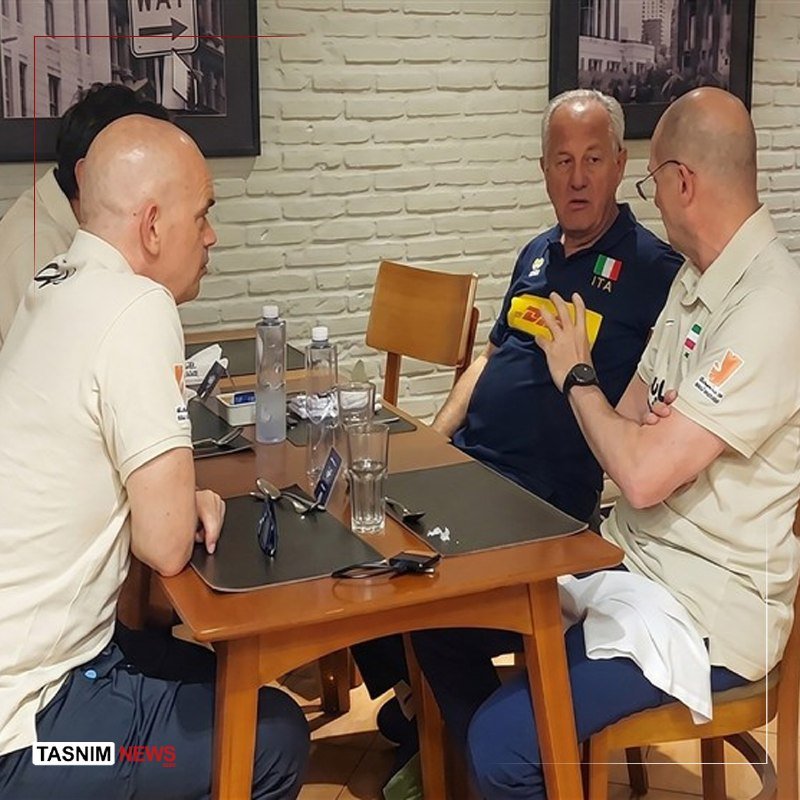
When Iranian state media named Pejman Darstkar, head coach of the national freestyle wrestling team, coach of the year at its annual sports awards on 31 May 2026, the announcement arrived wrapped in a vocabulary that had little to do with athletic merit. "If we stand here and the flag and soil of Iran are stable, it is because of the bravery of the martyrs and defenders of the homeland," Darstkar said in remarks carried by Tasnim News, an Iranian state-affiliated outlet. Iran's national futsal team received the best-team prize at the same ceremony. The occasion was sporting; the language was not.
What Tehran presents as celebration is in fact a performance of legitimacy — one that converts athletic accomplishment into an endorsement of a political system. The specific vocabulary matters: martyrs, defenders of the homeland, flag and soil. This is not the lexicon of a national sports federation. It is the lexicon of a theocratic state that views every public institution as an extension of its ideological mission. When an Olympic wrestling champion stands on a podium and thanks martyrs, the regime has successfully collapsed the distinction between sport and doctrine. That is not incidental. It is the design.
The machinery of the medal
The ceremony is not merely symbolic. It is the mechanism by which the Islamic Republic converts athletic capital into political capital — both domestically and, to the extent it can, internationally. Domestically, the awards reinforce the message that excellence is legible only through the frame of regime ideology. An athlete does not succeed despite the system; they succeed because of it. The state claims co-authorship of every victory. This is a well-documented governance strategy in closed political systems, where public spectacle serves as a substitute for the legitimacy that contested elections, independent judiciary, or a free press might otherwise provide.
Internationally, the calculus is more complicated. Iran cannot easily deploy its sports awards on the global stage — sanctions, diplomatic isolation, and the widespread perception of the Islamic Republic as a human-rights interlocutor limit the reach of soft-power initiatives. But the domestic ceremony still matters for foreign audiences. It tells Western analysts something true: this regime cannot resist instrumentalizing every institution, including those built on genuine human achievement. That transparency is itself informative.
A global pattern, not a local pathology
It would be convenient to treat the Iranian case as a singular pathology. But the pattern is not unique. The Soviet Union built an elaborate state-sport apparatus expressly designed to generate propaganda victories from athletic competition. China has invested billions in Olympic programmes that serve as a visible demonstration of state capacity. North Korea's athletes return from international competitions to mandatory rallies. What distinguishes the Iranian formulation is not the logic but the specificity of the ideological language — the direct invocation of martyrs and religious-martial sacrifice in a sporting context. That explicitness is worth noting: it signals a regime unwilling or unable to separate its identity from any institution it controls.
This does not mean the underlying athletic achievements are fraudulent. Iran's wrestling tradition is centuries old; its futsal programme has produced competitive regional results. The athletes involved are genuinely skilled. But the regime's insistence on inserting itself into their narratives does real damage to how those achievements can be understood — by Iranians themselves, by the diaspora, and by outside observers genuinely trying to assess the nature of the Islamic Republic's grip on society.
What remains opaque
The sources covering the ceremony do not specify its venue, attendee list, or the full slate of award recipients. The framing in Iranian state media is uniform, as one would expect from outlets operating under institutional alignment with the government. Whether Iranian athletes or coaches privately chafe at the ideological packaging of their achievements — a dynamic visible in other authoritarian sports systems where athletes navigate a gap between public performance and private disposition — is not answered by the available record. The gap between the regime's framing and the lived experience of Iranian athletes remains, in this instance, inaccessible.
The stakes for outside observers
The risk for Western media and policy audiences is not that Iranian sports achievements are overstated — some are genuine — but that the ideological apparatus surrounding them goes unexamined. When a state converts athletic ceremony into political ceremony, it is not merely celebrating sport. It is consuming it. The 31 May awards are evidence of that consumption. They are worth noting not because the futsal team does not deserve recognition, but because the recognition says something about who is doing the awarding and what they believe it accomplishes.
Tehran understands the utility of sport as state theatre. Outside observers who treat the ceremony as merely a sporting event are missing the performance entirely.
Wire provenance
This editorial synthesis draws on the following public wire/social posts:
- https://t.me/tasnimnews_en
- https://t.me/farsna
- https://t.me/tasnimnews_en