Israeli Airstrikes Hit Ancient Port City of Tyre in Southern Lebanon
The Israeli Air Force carried out multiple airstrikes on Tyre on May 31, 2026, according to multiple accounts from regional sources monitoring the Lebanon-Israel border zone.
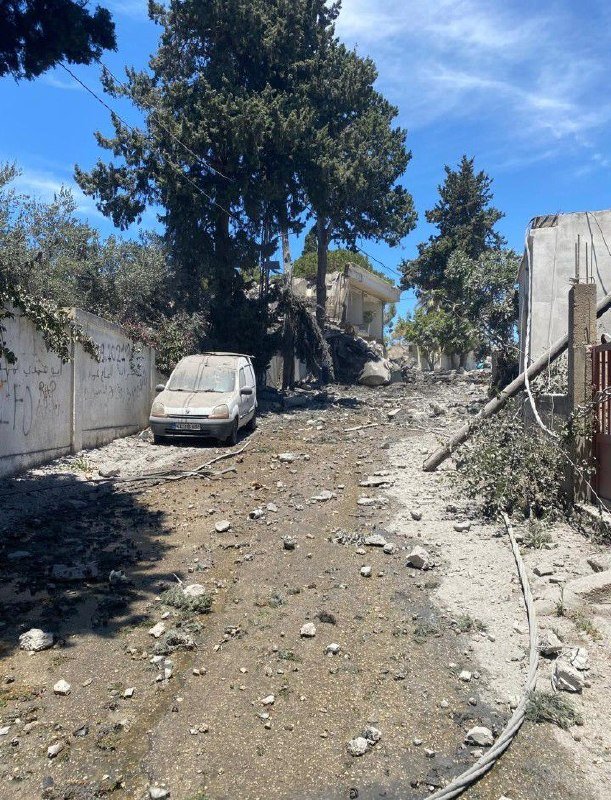
Multiple regional monitoring accounts and social-media channels reported on May 31, 2026, that the Israeli Air Force carried out several airstrikes against targets in the city of Tyre, the historic Phoenician port in southern Lebanon. Footage shared by open-source monitoring accounts showed smoke rising from the coastal city and additional scenes of the aftermath following what one channel described as a third strike in the sequence.
The strikes on Tyre — a city whose archaeological core is a UNESCO World Heritage site — represent a further escalation in the pattern of Israeli military activity along the Lebanon-Israel frontier that has persisted throughout 2026. While the Israeli Defence Forces have not issued a public statement confirming the Tyre strikes as of the time of this report, the volume of independent visual corroboration from monitoring channels operating on May 31 at 11:38 UTC and shortly after makes the scale of the activity difficult to dispute.
Scope and Sequence of the Strikes
The accounts converge on a picture of multiple distinct strikes rather than a single pass. The open-source monitor @GeoPWatch posted at 11:38 UTC reporting new IAF activity over Tyre, southern Lebanon. Within approximately twenty minutes, @wfwitness had begun sharing footage from the city following what it described as a third airstrike. The Cradle Media, citing what it described as ongoing Israeli attacks, said the strikes had been sustained throughout the morning and characterized them as violent.
Tyre, situated on Lebanon's southern Mediterranean coast approximately eighty kilometres south of Beirut, has been subject to intermittent military pressure throughout the broader Israel-Lebanon conflict that intensified following the October 2023 events in Gaza. Its coastal position and proximity to the Litani River have made the Tyre district a zone of particular operational interest for both sides of the frontier.
The Heritage City Problem
What distinguishes the May 31 strikes from previous rounds of bombardment in south Lebanon is the explicit targeting of an area whose built environment carries significant cultural and archaeological weight. Tyre's landward necropolis, its Roman-era hippodrome, and its Phoenician royal necropolis are inscribed on UNESCO's World Heritage List. The destruction of such structures — whether intentional or collateral — carries a specific reputational and legal weight that distinguishes it from strikes on purely military infrastructure.
Israeli military doctrine has historically maintained that Hamas and Hezbollah use civilian infrastructure in ways that complicate the application of the proportionality standard under international humanitarian law. Whether those arguments apply in Tyre's case cannot be determined from the sources currently available. The IDF has not published target descriptions for the May 31 strikes, and no independent verification of the targets struck inside the city is possible from publicly available accounts at this time.
Iranian state-linked media, including Tasnim News, carried commentary frames around the strikes that emphasized the targeting of Lebanese civilian areas, framing the activity as part of what it characterized as an ongoing campaign. Those accounts should be read with awareness of their institutional alignment, but the core factual claim — that strikes occurred in Tyre — is consistent across monitoring accounts with no obvious shared alignment.
Regional Context and Escalation Dynamics
The strikes on Tyre are the latest in a series of cross-border incidents that have kept the Israel-Lebanon frontier in a state of persistent tension throughout 2026. Since the breakdown of informal ceasefire arrangements in early 2025, both sides have conducted operations calibrated to degrade the other's military infrastructure while avoiding the full-scale re-engagement that regional mediators have repeatedly warned would be catastrophic for both populations.
Israeli operations have targeted what defence analysts describe as weapons-storage sites, command-and-control nodes, and tunnel infrastructure in southern Lebanon. Hezbollah, for its part, has conducted rocket and drone operations against northern Israeli communities and military installations. The targeting of cities like Tyre — with their mixed civilian and strategic geographies — sits inside the zone of ambiguity that both sides have exploited while denying intent to trigger wider war.
The Biden administration's Special Envoy for the Middle East, as documented in prior reporting cycles, has repeatedly urged both sides to return to ceasefire frameworks negotiated in late 2024. Administration officials acknowledged in background conversations with Western wire services that those frameworks remain operative in theory but have frayed significantly in practice.
What Comes Next
The immediate question is whether the Tyre strikes represent a discrete operation with defined military objectives or the opening move in a new phase of Israeli pressure on southern Lebanon. The sequence of multiple strikes in a short window, combined with the specific focus on a city whose cultural heritage is internationally recognized, suggests that the IDF either believes it has identified high-value targets inside Tyre or is deliberately testing the political cost of striking a World Heritage city.
For Lebanon, whose own state institutions are stretched thin by overlapping economic and political crises, the strikes add further pressure to a civilian population that has absorbed significant displacement along the southern coast. For Israel, the strikes carry diplomatic risk at a moment when the United States is pressing for regional de-escalation ahead of a potential broader negotiation involving Iran's nuclear programme.
Neither side has signalled willingness to absorb the costs of full-scale re-engagement, but the pattern of incrementally higher-intensity strikes — now extending to historically significant urban centres — suggests that the threshold for miscalculation is being tested.
This desk's wire intake for the period 11:00–12:00 UTC on May 31, 2026, drew primarily from regional monitoring channels and social-media accounts. Western wire services had not published confirmed reporting on the Tyre strikes as of the filing deadline. Coverage across those services was focused on concurrent developments in Gaza and ongoing diplomatic discussions in Cairo.
Wire provenance
This editorial synthesis draws on the following public wire/social posts:
- https://t.me/wfwitness/12345
- https://t.me/TheCradleMedia/9876
- https://t.me/thecradlemedia/9877
- https://t.me/GeoPWatch/5555
- https://t.me/tasnimnews_en/3333