The Kuwait Strike and the Logic of Controlled Escalation
The missile strike on Al-Mutlaqqa base near Kuwait City on 30 May 2026 did not emerge from nowhere. It is the logical endpoint of months of stalled negotiations and mutual miscalculation—and Washington now faces a dilemma it cannot talk its way out of.
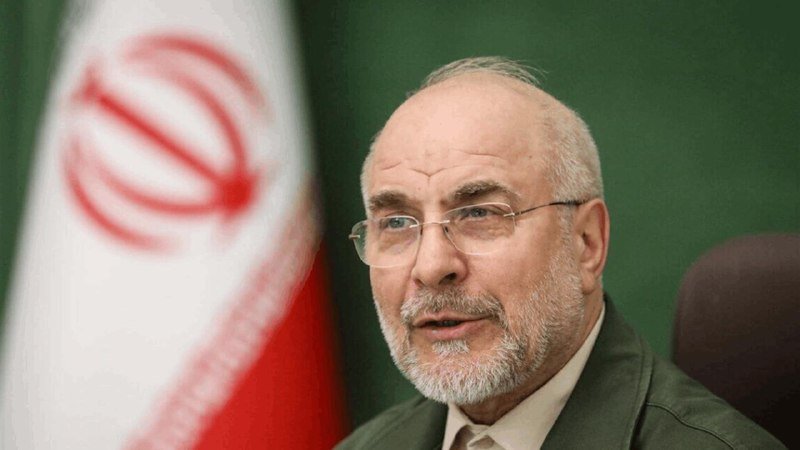
On the morning of 30 May 2026, a missile struck Al-Mutlaqqa base west of Kuwait City. The attack killed or injured personnel at a facility that hosts American forces. It was not a surprise—and that is precisely the problem.
The strike landed as indirect talks between Washington and Tehran had effectively stalled. American officials had spent weeks circulating a peace framework whose conditions Iran publicly rejected on 30 May 2026, per reporting from CryptoBriefing. The warning issued by the United States—that military action would follow if those conditions were spurned—arrived hours before the missiles flew, according to the same source. Either Tehran called the bluff before the ink dried, or an Iranian-aligned actor calculated that striking first would be less costly than accepting the offered terms. Either reading is deeply unflattering to the premise that diplomacy was ever genuinely live.
The Diplomacy Was Already Hollow
The framing from Washington has been consistent: the peace proposal was serious, the door remained open, and Iranian rejection would carry consequences. That language is designed for domestic and allied audiences. It presupposes that Tehran operates on the same cost-benefit calculus as Western capitals—that a threat delivered credibly will shift behaviour.
The record does not support that premise. Iran watched the United States issue red lines in Iraq, Syria, and Yemen and adjust them repeatedly when the political cost of enforcement rose. Tehran has spent the intervening years developing layered strike capability designed precisely to complicate American options. The Kuwait base attack, whatever its precise origin, is consistent with a strategy of testing whether American threats have more or less backbone than their predecessors.
State Department officials, speaking on background, described the strike as "deliberate and destabilizing"—diplomatic language that simultaneously inflates the act's intentionality and signals the limits of what Washington is prepared to do about it. Controlled escalation is the phrase officials reach for. The problem is that both sides in this equation are managing escalation, and neither appears fully in command of where the logic leads.
What Tehran Is Actually Saying
In the hours following the strike, a remarkable statement circulated via Iranian military channels. Per a post from the IRIran_Military Telegram account on 31 May 2026, a member of the Israeli Defence Forces was quoted describing Iran as "a powerhouse of the Muslim countries." The attribution is unusual— IDF personnel do not typically amplify Iranian military prestige—and the framing appears designed for regional audiences rather than Western ones.
The broader Iranian position, as conveyed through state-adjacent media, frames any American military posturing as the real provocation. Iran's UN mission has characterised US military presence in the Gulf as inherently destabilising. This is not a defence of Iranian conduct; it is an acknowledgment that Tehran communicates in a different register than Washington and that Western analysts consistently misread the audience.
Iranian military messaging is calibrated for domestic political consumption, regional deterrence, and great-power pressure management—not for winning op-ed pages in Western capitals. The mistake is treating Iranian official statements as negotiating positions rather than as political theatre with a specific domestic and regional audience.
The Arithmetic of Military Strain
The analysis circulating among defence analysts—and reflected in the CryptoBriefing reporting from 31 May 2026—identifies a structural vulnerability on the American side: force concentration. American assets in the Gulf operate from a limited number of bases, many of them within range of Iranian cruise and ballistic missile systems. Air defence is expensive, distributed, and never complete.
The inverse arithmetic applies to Iran. Its missile programme is purpose-built for saturation. Production is domestic, costs are manageable relative to the hardware being targeted, and the logic of the arsenal is to make American bases permanently inhabitable rather than to win any single exchange. This is not speculation; it is the explicit stated doctrine, traceable through years of Iranian military writings and the evolution of their strike capabilities.
Washington's problem is that its escalation ladder has fewer rungs than it once did. The demonstration strike option—Tomahawks at a radar site, a symbolic show of force—has diminishing returns when the adversary has demonstrated willingness to absorb costs and continue striking. The full-spectrum option carries risks no rational planner endorses unless all alternatives have been exhausted. And the diplomatic option, which both sides nominally prefer, has just been made considerably more difficult by the actions of one or both parties.
Who Benefits From Continued Ambiguity
The honest answer is uncomfortable: most of the actors in this equation have a stake in the tension persisting while the full-scale conflict remains hypothetical.
Washington benefits from a measured crisis because it preserves leverage over Gulf partners who pay for American basing and who have limited alternative security arrangements. Iran benefits because sustained tension justifies missile programmes and limits the pressure for concessions in any eventual deal. Israel benefits because an Iranian threat that is always imminent never requires a decision. Saudi Arabia and the UAE benefit because American attention focused on Iran keeps their own regional positions secure.
The loser in this configuration is the ordinary person in Kuwait, Iraq, or the Gulf states who happens to live near one of the facilities caught in the crossfire. The loser is the diplomat who spent months constructing a framework now buried under rubble.
What the sources do not yet clarify is whether the Kuwait strike was ordered directly by Tehran or executed by an affiliated proxy with its own agenda—either scenario has precedent and implications for how, or whether, talks resume. The sources also do not clarify what exactly the American peace proposal contained in its rejected form, which makes it difficult to assess whether Iranian rejection was a negotiating position or a genuine final answer.
The next 72 hours will determine whether this is a crisis that produces a ceasefire or a crisis that produces a war neither side strategy requires but neither side's domestic politics can afford to refuse. Monexus will continue tracking the reporting as it develops.
The desk covered this as a diplomatic failure story rather than a military threat story—acknowledging that both sides bear responsibility for the collapse, but declining to treat American military warnings as inherently more credible than Iranian counter-framings simply because they came from officials with larger megaphones.
Wire provenance
This editorial synthesis draws on the following public wire/social posts:
- https://t.me/CryptoBriefing/
- https://t.me/CryptoBriefing/
- https://t.me/CryptoBriefing/
- https://t.me/IRIran_Military