The Weight of Sustained Airstrikes: How Russia's Drone Campaign Is Reshaping Ukrainian Society
Three years into a full-scale invasion, Russia's reliance on aerial strikes against Ukrainian population centers is producing compounding effects that go beyond physical destruction — reaching into how citizens navigate daily life, how institutions function, and what resilience actually costs.
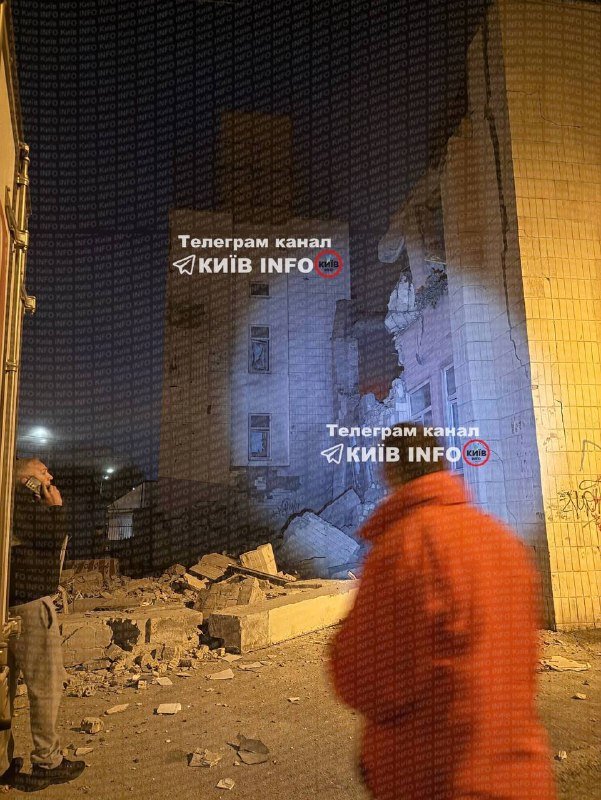
On the evening of 31 May 2026, a Russian drone struck a multi-story residential building in Ukraine, igniting a fire that crews fought through the night. The incident — reported by TSN.ua correspondents at the scene — left no immediate word on casualties, but the image of a darkened high-rise wreathed in flame has become a recurring one across the country's eastern and southern cities. Somewhere in the same 24-hour window, a car carrying men fleeing from a Territorial Conscription Center careened into a roadside ditch, a postscript to the pressures driving civilians away from — or deeper into — a war that shows no sign of ending on terms Kyiv can accept.
These are not isolated events. They are data points in a pattern that has defined the third year of Russia's full-scale invasion: an attacker that cannot seize territory at acceptable cost has instead chosen to make holding that territory, and simply living in it, progressively more unbearable. The drone campaign — Shahed-type munitions launched in waves from Russian territory — has become the primary instrument of that strategy.
The Arithmetic of Aerial Pressure
Russia's strike tempo has not been constant. After a winter lull tied to its own ammunition shortages and the failure of its February 2024 offensive, Moscow rebuilt its strike arsenal with Iranian-supplied components and expanded domestic production. The result has been an sustained campaign of 40 to 80 or more drones per night during active periods, targeting electrical infrastructure, district heating systems, port facilities, and — with increasing directness — residential buildings. Ukrainian air defense, now equipped with Western-supplied systems, intercepts a significant fraction. But interception rates above 70 percent still leave dozens of munitions reaching their targets each week.
The effect is cumulative. A grid that survives one strike may fail after the fourth. A neighborhood that receives temporary shelter after one attack may find that local emergency services are stretched thin by the time the third arrives. The physical damage is repairable; the administrative and psychological toll is not — or not as quickly.
The Conscription Question as Pressure Valve
Ukraine's mobilization system was redesigned in 2024 under legislation that lowered the conscription age and expanded the categories of men subject to call-up. The law was necessary — frontline rotations had become unsustainable — but its implementation created a secondary pressure on civilian society. Men of fighting age moved differently: they altered routines, avoided administrative buildings, crossed city borders with heightened caution.
The car that left a road after an escape from a Territorial Conscription Center, as reported by TSN.ua on 31 May, is not anomalous. It is a legible response to a system that has made movement itself a calculation. The risk is not merely legal — evasion carries criminal penalties — but social and economic. A man who cannot work because he is in uniform is a household that loses income. A man who cannot be found is one who avoids that loss, at the cost of an irregular life lived in partial concealment.
The Ukrainian government has resisted public discussion of desertion rates, and Western officials who speak off the record offer figures that vary widely. What is not contested is that the pool of men available and willing to serve has not kept pace with the rate at which units require reinforcement. This is a structural constraint on Ukraine's ability to hold the line — one that Russia has calculated it can exploit through continued pressure rather than through territorial seizure.
The Infrastructure Equation
Ukraine's energy infrastructure has absorbed more than three years of strikes and remains functional — a genuine achievement of engineering, repair crews, and Western financial support for grid hardening. The International Energy Agency estimated in early 2026 that Ukrainian power generation had recovered to roughly 85 percent of pre-war capacity, despite repeated targeting of thermal and hydroelectric plants.
But the cost of that recovery is not evenly distributed. Industrial consumers — the factories and foundries that form the base of any wartime economy — face spot prices for electricity that have risen sharply as the grid operates closer to capacity margins. For every high-profile strike on a residential building, there are three on substations and transformer yards that do not make headlines but raise the cost of keeping lights on across entire regions.
This is not an accident. Russia's targeting doctrine appears to have shifted from attempts to collapse the grid entirely — which proved beyond the volume of drones available — to a strategy of attrition: small, repeated damages that accumulate faster than repair cycles can address. The effect is not blackouts but price increases, reduced industrial output, and a steady erosion of the economic base that funds the war effort itself.
What Sustained Pressure Cannot Achieve
The strategic logic of the drone campaign assumes that sufficient pressure will eventually produce political capitulation — a Ukrainian government willing to negotiate on terms favorable to Moscow, or a Western coalition whose support fractures under the weight of domestic fatigue. There is no evidence that this threshold has been reached. Ukraine's Western partners have, so far, maintained the flow of air defense interceptors, artillery ammunition, and budget support that Kyiv has identified as its minimum requirements. The political cost of abandoning Ukraine, for Washington, Berlin, and London alike, remains higher than the cost of continued support.
The pressure also produces effects that do not appear in targeting assessments: solidarity, in some populations, hardens in response to bombardment. The high-rise that burned on 31 May will be rebuilt, and its new residents will know precisely why it was struck. That knowledge — specific, local, personal — does not reliably produce surrender. It can produce its opposite.
The Telegram brief about the drone strike and the one about the car in the ditch are, individually, minor entries. Together they illustrate the texture of a war that has passed beyond maneuver and into something closer to endurance. The question is not whether Ukraine can absorb these strikes — it demonstrably can, up to a point. The question is how long that point can be extended, and whether the architecture of Western support will hold long enough to change the arithmetic in Kyiv's favor. That remains the central unknown, and no number of drones answered it.
Wire provenance
This editorial synthesis draws on the following public wire/social posts:
- https://t.me/TSN_ua/4823
- https://t.me/TSN_ua/4820
- https://t.me/TSN_ua/4819
- https://t.me/TSN_ua/4824