Trump Push for Fort Knox Physical Audit Puts US Gold Transparency Back on the Table
A proposal to comprehensively audit the United States' gold reserves for the first time in over seven decades surfaces as governments globally confront the credibility of their monetary infrastructure — in both old vaults and new digital asset frameworks.
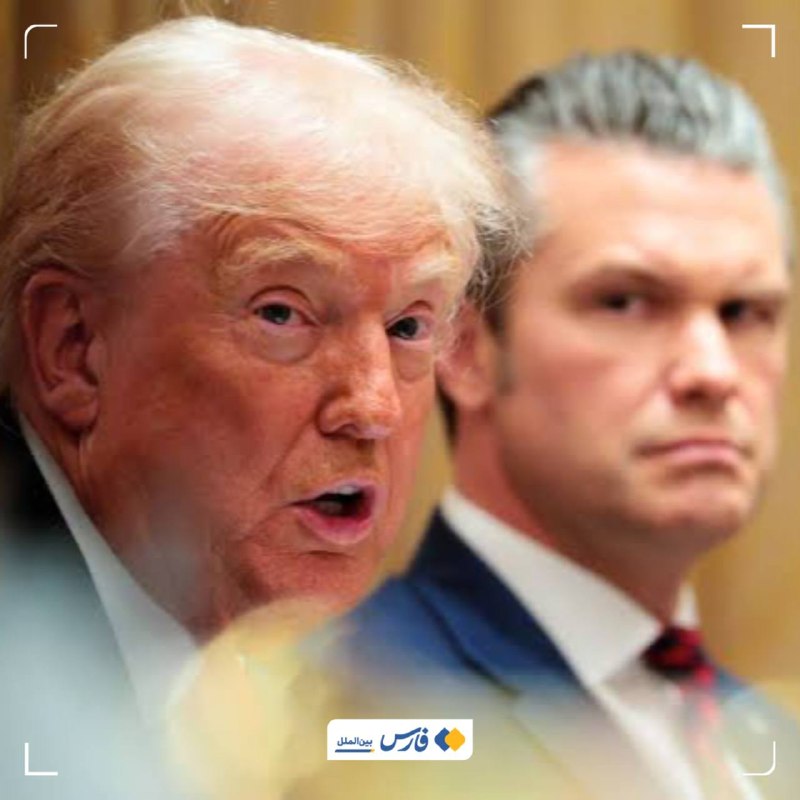
The United States Bullion Depository at Fort Knox, Kentucky, has not undergone a full independent physical audit in over seventy years. That omission is now drawing direct political attention, placing the credibility of the country's oldest monetary asset — and by extension, the institutional architecture underpinning the dollar — back into the centre of a policy conversation.
The proposal surfaced as a stated intent from the Trump administration, framing a comprehensive audit as a transparency measure long overdue. The stated rationale: if the gold is there, in the quantities recorded, confirming it publicly would be a straightforward act of institutional accountability. If it is not — or if discrepancies exist at a scale large enough to matter — the exposure would arrive before rather than during a crisis.
Congress would need to act for a physical audit to proceed. The Mint's gold holdings are currently classified as monetary assets rather than inventoried property, meaning that accessing the depository for independent verification requires explicit legislative authorization. The last thorough accounting occurred in 1953; an informal verification was conducted in a 1974 Senate hearing on gold market operations, but no systematic independent audit has since followed.
The structural logic behind the proposal is not purely about transparency for transparency's sake. The US holds roughly 8,133 metric tonnes of gold across multiple Federal Reserve and Mint facilities, with Fort Knox holding the largest share. That inventory underwrites a significant portion of the dollar's credibility as a reserve currency — not because gold backs the dollar in any formal mechanical sense, but because the existence of a sovereign backstop, even one that is rarely tested, shapes how creditors and foreign central banks assess the durability of dollar-denominated obligations. Auditing that inventory means confronting a paradox: a clean result removes one source of geopolitical ambiguity that has quietly served US interests, while a contested or incomplete result would be interpreted by markets as an immediate systemic event.
The timing is notable. Vietnam's financial regulators have proposed allowing small and medium enterprises to pledge digital assets and intellectual property as collateral for conventional bank loans — a regulatory innovation that extends formal financial infrastructure to assets previously treated as outside the banking perimeter. Argentina, in a separate enforcement action, arrested 24 individuals and seized more than $8 million in cryptocurrency as part of a nationwide crackdown on alleged investment fraud schemes.
These three developments — an audit proposal in Washington, a collateral framework in Hanoi, and a fraud prosecution in Buenos Aires — are not merely coincidental. They reflect a common pressure: governments that have expanded their financial infrastructure in the digital era are now being asked to account for what that infrastructure actually holds. In the US case, that means a physical vault containing one of the world's largest sovereign gold stockpiles. In Vietnam, it means legitimising digital assets as bankable collateral. In Argentina, it means demonstrating enforcement capacity against scams that exploit crypto adoption as it spreads across the region.
What each situation reveals is that institutional credibility is being renegotiated at speed. In Washington, the question is whether the oldest monetary reserve on earth can be opened to scrutiny. In Hanoi, the question is whether new digital assets can be trusted inside conventional banking. In Buenos Aires, the question is whether regulators can keep pace with fraud as crypto reaches populations with limited financial literacy and high exposure to speculative products. None of these questions has a settled answer. The audit proposal, whatever its political mechanics, is a recognition that institutions which cannot be examined eventually lose the benefit of the doubt — and that in a world where financial information moves in real time, ambiguity about what a government actually owns is a liability, not an asset.
Whether the audit proceeds, and in what form, will depend on how Congress responds and what scope an authorized inspection would carry. A partial verification — counting bars without assaying purity, for example — would not settle the underlying credibility question. A comprehensive independent audit, with full public reporting, would. The difference matters not only for the gold market but for the broader assumption, embedded in dollar pricing and central bank reserve management worldwide, that the US government's balance sheet contains what it says it contains.
The question of whether to look is now on the table. The question of what happens when they do remains open.
This publication covered the audit proposal through the lens of institutional credibility in monetary infrastructure. The wire framing placed it primarily in a domestic political register; this analysis positions it as one node in a broader global renegotiation of what financial transparency means across both traditional and digital asset frameworks.
Wire provenance
This editorial synthesis draws on the following public wire/social posts:
- https://t.me/Cointelegraph/29468
- https://t.me/Cointelegraph/29466
- https://t.me/Cointelegraph/29467