Trump Unmoved as Iran Threatens Hormuz Blockade Over Lebanon Escalation
Tehran's warning of a potential Strait of Hormuz blockade — triggered by Israeli military activity in Lebanon — has pushed crude prices higher, but the White House shows no sign of adjusting its pressure campaign.
Iran has informed Washington it is halting message exchanges with the United States and is threatening to block the Strait of Hormuz entirely, according to multiple reports on 1 June 2026. The decision, attributed by Iranian officials to ongoing Israeli military operations in Lebanon, sent crude prices sharply higher as traders assessed the risk to roughly one-fifth of the world's oil supply transiting the narrow waterway each day.
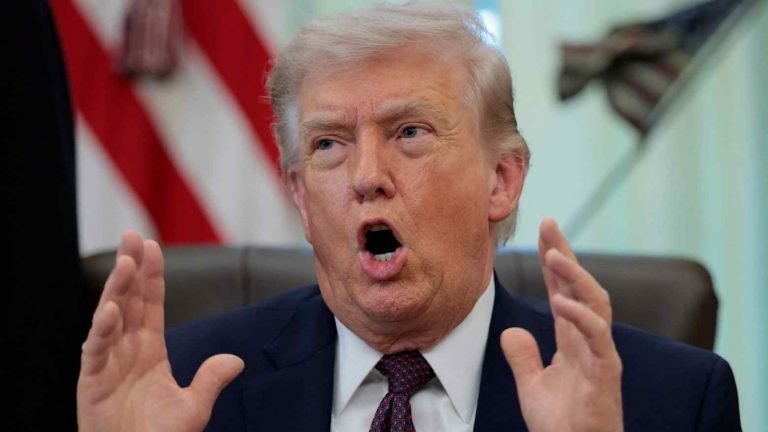
The White House response was dismissive. Speaking to NBC News on the same day, President Donald Trump said he had not received confirmation that Iran was suspending negotiations, but that if true, he was unconcerned. "I think we've been talking too much if you want to know the truth," Trump told reporters. "Going silent would be very good, and that could be for a long time." The comment rattled markets initially before crude prices partially recovered as traders parsed its ambiguity.
Iran Draws a Red Line on Lebanon
The Iranian position hardened rapidly over the preceding hours. State-aligned outlets carried Tehran's demand for a ceasefire across all active fronts, with Lebanon — where Israeli operations have intensified — cited as the proximate trigger. The threat to Hormuz represents a significant escalation in Iranian signaling. The strait, bordered by Iran and Oman, is the chokepoint through which Gulf producers route the majority of their exported crude and LNG. Any credible disruption would dwarf the marginal supply gluts that have kept prices depressed for most of the past three years.
Iranian officials have made similar threats in the past during periods of heightened tension, most notably in 2019 and 2022. On both occasions, the rhetoric preceded limited symbolic moves rather than sustained obstruction. Whether the current warning reflects a genuine willingness to follow through — or functions as leverage in the broader nuclear negotiations — remains contested. Western intelligence assessments cited by wire services suggest Iran is more isolated than at any point since the reimposition of sweeping sanctions, which may alter the calculus.
Oil Markets React, then Pause
Futures on both Brent and WTI Crude climbed more than three percent in early Asian trading following the reports from Tehran. Energy traders moved to price in a tail risk that the market had largely shrugged off since last year's provisional nuclear understanding. By mid-morning European session, however, the spike had moderated as traders absorbed the White House readout and Trump's stated unconcern.
The president explicitly predicted the oil would be "dropping" — a statement that clashed with the immediate market reaction but reflected his administration's consistent posture that upstream supply discipline by Gulf allies could absorb temporary disruption. Whether that confidence is well-placed depends on whether Iran's threat remains signaling or moves toward operational reality. Neither the Trump administration nor allied Gulf producers have publicly confirmed contingency plans, leaving the market pricing in elevated uncertainty.
The Lebanon Variable
Any accounting of the current crisis must account for the Lebanese dimension. Israeli military activity inside Lebanon has accelerated in recent weeks, according to regional wire reporting, drawing condemnation from Tehran and its allied network across the Levant. Lebanese political sources describe a situation approaching open-ended confrontation, with Hizballah's command structure under pressure and southern infrastructure battered.
From Tehran's vantage point, Lebanon functions as a geopolitical pressure-release valve — a theater where Iranian-backed forces absorb Israeli pressure without directly implicating Iranian territory. When that arrangement comes under direct threat, Iranian decision-makers face pressure to demonstrate resolve beyond the negotiating table. The Hormuz threat is, in this framing, a message not just to Washington but to domestic audiences who have borne the economic weight of sanctions and want evidence that their government's regional posture retains deterrent value.
What Comes Next
The immediate question is whether the message pause between Washington and Tehran holds or fractures into something more durable. Iran's threat to Hormuz is, at minimum, a negotiation tactic — an attempt to raise the cost of continued Israeli operations in Lebanon by attaching a dollar figure to the broader relationship. Whether it works depends on how the White House weighs the competing priorities: a nuclear agreement that has taken months to construct, a regional ally whose Lebanon operations serve a stated security rationale, and an oil price that has become, for this administration, both a political touchstone and an economic variable.
Trump said on 1 June that he planned to ask Israeli Prime Minister Benjamin Netanyahu directly "what's going on with Lebanon" — suggesting the US is not fully briefed on or aligned with the current phase of Israeli operations. That gap between allied governments, rather than the Hormuz rhetoric itself, may prove the more consequential detail in the days ahead.
What remains unclear is whether Iran has a specific operational threshold — a particular scale of Lebanon operation — that would prompt physical action at Hormuz, or whether the threat is calibrated to persist as background pressure regardless of the Lebanon outcome. The sources reviewed do not specify what evidence, if any, Western officials have gathered on Iranian naval positioning or the state of readiness in the Gulf. That uncertainty alone is enough to keep traders cautious.
This publication led with the oil-market signal and the White House readout rather than the Hormuz threat as a geopolitical abstraction — a framing choice that reflects where the measurable risk currently sits.
Wire provenance
This editorial synthesis draws on the following public wire/social posts:
- https://t.me/GeoPWatch/18432
- https://t.me/ClashReport/48291
- https://t.me/ClashReport/48293
- https://x.com/polymarket/status/1938197761249587408
- https://x.com/polymarket/status/1938190126498464064
- https://x.com/polymarket/status/1938157379248636449