Australia's Fair Work Commission Grants 4.75% Minimum Wage Rise to 3 Million Workers
The Fair Work Commission has awarded approximately 3 million Australian minimum wage workers a 4.75% pay increase, falling short of the 6% union demand but marking a significant annual adjustment as Middle East geopolitical tensions continue to pressure global inflation.
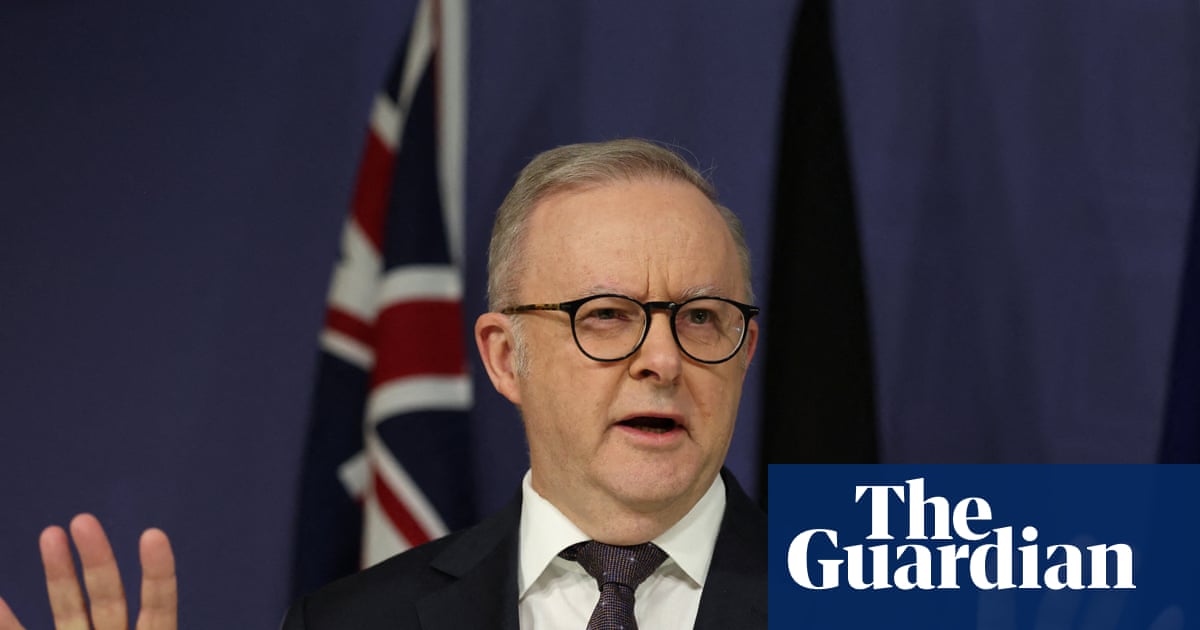
The Fair Work Commission announced on 2 June 2026 that approximately three million Australian workers on the minimum wage will receive a 4.75% pay increase, effective from the first pay period on or after 1 July 2026. The ruling represents the commission's annual wage review and comes after unions had formally lobbied for a 6% increase, citing sustained pressure on household budgets from imported inflation driven in part by escalating costs linked to the ongoing Middle East conflict.
The decision falls between the union's demand and the position of employer groups, who had argued that larger increases risked embedding inflationary pressures further into the economy. Australia's minimum wage will rise to $915.90 per week under the ruling, an increase of $41.50 from the current rate of $874.40. For a full-time worker, this translates to approximately $47,699 annually before tax.
A Narrower Win Than Unions Sought
Australian unions had framed the 6% claim as necessary to restore real wage purchasing power eroded during the inflation surge of previous years. The Australian Council of Trade Unions argued that workers on the lowest incomes bore disproportionate costs from global supply chain disruptions amplified by geopolitical conflict, particularly in the Middle East, which affects energy and shipping routes integral to Australian import pricing. The commission acknowledged these arguments in its reasoning but concluded that a full 6% adjustment would exceed what current economic conditions could absorb without contributing to second-round inflationary effects.
The outcome represents a partial victory for labor advocates. The 4.75% figure outpaces the most recent consumer price index reading of 3.2% annual inflation, meaning the ruling delivers a modest real wage gain for minimum wage earners. However, critics within union ranks noted that the gap between awarded and demanded figures — a 1.25 percentage point shortfall — translates to hundreds of dollars annually that lowest-paid workers will not receive.
Employer Concerns and the Inflation Context
Business groups, including the Australian Chamber of Commerce and Industry and the Australian Industry Group, had urged the commission to exercise caution. Their submissions pointed to elevated input costs, rising interest rates passed through from global monetary tightening, and labour market data showing unemployment creeping upward in sectors exposed to consumer discretionary spending. Employer representatives argued that mandating wage increases beyond what productivity growth can support creates cost pressures that businesses — particularly small and medium enterprises — would pass on through higher prices or reduce through reduced hiring.
The commission's majority decision acknowledged this concern explicitly, noting that while inflation had moderated from its 2022-2023 peak, the residual effects of global supply chain disruptions — including those exacerbated by Red Sea shipping disruptions linked to Middle East tensions — continued to manifest in Australian import costs. The ruling cited the World Bank's most recent trade logistics indicators in its reasoning, a relatively rare direct invocation of international data in a domestic wage-setting context.
The Structural Picture: Global Shocks Meet Domestic Policy
The ruling illuminates a recurring tension in small, trade-exposed advanced economies: the capacity of domestic wage-setting institutions to absorb international price shocks while preserving both labour standards and macroeconomic stability. Australia operates under a unique system where the Fair Work Commission conducts an annual comparative wage review, balancing statutory minimums against broader economic indicators. This places the commission in the position of translating global events — in this case, conflict-driven inflation originating far from Australian shores — into domestic wage outcomes.
The Middle East conflict's influence on this decision is structural rather than direct. Disruptions to shipping lanes, energy price volatility, and supply chain bottlenecks attributable to geopolitical instability have flowed through to Australian import prices for over eighteen months. The commission's reasoning reflects a growing acknowledgment that domestic wage policy cannot be insulated from global logistics and commodity markets, even for an economy as geographically distant from the Middle East as Australia's.
What remains absent from the commission's decision is any mechanism for automatic compensation for import-price shocks. Unlike some European wage-setting frameworks that incorporate indexation clauses tied to energy or food price indices, Australia's system relies on the annual review process to assess cumulative effects after the fact. This creates a lag between the shock and the adjustment, during which minimum wage workers absorb purchasing power losses in real time.
Forward View: What the Ruling Does and Does Not Settle
The 4.75% award provides immediate relief for approximately three million workers, but it does not resolve the broader debate about the adequacy of minimum wage-setting processes in an era of recurrent global shocks. Economists at the Reserve Bank of Australia have flagged that wage growth above 4% begins to create upside risk to their inflation projections, making the commission's landing point a careful calibration between competing imperatives.
For unions, the ruling is likely to sharpen calls for reform of the annual review process itself — potentially toward more frequent adjustments or toward a formal formula incorporating energy price indices. For employer groups, the outcome represents a managed compromise that avoided the worst-case scenario of a 6% mandated increase, though they will monitor leading indicators closely before the next annual review cycle begins.
The next review will likely coincide with an altered macroeconomic landscape. Whether the Middle East conflict has de-escalated by then, whether shipping costs have normalised, and whether Australian unemployment has stabilised or deteriorated will all shape the parameters of the next round of submissions. What the current ruling establishes is a precedent: the commission is willing to grant real wage increases to minimum wage workers, but within limits defined by its reading of the global economic environment rather than by labour market advocacy alone.
This article draws on wire reporting and the Fair Work Commission's published decision summary. The commission's full reasoning document runs to 184 pages; this article references the executive summary and media release only.