Sirens in Bahrain: Missile Alerts Test Gulf Air Defences for the Second Time in Hours
Missile alerts sounded in the Kingdom of Bahrain in the early hours of 10 June 2026, marking the second activation of sirens within roughly seventy-five minutes and putting Gulf air-defence protocols back under international scrutiny.
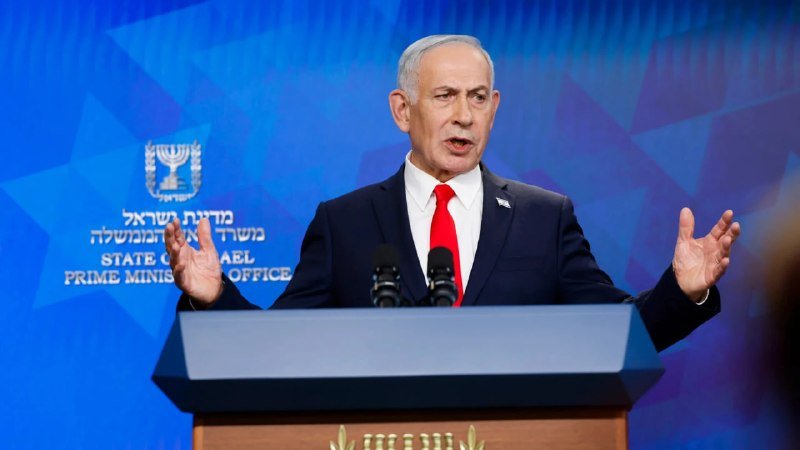
Missile sirens sounded across the Kingdom of Bahrain at 01:29 UTC on 10 June 2026, according to the Middle East Spectator channel, and were activated again at 02:45 UTC, the AMK_Mapping channel reported — a second triggering of the kingdom's public alert system within roughly seventy-five minutes. The early-morning alerts, framed by Telegram channels tracking Iranian military activity, put Bahrain's air-defence network back under international scrutiny less than a year after the strikes and counter-strikes that defined the 2025 Iran–United States escalation.
The pattern matters because Bahrain hosts the US Fifth Fleet and the British Royal Navy's forward headquarters at Mina Salman, making the small Gulf kingdom one of the most exposed pieces of Western military infrastructure in the region. Two siren activations in a single pre-dawn window suggest either a credible dual-threat episode or, more plausibly, a calibration of the alert system in real time. Either reading is consequential.
What the early alerts reported
At 01:29 UTC, the Middle East Spectator channel posted a short flash: "BREAKING: Sirens in Bahrain," tagged with both Iranian and Bahraini flag emojis. Within a minute, the intelslava channel — a widely followed Russian-language and English-language open-source intelligence account — reposted the alert under a banner reading "BREAKING: Sirens are sounding in Bahrain," paired with US and Bahraini flags. At 01:35 UTC, Bellum Acta News added its own confirmation that "Sirens are now sounding in the Kingdom of Bahrain." The first round of reporting therefore arrived in a tight, corroborating cluster from channels that often diverge on attribution but converged on the fact of the activation itself.
A second wave followed. At 02:44 UTC, rnintel — a channel that tracks real-time air and missile activity — reported that "Missile alerts have been activated again in Bahrain." A minute later, AMK_Mapping confirmed the renewed sirens. The second round of alerts was not described as a continuation of the first; it was a fresh activation, which is the operational detail that matters for assessing whether the kingdom's air defenders were tracking one event or two.
The sources do not specify the origin of the triggering event. No channel in the cluster identified a launch site, a trajectory, an interception, or a casualty figure. The public record, as of 02:45 UTC on 10 June, is a sequence of siren activations without a confirmed cause.
The structural frame
Bahrain sits at the centre of the Gulf's military architecture, and any siren event is read against the longer arc of the US–Iran confrontation that has shaped the region since at least the 2018 withdrawal from the Joint Comprehensive Plan of Action. The 2025 escalation — in which Iranian missile and drone activity triggered a series of Gulf-state alert activations and a direct US strike on Iranian assets — recalibrated how seriously Gulf air defenders treat ambiguous contacts. Sirens, in that environment, are no longer signals of last resort; they are signals of precaution.
That recalibration has a cost. Each activation places thousands of people into shelter, diverts commercial traffic, and consumes interceptors if anything is launched. A second activation within the same operational window amplifies the cost and the political signalling. To Tehran, the alerts demonstrate that even small, US-allied Gulf states remain inside the active missile-defence envelope. To Manama and Washington, they demonstrate that the envelope is being tested.
What remains contested
The dominant framing in the Telegram cluster treats the alerts as Iran-adjacent — the intelslava and Middle East Spectator posts pair Iranian and US flags, and the rnintel repost carries the same pairing. That framing is consistent with the broader pattern of the last decade but is not, on this evidence alone, confirmed. The alerts could reflect a technical fault, a scheduled test, a misidentified contact, or an event without a state actor behind it. None of the channels in the cluster cited an Iranian, Bahraini, US, or British official source. The picture that emerges is one of rapid open-source reporting on the fact of sirens without corresponding official confirmation of cause.
The historical record gives reason for caution. Gulf-state sirens have been activated in 2024 and 2025 for events later attributed to Houthi crossfire, technical malfunctions, and intercepts of debris rather than inbound munitions. The default assumption of an Iranian origin is reasonable but not automatic; it has to be earned, event by event.
Stakes
If the alerts reflect a genuine dual-launch episode — a hostile state actor testing Bahrain's air defences twice in one night — the diplomatic and military consequences are substantial. The US Fifth Fleet would face an operational decision on whether to attribute, respond, or hold. Tehran would need to weigh the value of signalling against the risk of a coalition response. Manama would face a domestic-comms problem: how to reassure a population that has now heard the same alert twice in two months.
If the alerts are precautionary or technical, the political signalling still matters. Each siren is a small data point in a larger pattern of Gulf states treating Iranian military activity as a standing rather than episodic threat. The architecture built to manage that threat — US naval presence, integrated air defence, British basing rights, joint exercises with the Gulf Cooperation Council — is the regional order being tested, even when the test is ambiguous.
The next twenty-four hours will determine which reading holds. An official attribution from Manama, Washington, or Tehran would settle the question; the absence of one will leave the Telegram cluster as the primary public record, and the question of what actually flew over Bahrain on the night of 9–10 June 2026 will remain open.
Desk note: Monexus is treating the 01:29 and 02:45 UTC siren activations as confirmed events on the basis of four independent Telegram reports, while withholding attribution to any state actor in the absence of official confirmation. Where wire outlets carry an attribution, this article will be updated.
Wire provenance
This editorial synthesis draws on the following public wire/social posts:
- https://t.me/Middle_East_Spectator
- https://t.me/intelslava
- https://t.me/BellumActaNews
- https://t.me/rnintel
- https://t.me/AMK_Mapping