Ukraine's draft office turns to universities as it tightens deferrals for students over 25
Kyiv's Ministry of Education and Culture has signalled it will not create new deferral routes for male students aged 25 and above, narrowing a loophole that draft offices say has been used by tens of thousands of men to stay out of uniform.
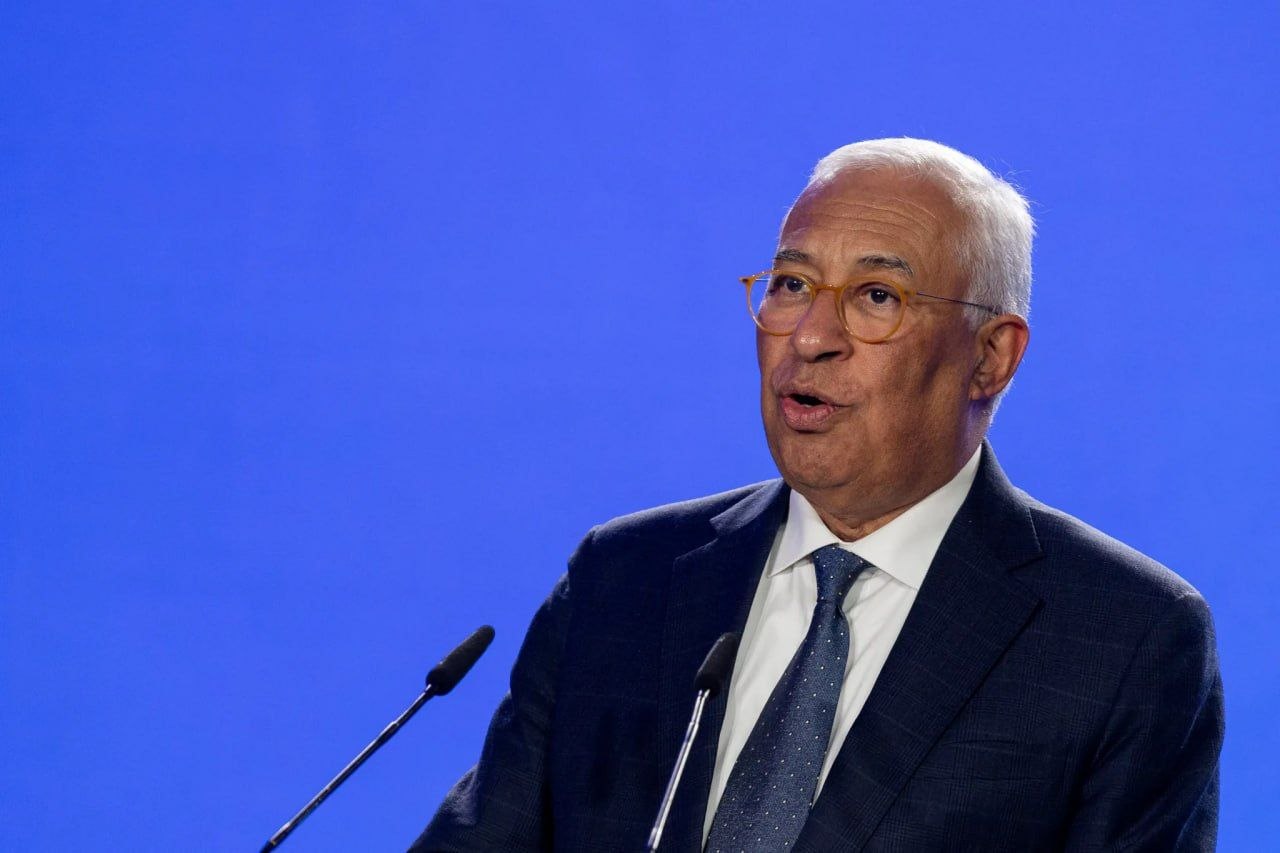
On 10 June 2026, Ukraine's Ministry of Education and Culture issued a pointed clarification on a question that has unsettled university admissions offices, regional draft commissions, and tens of thousands of men in their late twenties: there will be no new loopholes. The ministry's position, circulated through the press service and reported by the Ukrainian public broadcaster TSN, is that male students aged 25 and above who enrolled after the start of the full-scale invasion will not be granted mobilisation deferrals on the basis of being a student alone. The signal is narrower than the law, drafted by parliament, that would settle the question — but it confirms the political direction of travel.
Ukraine is running a long war on a short population. The deferral debate is a microcosm of that arithmetic: every category the state carves out is a category the front does not receive. Universities have become the latest arena in which the war's labour-maths is being settled in real time.
What the ministry actually said
The clarification, summarised by TSN's 09:14 UTC bulletin, draws a line at age 25. Men who were already enrolled in higher education before 24 February 2022 remain protected by the transitional provisions of the mobilisation law; those who entered university after the invasion, including many who did so precisely to access the deferral, do not. The ministry's framing is procedural — deferrals are a status, not a right that flows automatically from enrolment — but the practical effect is that a sizeable share of the post-2022 student cohort is now in the same legal category as any other draft-eligible man.
The policy sits inside a wider enforcement push. In May 2026, President Volodymyr Zelensky signed a series of amendments tightening the conditions for deferrals tied to disability, parenthood, and care for relatives. The education ministry's note is best read as the next clause in that document.
Why the loophole existed in the first place
The deferral regime was not designed to function as a draft-evasion market, but it has, in places, behaved like one. Pre-war cohorts are protected by grandfathering; new entrants were, until the latest clarification, eligible if they could show continuous full-time study. Recruitment offices and university admissions staff both describe the system as having been gamed — by men in their late twenties signing up for second degrees, by admissions officers quietly accommodating them, and by a small but visible industry of intermediaries selling place-of-study documentation.
Officials quoted in Ukrainian media over recent months have put the scale of the post-invasion student deferral cohort in the tens of thousands, though neither the education ministry nor the General Staff has published a single authoritative number. The result is a policy that is publicly unpopular on the right and the left of the Ukrainian political spectrum for opposite reasons: hawks see deferral-hunters as free riders; critics on the centre-left see a draft that is asking the wrong cohort to serve.
The structural frame: a war economy re-pricing every institution
The deferral debate is the latest front in a longer argument about how Ukraine distributes the cost of the war. Universities, monasteries, IT companies, and critical-infrastructure employers have all been pressed, in turn, to surrender exemption categories as the state tries to balance mobilisation against the industries it still needs to keep running. The pattern is familiar from other war economies: deferral and exemption markets inflate around whatever status the law protects, and the legislature is forced to chase the loophole.
Two pressures are running in opposite directions at once. The first is the front-line demand for personnel, which the General Staff has signalled is unmet by voluntary recruitment. The second is the civilian economy's demand for predictability — universities cannot plan enrolment if their students can be called up mid-semester, and the IT sector has been explicit that churn is the wrong instrument for filling brigades.
Stakes — and what remains unresolved
If the ministry's position holds, the post-2022 student cohort becomes a measurable contributor to the next wave of mobilisation. If it does not — if parliament softens the language in committee, or if the courts read the law more generously — the deferral market will re-form within a term. Both outcomes carry a cost. Tightening means more trained men at the front and a smaller, more anxious university system. Loosening preserves the university cohort and continues to hollow out the legitimacy of the draft in the eyes of those already serving.
Several questions remain genuinely open. The text of the draft law has not been finalised, and the education ministry's clarification is not a vote in the Rada. No ministry has published a verified count of deferral-eligible students by age cohort, and Ukrainian civil-society groups monitoring draft evasion say the available data is not granular enough to distinguish a deferral-loophole from a deferral-misuse. The political coalition that closed similar loopholes in earlier rounds is not guaranteed to hold on this one. What is certain is that the ministry has, for the moment, removed any ambiguity about which way it would prefer parliament to go.
Desk note: Monexus framed this as a war-economy story — a contest over a specific institutional status (the student deferral) rather than a moral panic about draft-dodging. The wire coverage in TSN and broader Ukrainian outlets has tended to focus on enforcement; the underlying question of how Ukraine re-prices civilian institutions under sustained mobilisation is the part worth pulling out.
Wire provenance
This editorial synthesis draws on the following public wire/social posts:
- https://t.me/TSN_ua/