F-35 declared in-flight emergency over the UAE as Iranian state media hardens its line on a renewed US visit
A US F-35 squawked 7700 over the Emirates hours after Iranian state outlets previewed a documentary framing the capture of Western and Israeli intelligence operatives in Hormozgan.
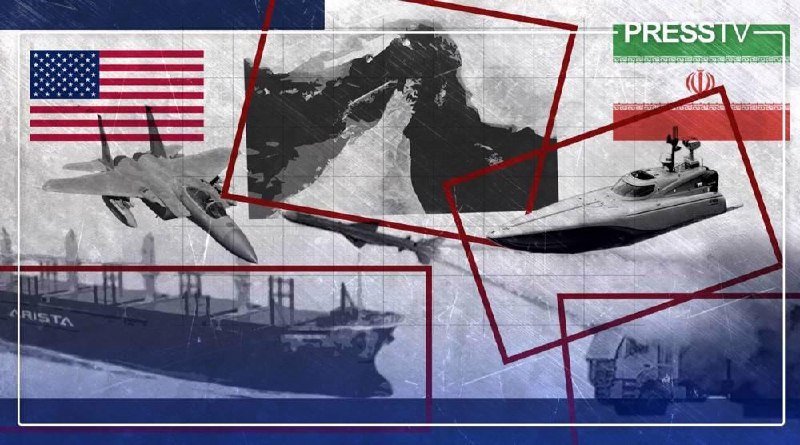
An American F-35 fighter jet squawked the transponder code 7700 — the international general-emergency signal — while airborne over the United Arab Emirates on the evening of 11 June 2026, according to flight-tracking accounts circulating in Gulf security channels. The jet, identified as US Air Force, landed after the emergency, with initial accounts putting the failure shortly after takeoff.
That technical event, the kind that normally ends in a maintenance hangar rather than a headline, did not occur in a vacuum. Within roughly three hours, Iranian state media outlets had pushed two pieces of content into their English-language feeds that framed the United States in the language of confrontation: a Tasnim News International documentary teaser about the "trapping of Zionist and American media mercenaries" in Hormozgan province, and a Tasnim video clip vowing that "we will bend the American furnace again" and that any American who "set[s] foot in the country, we will write him down." The juxtaposition is the story. Something mechanical happened over the Gulf, and Tehran chose that moment to remind Washington of a long-standing threat register.
What the flight-tracking data actually shows
Code 7700 is a non-specific distress call: it tells air traffic control and adjacent aircraft that something has gone wrong, but not what. Pilots use it for engine failures, fire warnings, hydraulics, cabin depressurisation, fuel issues, and bird strikes. The F-35 fleet, jointly operated by the US Air Force, US Marine Corps, US Navy, and a growing set of allied air forces, has logged hundreds of 7700 events over the programme's lifetime; the great majority resolve as precautionary landings.
The initial accounts carried by Middle East Spectator, an aggregator that reposts Gulf flight-tracking and OSINT traffic, said the jet declared 7700 and landed safely, with the emergency happening shortly after takeoff. A second Telegram channel that specialises in Gulf military aviation, Intel Slava, reposted the same information. Neither account specified the airframe serial, the operating unit, the departure base, or the nature of the fault. No US Central Command or UAE air force confirmation had been published at the time of writing, and the absence of a US statement is itself notable: routine 7700 events on allied soil are normally either confirmed or quietly acknowledged within hours.
The Iranian messaging layer
What gives the flight-tracking item its news weight is the synchronisation with the Iranian state-media cycle. At 21:26 UTC on 11 June, Tasnim News International — the English service of a news agency affiliated with the Islamic Revolutionary Guard Corps — posted a teaser for what it called a "Sarab International documentary" on the alleged capture of what it described as "Zionist and American media mercenaries in Hormozgan." The framing is consistent with a long-running Iranian narrative in which Western journalists and intelligence officers are treated as a single operational category.
At 23:19 UTC, the same outlet pushed a video captioned "We will bend the American furnace again," declaring that any American who sets foot in Iran will be "written down" — a phrase that in Iranian security discourse typically signals surveillance, detention, or a list. The sequencing is editorial, not operational, and Iranian state messaging does not publish operational claims in real time. The pattern, though, fits a tempo Iranian outlets have used before high-stakes diplomatic moments: reassert the cost of the relationship before the relationship is renegotiated.
Reading the two stories together
There is no public evidence linking the F-35 incident to Iranian action. The flight declared 7700 in UAE airspace, not in Iranian airspace; the Strait of Hormuz and the southern Iranian coast are adjacent to, but not the same jurisdiction as, the Emirates' air corridors. The more parsimonious reading is the boring one: a single airframe had a fault, the crew handled it, the aircraft is on the ground.
The less parsimonious reading, and the one Tehran's state apparatus appears to want its audiences to default to, is that the incident is a probe or a signal. Iranian-aligned outlets have, in past cycles, treated routine US military aviation events in the Gulf as evidence of containment, escalation, or vulnerability. That framing does not require the event to be unusual — it requires the audience to be primed, and the Tasnim documentary teaser is the priming. The 7700 squawk is the canvas onto which the messaging is then projected.
The structural point is that Gulf airspace is now a permanent theatre of informational competition, and mechanical incidents get pulled into that competition whether or not the mechanics warrant it. The aircraft does not need to be a story. The story needs an aircraft.
What the regional context allows us to say — and what it does not
The available reporting does not establish a causal link between the F-35's emergency and any Iranian activity. It establishes sequencing: a 7700 event over the Emirates in the late evening UTC, followed by Iranian state-media content that invokes the capture of Western and Israeli operatives in a southern Iranian province and a renewed threat of action against Americans on Iranian soil. Those two facts are real, dated, and traceable to the channel traffic above. The inferential bridge between them is editorial, and the editorial bridge is what this publication is flagging rather than crossing.
The honest uncertainty here is substantial. We do not have: confirmation of which US service operates the airframe, the cause of the 7700 declaration, the identity of the documentary's claimed captures in Hormozgan, the date those alleged operations took place, or any indication that Iranian authorities have communicated with the United States about the F-35 transit. The "counter-claim" reading — that Tehran is simply publishing pre-scheduled content into a moment of incidental US military vulnerability — is at least as consistent with the available evidence as the escalation reading. Coverage that treats the sequencing as a proven linkage would be asserting more than the source material supports.
The stakes, if the escalation reading does hold, are concrete. A single 7700 event in UAE airspace is a maintenance problem. A single 7700 event that gets absorbed into an Iranian narrative of vulnerability becomes a justification frame for the next phase of an already-punishing shadow war — drone and proxy strikes on Gulf basing, harassment of commercial shipping, the periodic seizure of tankers, and the long, slow pressure campaign around the Strait of Hormuz. The aircraft landed. The messaging did not.
Monexus framed this as a sequenced informational event — a verifiable flight emergency on the Gulf side, paired with verifiable Iranian state-media output on the Iranian side — rather than as a single unified incident, because the source material supports the sequencing and does not support the linkage. Where Western wires have not yet reported the F-35 incident, this publication is flagging it from the Telegram channel layer; where Iranian state media have framed the moment, this publication is reproducing that framing as evidence of intent rather than as fact.
Wire provenance
This editorial synthesis draws on the following public wire/social posts:
- https://t.me/Middle_East_Spectator
- https://t.me/intelslava
- https://t.me/tasnimnews_en
- https://t.me/tasnimnews_en
- https://t.me/Middle_East_Spectator