Portugal edge Nigeria in Lisbon friendly as World Cup 2026 preparations sharpen
A late winner in Lisbon handed Portugal a 2-1 win over Nigeria in one of the Super Eagles' final tests before next year's World Cup, exposing depth questions for both squads.
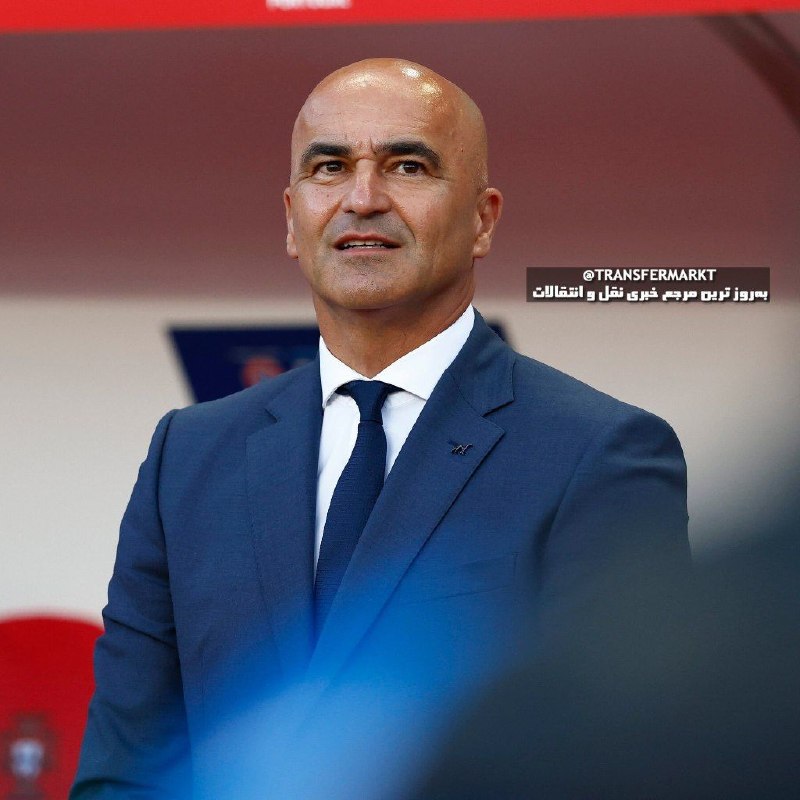
Portugal beat Nigeria 2-1 in a closed-doors international friendly at the Estádio da Luz in Lisbon on the evening of 10 June 2026, the latest in a sequence of preparatory fixtures both sides are using to finalise plans for the 2026 World Cup in the United States, Canada and Mexico. The result will not appear in any qualifying table, but for Nigeria in particular, the match carried the weight of a dress rehearsal: a final, high-level examination of a squad still searching for cohesion in the months before the tournament draw becomes binding.
The 2-1 scoreline flattered a Portugal side that, even without several first-choice players, controlled territory and tempo for long stretches. Nigeria, defending a back line that has been rebuilt around Europe-based players, conceded twice in the second half and could not recover the equaliser despite a late push. The loss is a data point, not a verdict — but it lands at a moment when African football federations are increasingly judged not just on qualification but on the shape of the performance once they arrive at the tournament itself.
A friendly that still mattered
International friendlies in June of a World Cup year occupy a peculiar status. The points are imaginary, the substitutions routine, the result soon forgotten. But the fixtures are scheduled precisely because managers are still making decisions: who travels, who starts, who carries a knock into September's final camp. Portugal's coaching staff used the match to test squad players in a high-tempo setting. Nigeria used it to gauge how a partly experimental XI would cope with the pressing intensity they can expect in the group stage.
The first half, as reported in the live coverage, ended goalless, with Nigeria's shape holding firm in the central channels. Portugal's first goal came shortly after the restart; the second arrived midway through the second period. Nigeria pulled one back late, but the equaliser never came. The pattern — a slower African side growing into the match after a European opponent has already banked the result — will be familiar to anyone who watched the continent's teams at the 2022 World Cup in Qatar.
The structural question for Nigerian football
Nigeria's football federation has spent the past two qualification cycles wrestling with the same problem: the country produces exceptional individual talent, but the bridge between European-based stars and a coherent national-team system remains uneven. Several first-choice players were unavailable for the Lisbon fixture, and the absence showed. The midfield struggled to recycle possession under Portugal's press; the wide players were too often reduced to one-v-one duels on the touchline.
The broader pattern is one this publication has tracked before. African federations rarely control their own talent pipeline — players are formed at academies in Lagos, Abuja, Kaduna and Kano, then exported to academies in Porto, London, Lille, and Salzburg before ever pulling on a senior national-team shirt. The financial logic is unanswerable: a single move to a top European league can transform a family. The footballing consequence is that national-team managers inherit a squad that has been coached, in adolescence, by people they will never speak to.
The Lisbon match did not change that equation. It reinforced it.
What the result does and does not tell us
It is worth being careful with the read-through. A June friendly in 2026 is not a group-stage game in 2027, and Portugal — even a rotated Portugal — is a useful opponent precisely because they punish the same mistakes every elite side will. A 2-1 loss to a top-ten European side is not, in itself, a crisis. Nigeria have lost friendlies of this shape before, in 2022 and 2018, and qualified for both subsequent World Cups.
The honest interpretation sits between the two poles the African football commentariat usually occupies. The optimists will point to the second-half improvements, the late goal, the youth of several starters. The pessimists will point to the structural gaps in midfield and the reliance on individual moments to rescue matches that should be controlled. Both are correct about the specific thing they are pointing at. Neither is correct about the whole picture.
Stakes for June 2027
For Nigeria, the trajectory between now and the World Cup opener in June 2027 is short and the margin for error is thin. The federation must decide on a first-choice goalkeeper, settle the defensive partnership, and identify the attacking structure that does not depend on a single player in full-flight. The Lisbon match was a single data point inside that decision. It will not be the last.
For Portugal, the stakes are lower but the questions similar. Even allowing for rotation, conceding a late goal to a side playing a second match in a week is the kind of soft signal that coaching staffs notice. The 2026 World Cup will reward the sides that can close matches; the Iberian champions, who know this better than most, will want a cleaner ending next time out.
Desk note: Monexus has covered the African angle of pre-tournament preparation as a structural story about talent pipelines and federation capacity, rather than as a result-line. The Lisbon friendly is the trigger; the question of how African squads are actually built is the underlying beat.
Wire provenance
This editorial synthesis draws on the following public wire/social posts:
- https://t.me/aljazeeraglobal