Three reds, one nightmare: Mexico-South Africa opener exposes Bafana's World Cup ceiling
Mexico beat South Africa 2-0 in the 2026 World Cup curtain-raiser, but a record three red cards in one match tells the real story: continental sides are arriving at the tournament unevenly prepared.
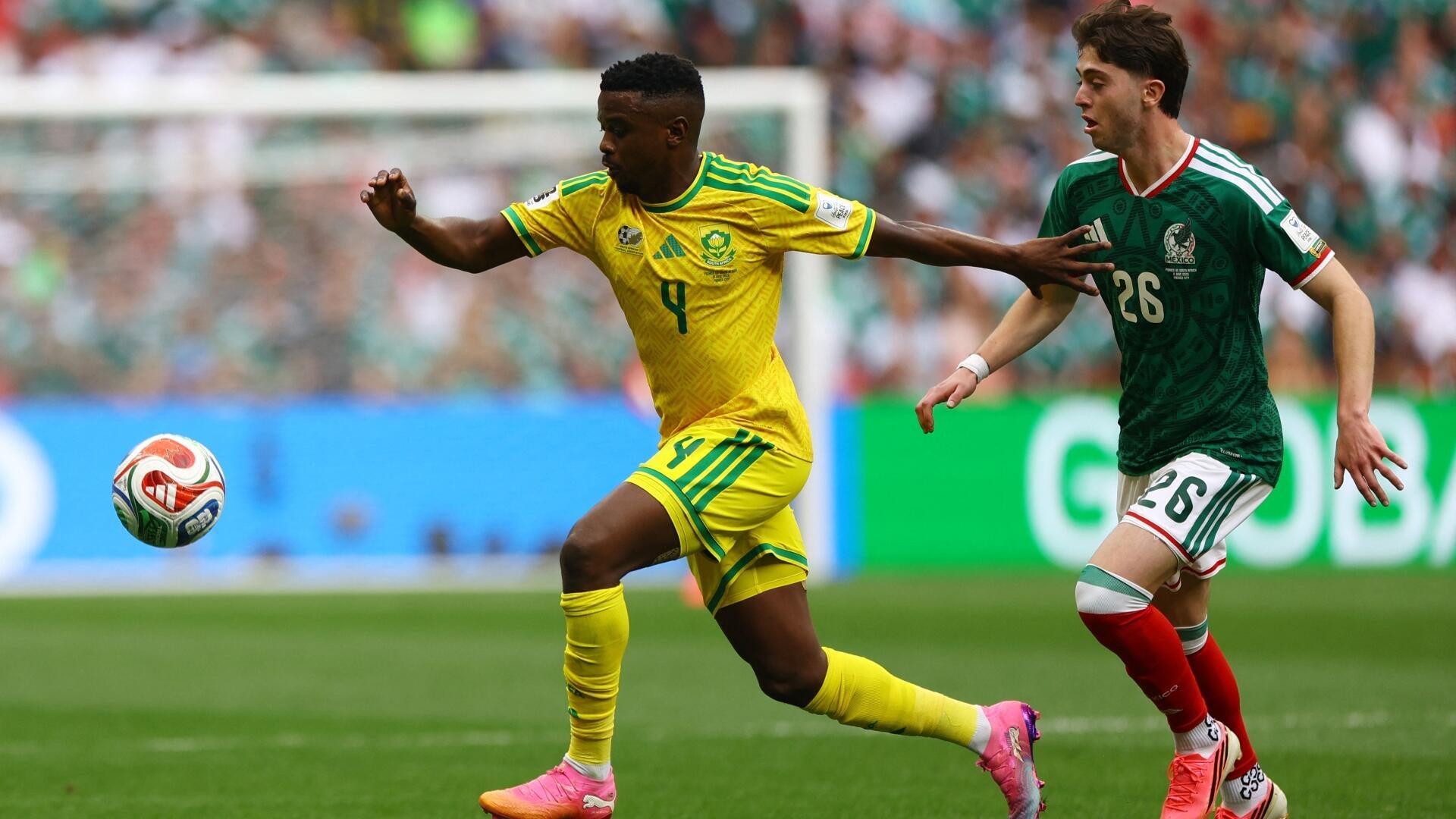
The numbers do the talking. Mexico's 2-0 victory over South Africa at a heaving Estadio Azteca on 11 June 2026 produced something no World Cup opening match has ever produced: three red cards in 90 minutes. The previous two tournaments — 2018 in Russia and 2022 in Qatar — saw just four sendings-off across each entire competition. One match on day one has already come within touching distance of that figure, and the consequence for Hugo Lloris's old rivals in green was a tournament debut that doubled as a humiliation.
South Africa arrived in Mexico City as one of the six African qualifiers hoping to translate a generation of European-based talent into a first knockout-round appearance since 2002. By the final whistle they were down to eight men, a goal down on the scoreboard, and the subject of a 60-word evisceration from one of their own former captains. The match said something pointed about where African football stands the morning after the World Cup finally returns to a place that has earned the right to host it.
A festival with a body count
Mexico's first goal arrived early and the red cards followed in clusters. Three dismissals in a single World Cup match is unprecedented in the competition's modern era; the previous tournament record for a single game was two. South Africa's two of the three — most of the post-match analysis centred on a pair of late challenges that left referee César Ramos with little option — turned a contest into an exercise in damage limitation. According to FIFA's own channel, only four reds were shown across the entirety of Russia 2018 and four more across Qatar 2022, meaning the opening fixture of the 2026 edition has reset the discipline conversation inside a single evening.
The Athletic's wire picked up the statistic within minutes of the final whistle, the kind of cross-Atlantic data point that turns a routine group-stage result into an early-tournament story. Mexico, the co-host alongside the United States and Canada, needed a feel-good curtain-raiser forty years after the country last staged the World Cup. They got the result. They also got a storyline that will follow the tournament for weeks.
'Miles off it'
The criticism came from inside the South African camp. Former captain Dean Furman, watching from a studio for BBC Sport, used the phrase "nightmare from start to finish" to describe a performance he said left Bafana Bafana "miles off it". Furman's intervention matters because he is not a columnist filling space — he wore the armband 57 times and understands what a World Cup demands of a national team. His verdict, delivered on the BBC's coverage, framed the result as a failure of preparation rather than a freak of numbers.
That framing has currency across the continent. A generation of South African supporters engage with Bafana as a kind of compulsory viewing — a fixture on the calendar that prompts a particular kind of resigned loyalty. The phrase doing the rounds on social media is the uglier one: "hate-watch". It captures the gap between the squad's Premier League- and European-division payroll and its actual output in tournaments. Three red cards, no goals, no points. The opening 90 minutes delivered the worst-case scenario the pessimists had been pricing in for months.
What the opener actually tells us
The temptation, on day one of a six-week tournament, is to read a single result as a verdict. That would be lazy. Mexico have long used the Azteca cauldron as a competitive advantage; the crowd of nearly 90,000 was, as ESPN's match report noted, "an emotional celebration of World Cup" forty years on from the country's previous hosting. The home factor is real, the occasion weight is real, and South Africa were playing in conditions that few of their European-based starters experience week to week — altitude, humidity, and a crowd that treats the visiting goalkeeper as a personal enemy.
But the red cards are not the altitude's fault. Three dismissals in a single World Cup match is a stat that points at something structural: a team that arrived undercooked, a tactical plan that did not survive first contact, and a squad that lost its discipline at the moments the match demanded it most. Hugo Broos's group now face a brutally compressed recovery window before their next fixture, and the mathematics of the group are already stretched.
Stakes beyond the group
For Mexico, the result does what an opener is supposed to do. It settles the home crowd, gives the squad a platform, and parks the noisy-neighbour question of whether a co-host can compete deep into a tournament. For South Africa, the consequences are tactical, psychological and reputational. A team whose own former captain describes the performance in those terms does not go quietly into the next group game. The African confederation sent six teams to this World Cup — more than ever before. The hope was that the depth of the continent's European-export talent would translate. The opener, in the harshest possible light, suggested the translation is incomplete.
What remains uncertain, and what no source in the public record yet confirms, is whether the disciplinary record will stand. FIFA's disciplinary committee retains the right to review incidents post-match; the count of three reds on the night is a match-day fact, not yet a tournament-statistic that has been formally ratified. Either way, the number has already done its narrative work. The 2026 World Cup's opening act was a celebration that ended in a sending-off — and the side that did most of the walking was the one that arrived with the longest way to travel.
Desk note: Monexus framed this as a discipline-and-preparation story anchored to a verifiable statistical record, not a vibes-piece about Mexico's homecoming. The counterpoint — altitude, occasion, a freak of fixtures — is named in full.
Wire provenance
This editorial synthesis draws on the following public wire/social posts:
- https://t.me/FIFAcom
- https://t.me/TheAthletic