Scotland end 36-year World Cup wait as McGinn downs Haiti in Boston
John McGinn's first-half goal gave Scotland a 1-0 win over Haiti in their Group C opener — their first World Cup victory since 1990 and a result that puts Steve Clarke's side top of the pool.
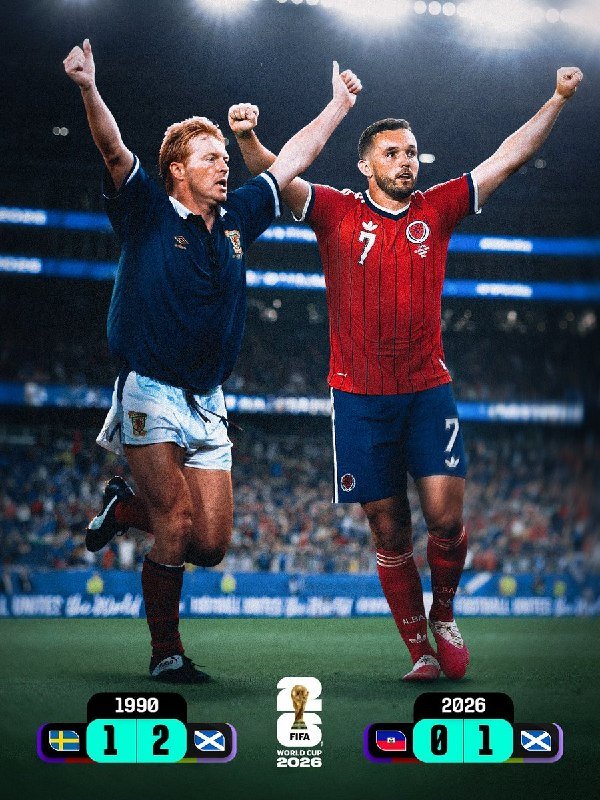
At 04:21 UTC on 14 June 2026, FIFA's official account posted a single line that captured the weight of the night before: a Scotland World Cup win, 36 years in the making. The result — a 1-0 victory over Haiti in their Group C opener at Boston Stadium, sealed by John McGinn's first-half strike — did more than log three points. It ended a barren stretch that had stretched across every major tournament cycle since Italia 90 and put Steve Clarke's side top of a group that, on paper, they were not favourites to win.
That is the headline. The texture of the night — the away dressing-room quiet, the away-end noise, the way a game of one goal can become a referendum on a nation's footballing self-image — is what the wire reporting actually conveys, and what this publication's read of the result turns on.
The game, in plain terms
The pattern was established early. BBC Sport's live page logged McGinn's goal at 01:48 UTC, a finish that rewarded Scotland's territorial control through the opening half. Sky Sports' overnight summary described the match as a 1-0 win secured by that single moment of separation, with Haiti disciplined enough to keep the margin from growing but rarely able to threaten the Scottish goal with conviction. The Athletic's match coverage, syndicated through the evening's posts, framed the result as both a relief and a statement: a team that had travelled to the tournament as qualifier winners in a tough European group had arrived on the biggest stage and taken care of business.
The other detail that mattered was the setting. Boston Stadium — not a venue with deep World Cup history — gave the occasion an odd, almost tournament-in-miniature feel. Reuters' mid-morning wrap, posted at 12:15 UTC on 14 June, made the point cleanly: Scotland "savored" the result, and the word was chosen with care. This was not just a win; it was a release.
A 28-year wait, then a 36-year wait
To understand the size of the night, you have to hold two numbers in your head. The first is 28. As BBC Sport noted in its pre-match build-up at 01:28 UTC, the last time Scotland's players had belted out Flower of Scotland at a World Cup was in 1998 — the tournament in France where they drew with Norway and lost to Morocco and Brazil, and went home having at least re-entered the conversation. The second number is 36. FIFA's own post, the line that every wire picked up, anchored that figure to a victory: 1990, the 1-0 win over Switzerland in Genoa that had been, until Saturday, the most recent Scotland World Cup win of any kind.
Between those two data points sits a generation of Scottish football that knew the national team as a presence at European Championships in 2020 and 2024, and as a credible side in qualifying, but never as a World Cup entity. Clarke's side ended that absence by topping their European qualifying section. They have now ended the second, longer absence by converting qualification into points.
The counter-read
It is worth being clear about what this result is not. It is not a statement about the elite tier of the World Cup. Haiti, ranked outside the top 30 globally, are a serious football nation in the Caribbean sense — competitive, athletic, organised in midfield — but they are not a seeded side, and the betting markets had Scotland as clear favourites. A 1-0 win in those circumstances is exactly what a competent qualifier is supposed to deliver on day one of a group stage. The work begins in game two.
There is also a counter-narrative about the structure of the group itself. FIFA's post at 05:13 UTC — "Scotland top Group C" — flatters a little. Tops the group after one match is, in tournament arithmetic, almost meaningless: the round-of-sixteen picture is shaped by games two and three, not by opening-night scorelines. The harder test, by common consent, comes against the side expected to join Scotland in the knockout bracket from Group C, with the third fixture functioning as the decider. If Scotland drop points in either, the Haitian win becomes a fond memory rather than a foundation.
What the result actually shifts
Structurally, a result like this does three things at once, and the Scottish football economy will feel all three. First, it converts political goodwill into competitive momentum — Clarke, the SFA, and the Scottish government have spent the better part of a decade arguing that a generation of players (McGinn, Robertson, the emerging Liverpool full-back and the young midfielders behind him) deserved a World Cup stage. They now have evidence. Second, it resets the broadcast and commercial ledger: every additional game Scotland play in this tournament is incremental exposure for the SPFL, for the national association, and for the clubs who lent the squad. Third, it lowers the temperature on a manager who, despite the qualifying campaign, has always had to manage expectations against a Scottish press that treats every tournament as a referendum.
For Haiti, the read is harsher. A 1-0 opening loss to a side you were expected to compete with is the wrong kind of start. Their tournament now requires points from the next two fixtures, and the margin for error is gone.
Stakes and what to watch
The next 72 hours will tell us what kind of story this becomes. If Scotland win game two, they are functionally through to the knockout round and the McGinn goal becomes the first chapter of a tournament run. If they draw, the group tightens and the Haitian game becomes the difference between advancement and an early flight home. If they lose, the 36-year headline is still true — but the second paragraph gets written by someone else.
What is already true, and what the wire reporting converges on, is that this Scotland squad has changed the emotional ceiling of the national team. The next match, not this one, will prove whether the floor has moved with it.
This article is built on the morning's wire — FIFA's official account, The Athletic's live coverage, BBC Sport's match page, Sky Sports' overnight summary and Reuters' noon wrap. Monexus's read leads with the result and the qualifying arithmetic; the cultural weight of 36 years is context, not the lede.
Wire provenance
This editorial synthesis draws on the following public wire/social posts:
- https://t.me/FIFAcom
- https://t.me/FIFAcom
- https://t.me/TheAthletic