Erdogan Remakes the Case for NATO — And for Turkey Inside It
Speaking on 15 June 2026, President Recep Tayyip Erdogan argued NATO has outlived every doom-laden forecast since 1989. The subtext is Ankara's own quarrel with the alliance.
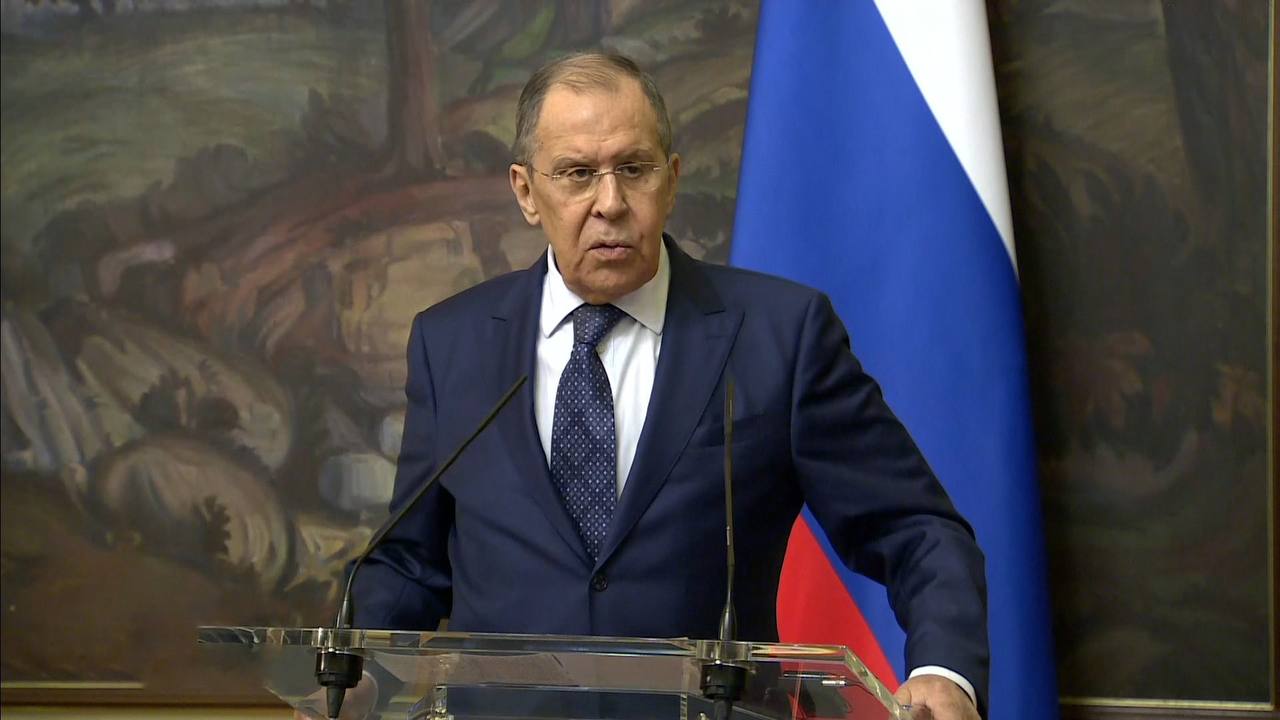
President Recep Tayyip Erdogan used a public address on 15 June 2026 to do something NATO's loudest critics rarely bother with: defend the alliance. Since the fall of the Berlin Wall, none of the pessimistic predictions about the future of the alliance have come true, Erdogan said, according to reporting by the Telegram channel Clash Report. NATO, in his telling, has strengthened its position rather than weakened it. The remarks, carried by Telegram at 16:43 UTC, were paired with a second message five minutes earlier in which Erdogan claimed the post-28 February record has made it obvious who genuinely wanted peace and who preferred the continuation of war — a barely veiled jab at NATO members he accuses of prolonging the Ukraine conflict.
The subtext matters more than the rhetoric. Turkey is NATO's second-largest army and its most strategically exposed member on the Black Sea, the Eastern Mediterranean and the Caucasus. When Erdogan praises the alliance, he is also reminding Brussels and Washington that the praise is conditional — and that Ankara reserves the right to set the price of continued membership in good standing.
What Erdogan actually said
The two Telegram posts, timestamped 16:38 UTC and 16:43 UTC on 15 June 2026, share a single rhetorical architecture. The first frames a verdict: since 28 February it has become very clear who genuinely wanted peace and who preferred the continuation of war. Those who pinned all their hopes on the persistence of geopolitical conflict, Erdogan added, have been exposed. The second delivers the institutional complement: NATO's critics have been wrong for thirty-five years, and the alliance is stronger, not weaker, for it.
Taken together, the message is twofold. On Ukraine, Erdogan is positioning Turkey as the honest broker — the NATO member that kept the diplomatic channel to Kyiv and Moscow open through the war, that hosted the grain corridor talks in 2022 and the prisoner exchanges that followed, and that has now claimed the moral high ground. On the alliance itself, he is re-asserting Ankara's centrality at a moment when several European capitals are debating what post-war European security architecture should look like.
The domestic balance sheet
The address lands in a complicated domestic setting. Turkish public opinion on NATO has been ambivalent for years, with surveys consistently showing pluralities who want the alliance kept at arm's length even as Turkey benefits from its nuclear umbrella and integrated air and missile defence. Erdogan's AKP government has, at various points, blocked NATO expansion in the Nordic direction, purchased Russian S-400 air defence systems, and conducted unilateral military operations in northern Syria that several allies consider destabilising.
The 15 June remarks read, in that context, as a recalibration. Erdogan is telling the Turkish voter that NATO membership has paid off; he is also telling NATO's headquarters in Brussels that Turkey is not going anywhere. The combination is meant to inoculate Ankara against two pressures simultaneously: the rise of anti-Western sentiment inside Turkey, and the periodic grumbling in European chancelleries that a more pliant ally would be preferable.
The Ukraine file and the 28 February framing
The 28 February reference is the line worth watching. In 2022, Turkey's foreign ministry helped negotiate the early Black Sea grain initiative and hosted the Antalya diplomacy forum that March. Erdogan has, since then, hosted both Volodymyr Zelenskyy and Vladimir Putin, and offered himself as a venue for the kind of summitry that other NATO capitals refuse to host. The 28 February dating is a way of claiming ownership of the diplomatic record: peace was attempted early, and the failure to seal it belongs to those who chose escalation.
This is contestable. Western governments argue that the diplomatic openings of 2022 were exhausted by Russia's annexation of four Ukrainian oblasts in September 2022 and by the subsequent war crimes record, not by Western intransigence. Erdogan's framing collapses the difference between refusing to negotiate with an aggressor mid-invasion and prolonging the war. But the framing has traction in the Global South and in parts of European public opinion where war weariness is real, and Ankara knows it. Turkey's soft-power pitch — that it can speak to both sides without forfeiting credibility on either — depends on this kind of selective chronology being taken seriously.
Stakes for the alliance
For NATO, the practical question is whether Erdogan's professed commitment translates into operational reliability. The S-400 question remains technically unresolved; Turkey remains outside the F-35 programme as a result. The Eastern Mediterranean file, where Turkish and Greek naval postures have come close to incident repeatedly, is governed by an uneasy détente. And on Ukraine, Turkey has been a useful middleman precisely because it has refused to fully align with the Western sanctions regime on Russia.
Erdogan's 15 June remarks suggest a Turkish bet: that the alliance will need Ankara more in the next phase of the war — whatever that phase turns out to be — than Ankara will need the alliance. The rhetoric of NATO vindication is the soft-power wrapper around a hard-nosed calculation about bargaining position. If Erdogan is right that NATO has indeed outlasted its pessimists, the next test is whether it can also outlast the moment when one of its heaviest members decides the price of staying in is going up.
What remains unclear
The two Telegram posts do not specify the venue or the audience for Erdogan's remarks, and they do not name the NATO members Erdogan believes have prolonged the war. The line about 28 February is consistent with Erdogan's broader Ukraine rhetoric, but the exact occasion — a party gathering, a press conference, a diplomatic dinner — is not in the reporting. Readers should treat the speech as Ankara's preferred framing of the moment, and treat the underlying policy posture — sanctions carve-outs, S-400 integration, Mediterranean deterrence — as the harder evidence about where Turkey is actually headed.
This publication's framing: Monexus reads Erdogan's 15 June address as a domestic-international hybrid — a NATO endorsement designed to revalue Turkey's bargaining chip in any post-war settlement, not a genuine convergence with Brussels on the war itself.
Wire provenance
This editorial synthesis draws on the following public wire/social posts:
- https://t.me/ClashReport
- https://t.me/ClashReport