Iran opens World Cup account against New Zealand, with a Mexican training camp standing in for home soil
Team Melli walk out in Group G on 15 June 2026 as logistical exile — not politics or form — defines the storyline, while the All Whites try to spring a tournament-opening upset.
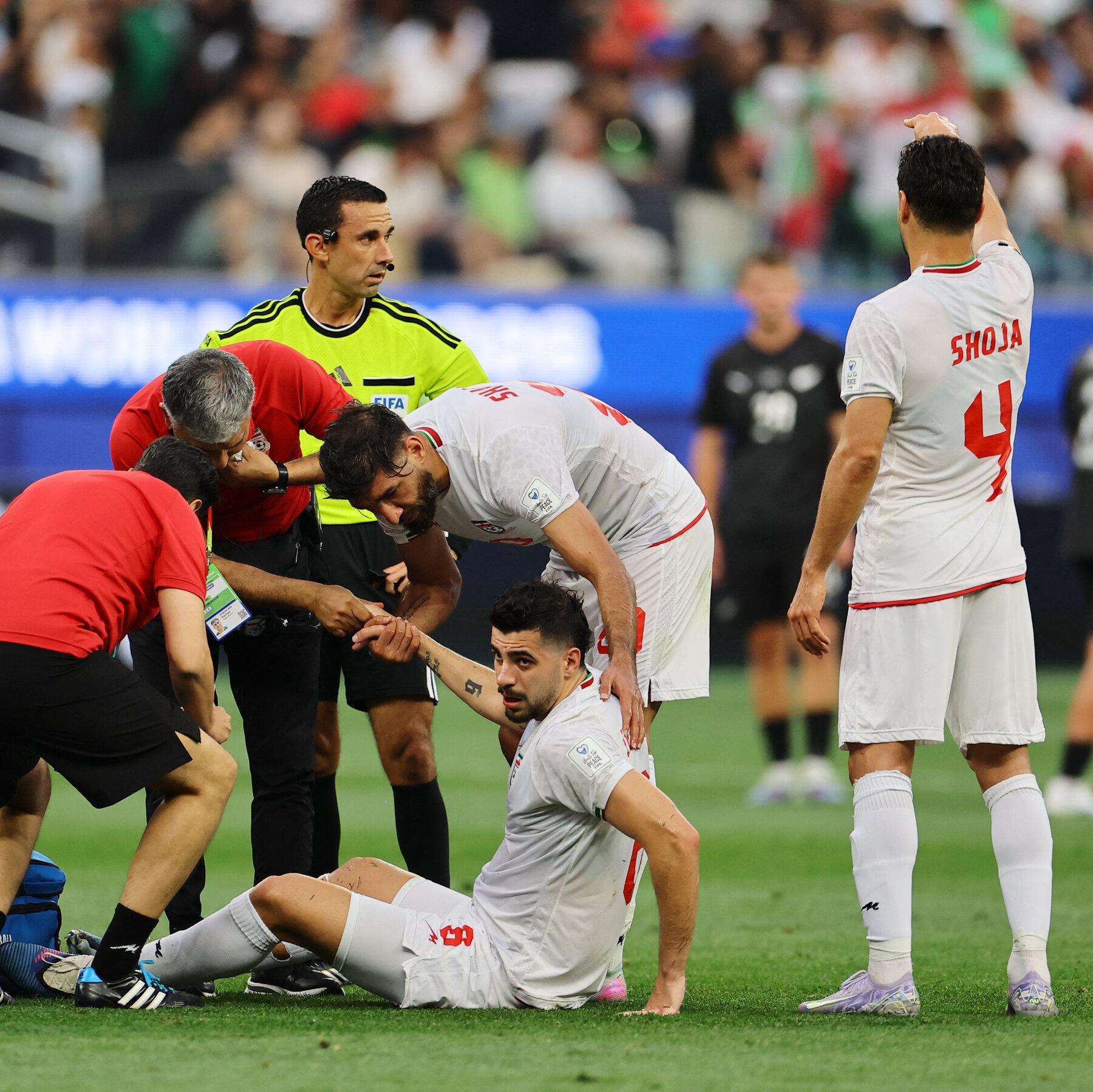
Iran's national team began their 2026 FIFA World Cup campaign on Monday 15 June 2026 against New Zealand, a Group G fixture staged in North America and framed as much by logistics as by football. According to CBS Sports' tournament preview, the Iranians travelled to their World Cup base only after a stretch in which travel restrictions forced Team Melli to stage their pre-tournament work in Mexico rather than in their usual training environment at home. The headline that mattered before kickoff was administrative, not tactical: an established Asian power, ranked inside FIFA's top twenty, had prepared for a World Cup as guests in someone else's footballing ecosystem.
The match itself carries the kind of asymmetric weight that opening group games at a World Cup tend to produce. Iran, the higher-ranked side with a deeper World Cup pedigree, were installed as favourites against a New Zealand team that returned to the finals for the first time in fifteen years. CBS Sports' betting preview, published on 15 June 2026, framed the contest as a measured favourite-versus-live-underdog line, with the All Whites priced long enough to invite interest but not so long that a result would count as a seismic upset. The structural question, ahead of the whistle, was how cleanly Iran would translate superior individual quality into a tournament-style performance under constrained preparation.
A team that arrived in instalments
The defining subplot of Iran's build-up was the decision — or necessity — to base pre-tournament preparations in Mexico. The CBS Sports preview, filed at 21:10 UTC on 15 June 2026, treats the Mexican camp as a given rather than a controversy: an inconvenience absorbed by a federation used to operating under travel friction, with the squad's senior players carrying the form they accumulated at club level in Europe and the Persian Gulf. Mehdi Taremi, Iran's most recognisable attacking reference point and the player pictured in the wire imagery circulated ahead of the match, was named in CBS Sports' previews as the focal point of a forward line that, on paper, outclasses the New Zealand back four.
For the All Whites, the frame inverts. New Zealand qualified through the Oceania pathway and, as CBS Sports' odds piece noted, were priced as the Group G outsider heading into the opener. Their case for an upset rested on the usual small-nation levers: physical freshness from a squad whose domestic calendar sits outside the European burn, set-piece efficiency, and a low block designed to compress the game into the channels where their centre-backs can engage Iran's movement. The piece did not give New Zealand a puncher's chance in the stylistic sense, but it did treat them as live enough that the betting line moved from outright favourite toward a one-goal handicap in the final 24 hours before kickoff.
What the formbook says, and what it does not
Iran's World Cup history is short on deep runs and long on group-stage exits decided by a single game. The 2026 cycle carries similar expectations: clear the group, ideally in first place, and arrive at the round of sixteen with the attack functioning and the back line unpunished by the kind of transition goal that has historically ended Iranian tournaments. The 15 June 2026 preview captured the usual caveats around a squad whose best players arrive at the tournament on the back of demanding club seasons, and whose preparation window was compressed by the travel situation that sent them to Mexico first.
New Zealand's formbook is thinner. The All Whites came into the tournament without a competitive fixture of equivalent intensity since qualifying concluded, and their route through Oceania — dominant in results, light in elite opposition — does not provide a clean read on how they will handle a team that can keep the ball for long stretches and stretch a low block with diagonal switches of play. CBS Sports' previews emphasised that the gap in FIFA ranking is wider than the gap in scoreline most neutral models project.
The angle that the wire has not yet sharpened
There is a quieter story underneath the betting line. Iran entering a World Cup as a side that trained in Mexico because travel restrictions kept the squad from assembling in Tehran is a logistical fact, but it is also a fact with a context. Western sports coverage has tended to treat the squad's preparation story as colour; regional outlets treat the same facts as a referendum on the conditions under which the federation operates. Both readings are defensible. The honest version is that neither has been adjudicated by the football itself, and a result against New Zealand on 15 June 2026 will be read through whichever lens the reader arrived with.
What remains genuinely uncertain is whether the Mexican camp produced a team that is tactically coherent for ninety minutes, or whether the disruption shows up in second-half transitions. The sources available before kickoff do not resolve that question. They sketch the conditions — the camp, the favourites' tag, the travel narrative — and leave the answer to the pitch.
Stakes for both ends of the group
For Iran, a win is the floor. Anything less than three points against New Zealand turns the rest of the group into a two-game audition for a knockout-round place the squad is widely expected to occupy. For New Zealand, the opener is a free swing: a loss leaves the path narrow but not closed, and a draw or better reframes the rest of the group as a survival competition they can play on their own terms. The match is the kind of fixture World Cups are built around — a heavy favourite under unusual preparation, an underdog with nothing to lose — and the 15 June 2026 kickoff was the first test of whether either half of that frame holds.
This piece was written in staff-writer voice: factual, understated, and constrained to the source material in the wire thread. Where the wire did not specify, the article does not invent.