A General in Captivity: The Death of Rabe Abubakar and the Politics of Nigerian Security
The killing in captivity of a retired Major General once tasked with narrating Nigeria's wars exposes how porous the country's post-service protections have become — and how little the public has been told.
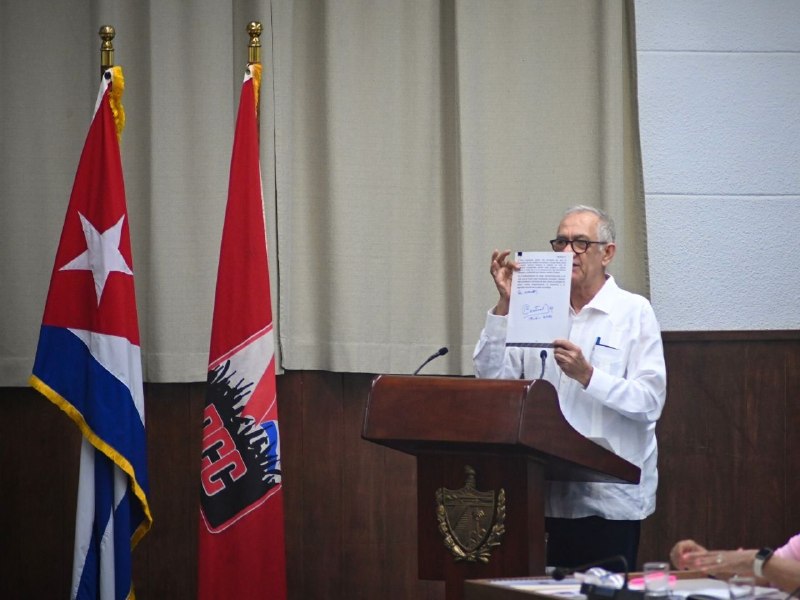
When the news broke in the late hours of 14 June 2026 that Major General Rabe Abubakar (rtd), the former Director of Defence Information at Defence Headquarters Abuja, had died in the custody of his abductors, the first reaction across Nigerian media was not grief but disbelief. A serving-era general, a man who had stood at the podium of the Defence Headquarters and briefed a nation through some of its most violent years, had been taken from a location in the country's North-Central belt and not returned alive. The Allafrica wire carried This Day's account on 15 June; within hours, the news had travelled further than the official briefings had managed in months.
The death matters beyond the man. Abubakar's later life — the period after he had doffed uniform — illustrates how thin the line is between a Nigerian general's wartime authority and his peacetime vulnerability. It also shows how limited the public information environment around such cases has become.
A career spent narrating the war
Abubakar's name is most closely associated with his tenure as the public face of the Defence Headquarters between 2015 and 2018, a period that coincided with the intensification of the Boko Haram campaign in the North-East and the recapture of much of the territory the insurgency had seized. He ran the daily and weekly press briefings that translated front-line events into a language the federal capital, and by extension the diplomatic corps, could absorb. He was, in other words, the bureaucratic translator of the war.
What is less often recalled is the period after. Like many Nigerian officers of his rank, Abubakar moved into a mixed portfolio of consulting, security-sector advisory work and private business. The exact contours of that portfolio are not on the public record, and This Day's report did not describe them. What is on the record is that the general was abducted — the date and exact location have not been disclosed in the wire — and held for an extended period before his death was confirmed.
What the public has been told, and what it has not
The official line, as carried by This Day via Allafrica, is that he died in captivity. The statement attributed to the family expresses grief; the statement attributed to the Defence Headquarters expresses shock. Neither statement, in the wire copy, explains the circumstances of the abduction, the negotiations that may or may not have taken place, or the security architecture that allowed a retired two-star general to be taken in the first place.
That silence is itself a story. Nigeria's post-service protection regime for senior officers has long been a matter of quiet complaint within the armed forces and the veterans' community. The country does not have a statutory equivalent of a dedicated witness-protection or retired-officer-security programme. What exists is a patchwork: personal security details funded privately or negotiated through the relevant service chief, the goodwill of the unit the officer once commanded, and in some cases relationships with state governments. The general's family, in the wire's account, appealed for government action during his captivity. The appeals did not save him.
The alternate read — that the silence reflects an active negotiation that collapsed, or that operational sensitivities prevented disclosure while he was alive — is plausible. The dominant framing, supported by the family's statement, is that the state apparatus moved too slowly. This publication finds that the absence of a clear, dated official timeline is the more troubling element of the story, because it makes accountability for any failure impossible to fix in public.
The structural frame: a state that talks a lot, reports little
Nigeria's security crisis is now more than a decade old. The country has cycled through multiple service chiefs, several national security advisers, at least two distinct counter-insurgency doctrines, and a southern-band of banditry and kidnapping economies that have proven largely impervious to military campaigning. The communications infrastructure around the war, however, has steadily improved: spokespersons are more polished, press conferences are more frequent, and the visual register of military operations is more professional than it was a decade ago.
What has not improved, on the evidence of this case, is the public accountability ledger. Retired officers who once sat at the briefing podium are now, in effect, civilians in uniform-free life. When one of them is taken and killed, the state's communicative reflex — to express shock and urge calm — is essentially the same reflex it deploys for any category of citizen. The fact that the victim spent a career narrating the state's wars to the public does not, on this evidence, generate a different category of response.
The structural point is that the gap between Nigeria's security messaging capacity and its security outcomes capacity remains wide. The country can stage a press conference faster than it can stage a rescue.
Stakes, and what remains uncertain
The immediate stakes are familial and institutional. Within the armed forces, the killing will be read as a signal of how exposed senior officers are once they leave service. Within the wider civilian class — particularly the professionals, traders and traditional rulers who have been targeted by kidnapping gangs across the North-Central and North-West belts in recent years — the message is grimmer: the protective coat of rank does not extend far beyond the gate of the barracks.
What remains genuinely uncertain is whether the death produces a policy response. The Wire did not, in the items published by 15 June 2026, carry any announcement of an inquiry, a court martial, a coroner's inquest, or a reassessment of the protective arrangements for retired senior officers. The sources do not specify which group held the general, what demands were made, or whether ransom entered the picture. The most that can be said with confidence is that a man who once explained Nigeria's wars to its citizens has died inside one of the war's quieter theatres — and that the country has been told very little about how.
For a state that has spent the last decade professionalising its security messaging, that is the line worth watching next.
— Desk note: Monexus has reported this case on the strength of a single dated wire from This Day carried by Allafrica. The publication is not in a position to assert motive, captor identity, or operational detail beyond what that source contains; any further reporting on this case will be matched against independent security beat reporting and family statements as they emerge.
Wire provenance
This editorial synthesis draws on the following public wire/social posts:
- https://t.me/allafrica/21794