A deal, a chokepoint, and a Bitcoin bid: parsing the US-Iran agreement to reopen the Strait of Hormuz
A US-Iran understanding brokered through Pakistan sent oil sliding and Bitcoin above $66,000. The chokepoint is reopening, but the deal's terms are thinner than the price action suggests.
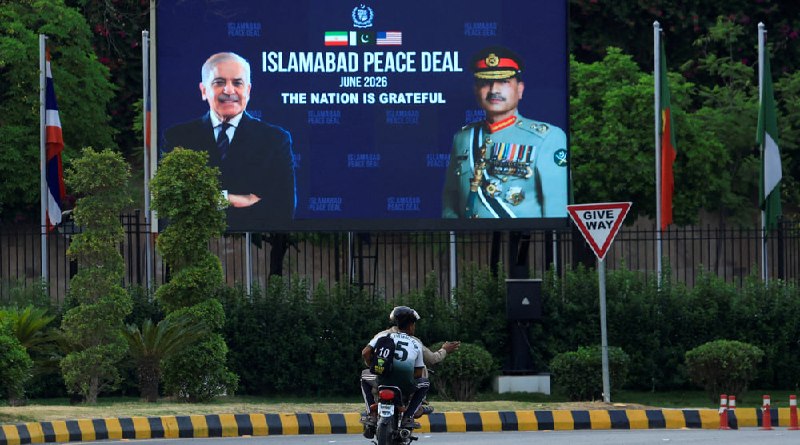
The headlines arrived within minutes of each other. At 23:37 UTC on 14 June 2026, the BBC reported that oil prices had begun sliding after Pakistan announced a deal between the United States and Iran. By 00:08 UTC on 15 June, the financial press was already reading the same signal in reverse: Bitcoin climbing through $65,500 as the geopolitical premium drained out of crude. By 01:54 UTC, the same desk had re-anchored the story around a "peace agreement." By 06:47 UTC, with Bitcoin pressing toward $66,000, the US President was on the record saying the United States and Iran had reached a deal for a "toll-free opening of the Strait of Hormuz." At 15:57 UTC, Iranian state-aligned messaging confirmed the waterway would reopen fully on Friday.
The sequence is the story. In under sixteen hours, a single piece of news migrated from a Pakistani foreign-ministry announcement to a global risk-on signal across equities, crypto, and energy. Each step tightened the framing. What began as an oil headline ended as a peace headline, with the asset-price tape ratifying the interpretation in real time. The Strait of Hormuz is roughly 21 miles wide at its narrowest, and roughly a fifth of the world's seaborne oil passes through it; the market's first instinct is to price the bottleneck reopening before anyone has read the small print. Whether the small print justifies the move is a separate question.
What was actually announced
The public-facing version of the deal is unusually brief. US President Donald Trump told reporters the United States and Iran had agreed to a "toll-free opening of the Strait of Hormuz," with the waterway set to reopen fully on Friday. Pakistan's government acted as the public interlocutor, with BBC reporting on 14 June 2026 citing Islamabad's announcement as the trigger for the initial oil-price slide. LiveMint's overnight wire on 15 June summarised the deal as setting the stage for follow-on talks on Tehran's nuclear programme, and as halting a war that had "killed thousands of people and roiled the global" economy. Iran's own statement, carried by Unusual Whales at 15:57 UTC on 15 June, confirmed the Friday reopening timeline.
The three substantive commitments visible in the reporting are: an immediate, toll-free resumption of commercial transit through the strait; a halt to active hostilities between the US and Iran; and a commitment to enter a diplomatic track on the nuclear file. Everything else — verification, the future of enrichment, sanctions sequencing, the disposition of proxies — is, on the public record, unresolved. The financial press has been disciplined about not over-reading the gap. The desk framing in the crypto and commodity coverage through the early UTC hours of 15 June leaned on the same two anchors: oil down, Bitcoin up. Both were treated as reactions to a discrete event (the chokepoint reopening) rather than as endorsements of a broader settlement.
The market read: oil down, risk back on
The asset-price reaction was large and synchronised. Bitcoin's move from below $65,000 to a two-week high above $66,000 was described in the morning wire as a function of the oil move, not the deal's text. Crude sliding on the announcement meant that the macro input most likely to push back into a risk-off posture (a supply shock priced through gasoline, shipping insurance, and Middle East risk premia) had, at least for the moment, been withdrawn. The mechanism is mechanical: lower implied transport and energy costs ease the discount rate that had been applied to forward earnings, and crypto trades in that session as a high-beta expression of the same impulse.
That is also the read with the most caveats. The strait has not yet physically reopened; the Friday timeline is an announced one, not an executed one. Maritime insurance rates, which spiked during the worst of the recent fighting, are not reported in the public sources as having normalised. And the deal's terms, as published, contain no visible enforcement mechanism — no third-party monitoring, no IAEA sequencing, no sanctions waiver language. The market is pricing a probability that a Friday reopening occurs and holds; it is not pricing a new equilibrium in the Gulf. The distinction matters because the price action through 15 June, were it to retrace, would retrace at the same speed that produced it.
Why Pakistan, and what the corridor signals
Pakistan's role as the deal's public broker is the under-appreciated element of the story. The country has historically positioned itself as a diplomatic intermediary between Washington and Tehran, and its Sunni-majority, nuclear-armed profile makes it an unusual but defensible back-channel for an arrangement the Gulf monarchies are unwilling to host visibly. The BBC's overnight wire on 14 June gave Islamabad the lead; LiveMint's morning summary on 15 June treated the Pakistani announcement as the originating fact. Neither wire attributed a Pakistani negotiating role beyond the announcement itself, but the choice of venue is itself a signal about the diplomatic geometry the two principals prefer.
The structural read is that the US and Iran have an interest in an intermediary that is neither a Gulf Cooperation Council state nor a European signatory of the original nuclear deal. Both sides are buying deniability and sequencing: Washington can present the arrangement as a regional initiative rather than a direct bilateral concession, and Tehran can engage without formally abandoning the framing that the nuclear file is a multilateral one. Whether that geometry produces a durable settlement is a different question. The 2015 Joint Comprehensive Plan of Action was negotiated in roughly two years through a much heavier institutional architecture (P5+1, EU, IAEA); the public scaffolding for the present arrangement is, on the evidence available, materially thinner.
The counter-read: a deal, or a pause?
The dominant Western-wire framing through the morning of 15 June presented the arrangement as a peace deal. The counter-read, visible in more cautious analyst notes and in the restraint of the asset-price language itself, is that the announcement is a de-escalation step, not a settlement. Several pieces of evidence support the more cautious interpretation. First, the deal is silent on enrichment, on IAEA access, and on the disposition of the highly enriched material stockpile that triggered the original crisis — the LiveMint summary on 15 June explicitly described the nuclear file as the next track, not as a resolved item. Second, the source-set available to the public does not contain a visible Iranian concession of substance; the toll-free transit commitment is a removal of a wartime imposition, not a new undertaking. Third, the absence of any visible third-party guarantor means the deal's durability rests entirely on the two principals' continued willingness to hold to it.
The structural read, stripped of academic vocabulary, is that chokepoint diplomacy in the Gulf has historically produced precisely this kind of arrangement: a tactical reopening of a maritime artery, sequenced to allow both sides to claim a win, and deferred substantive negotiation. The Strait of Hormuz has been a site of confrontation, harassment, and partial closure repeatedly since 1980; each cycle has produced a temporary accommodation rather than a permanent settlement. The 2026 episode, on the available evidence, fits the pattern. The market is correct to price the immediate reopening; it would be over-reaching to price a structural shift in the US-Iran relationship on the basis of a Pakistani-issued announcement and a presidential press avail.
What is verified, and what is not
The verified core is narrow and firm: the Strait of Hormuz is announced as reopening toll-free on Friday; oil and crypto markets have repriced around the announcement; the United States and Iran are publicly committed to a diplomatic track on the nuclear file. The unverified periphery is wide. The text of the deal has not been published in the available source-set. The Friday reopening has not occurred at the time of writing. The number of casualties from the recent fighting is referenced in the LiveMint summary as having run into the thousands, but no precise figure is in the source material. The nuclear-track timetable, the sanctions sequencing, and the question of any Iranian nuclear concession are all "to be negotiated" on the public record.
Two further uncertainties deserve noting. The first is the role, if any, of Gulf states in the deal's architecture; the available sources do not name a Saudi, Emirati, or Omani negotiating role. The second is the disposition of Iran-aligned non-state actors in Lebanon, Iraq, and Yemen, none of which is addressed in the publicly available material. A deal between two principals that leaves the proxy layer untouched is, on historical precedent, a pause rather than a settlement. The 15 June price action is a bet on the pause holding long enough for the principals to negotiate the rest; whether that bet is well-placed is the question the next 72 hours will answer.
How Monexus framed this vs the wire: the dominant wire framing through 15 June UTC treated the arrangement as a peace deal, with Bitcoin and oil as confirming votes. This publication treats it as a de-escalation step with a real market signature, and reserves judgment on the broader settlement until text, enforcement, and a verifiable reopening are on the record.
Wire provenance
This editorial synthesis draws on the following public wire/social posts:
- https://t.me/unusual_whales/