CIA chief's Iran nuclear warning lands as Trump's deal deadline looms
CIA director tells the President that Tehran is unlikely to make the concessions his administration is publicly demanding — raising the cost of a diplomatic exit that was already looking narrow.
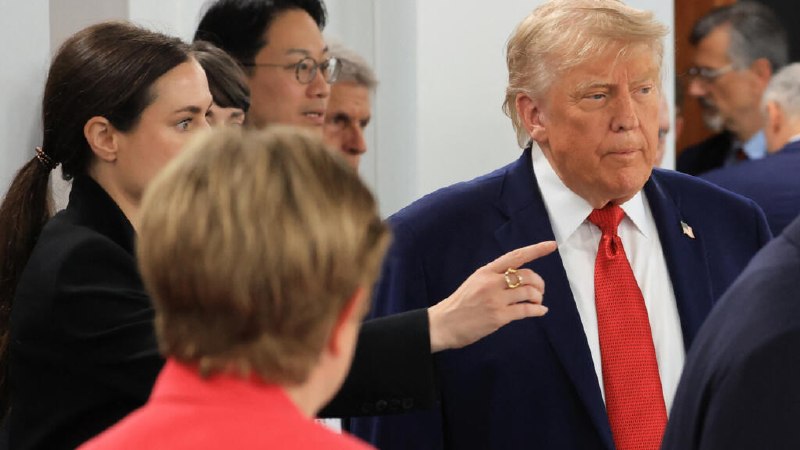
CIA Director John Ratcliffe has warned President Donald Trump in a series of meetings leading up to the President's June 2026 announcement that Iran is potentially unwilling to make the nuclear concessions the United States is publicly demanding, according to a 16 June 2026 report by Axios circulated via The Jerusalem Post's Telegram channel. The assessment, delivered inside the intelligence-to-presidential pipeline that ordinarily produces caveats rather than headlines, has now become one.
The warning matters because it lands in the same news cycle as the President's own framing of a diplomatic path. If the most senior US intelligence official is telling the White House that Tehran will not move on the central ask — curbs on enrichment, the fate of buried facilities, the inspection regime — then the negotiating floor the administration is offering the public is lower than the floor Iran appears willing to accept. The gap is the story.
What was actually conveyed
According to the Axios reporting carried by The Jerusalem Post, Ratcliffe briefed Trump that Iran's leadership was "potentially unwilling" to make the nuclear concessions being sought. The language is careful — "potentially," "unwilling," not a flat refusal — which is how intelligence assessments usually arrive at the President's desk. The point of the wording is to leave room for the policy maker to act, or not.
Trump was reportedly among the officials warned in a series of meetings that culminated in the June 2026 announcement, the substance of which the source material does not detail beyond the timeline. The report does not specify the size of the disagreement, the officials present, or whether the assessment was shared in writing. It does establish that the intelligence community's top civilian used the word "unwilling" in the President's presence, and that the President proceeded with the announcement anyway.
That sequence — a sceptical assessment, a presidential decision to continue — is the standard architecture of US national-security decision-making. The unusual part is that the assessment has now leaked, and been characterised publicly, in a way that constrains the White House's room to claim momentum.
Why the enrichment question is the fulcrum
The concessions the United States is publicly demanding cluster around a familiar set of items: limits on uranium enrichment, international access to facilities that have been damaged or buried, and guarantees against a weaponisation pathway. Each of these is, in Iranian domestic politics, a cost the Islamic Republic has shown a marked reluctance to pay in public.
Iranian state media, when it engages with the question at all, tends to frame enrichment as a sovereign right guaranteed under the Nuclear Non-Proliferation Treaty. The Western wire line treats enrichment above 60 percent as a weapons-proximity threshold. Both framings are technically defensible; the dispute is over which framing governs.
CIA assessments of intent are typically hedged in ways that reflect this disagreement inside the US government. "Potentially unwilling" reads as the agency's way of saying: do not assume that a deal on Washington's preferred terms is achievable through pressure alone.
The structural frame, without the jargon
What is being played out is the familiar gap between a US administration that wants a foreign-policy win it can photograph and an adversary that has learned, over four decades, to read American presidential timelines. The White House reads time as a finite resource that can be spent down. The Iranian side reads time as a renewable one, particularly when oil revenues, regional alignment, and Chinese demand for discounted crude are all moving in its direction.
The intelligence community's job, structurally, is to make the gap visible. Whether the President chooses to act on that visibility is a separate decision, and the Axios report does not suggest the administration has changed course. The leak itself, however, is a kind of pressure — a way of putting the assessment on the record before a deal is either signed or walked away from.
Stakes and what remains uncertain
If the assessment is correct, the most likely outcomes are an extended negotiation that produces a thinner agreement than the White House has signalled, a collapse into renewed sanctions-and-pressure posture, or a kinetic option that has its own costs. If the assessment is wrong — and intelligence assessments of intent are frequently wrong — the cost of disbelief is a deal that does less than advertised.
The source material does not say which way the President is leaning after the briefing. It does not name the Iranian interlocutors, the specific facilities at issue, or the size of the enrichment stockpile under discussion. Those are the details that would let an outside observer judge whether the CIA's caution is well-calibrated or excessive. The reporting establishes that the warning was delivered, and that it was notable enough to surface; everything else is downstream.
For now, the diplomatic clock is running against the intelligence clock, and the gap between them is exactly what a serious negotiation has to close.
Desk note: this publication treats the Axios report — carried here by The Jerusalem Post's Telegram feed — as the wire of record for the CIA assessment, and has not extended the framing beyond what the source material supports.
Wire provenance
This editorial synthesis draws on the following public wire/social posts:
- https://t.me/The_Jerusalem_Post