Iran's World Cup Draw with New Zealand Shows the Pitch Can Still Outrun the Politics
A 2-2 result in a politically charged group-stage fixture, watched intensely inside Iran, is a reminder that for all the pressure on the players, football remains the most legible common language a fractured public still has.
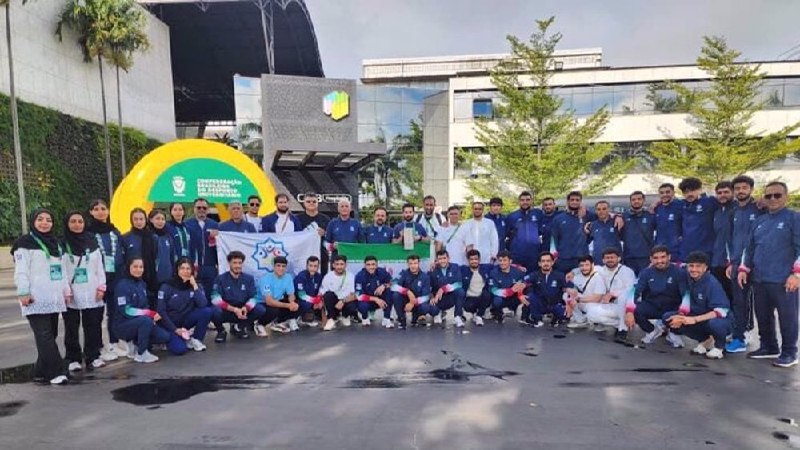
Iran's footballers went into their 2026 World Cup group-stage meeting with New Zealand carrying more than a kit bag. By full time in the early hours of 16 June 2026 UTC, the match had delivered what neutral observers tend to call the most honest verdict in football: a 2-2 draw, shared points, and a stadium conversation that did not need a translator. Al Jazeera English reported the result and the mood around it within minutes of the final whistle, framing the matchup as "politically charged" and noting that the game had "upstaged politics" for Iranian supporters watching from Tehran and beyond.
The result matters less than what it reveals. A national team operating under sustained external pressure has produced, in the space of a single tournament, a moment in which the sporting story has crowded the political one off the front pages inside Iran itself. That is not a small thing. It is, in fact, the point.
A team carrying the weight of a country
Iran's appearance at a World Cup is rarely just a sporting event. The squad is followed by a public that reads political meaning into squad selection, into whether players sing the anthem, into the colour of boots and the choice of pre-match gestures. The 2026 tournament, staged across North American venues, has inherited that tradition. Al Jazeera's reporting from 16 June 2026 framed the New Zealand match explicitly inside that context, characterising the public mood as one in which the team has become a focal point for national pride at a moment when other expressions of that pride are constrained.
New Zealand, for their part, arrived as the kind of opponent the draw can produce but the form book does not always predict. The All Whites have a history of frustrating established footballing nations at World Cups, and a 2-2 result against Iran sits comfortably inside that history of obdurate, technically disciplined performances on the sport's biggest stage. The draw leaves both sides with work to do in the group, and it leaves the broader story — of a tournament in which Iran is participating, and being watched, on its own terms — intact.
The crowd that politics could not silence
The second thread worth pulling is the one Al Jazeera drew most explicitly: that football has, for the duration of this tournament at least, "upstaged politics" among Iranian supporters. That framing is not naive. It is the kind of observation that journalists who cover Iran full-time make carefully, and it rests on a simple empirical fact — viewership, social media engagement, and the volume of conversation about Team Melli inside Iran have, by all available indicators, dwarfed the political coverage of the same 24 hours.
The structural point is bigger than one match. Across the region, football has long served as a release valve — a place where civic emotion can find expression without crossing lines that the state has drawn elsewhere. The Iranian case is the most heavily observed example of that dynamic, but it is not the only one. What the 2026 World Cup has done, so far, is put that pattern on a global stage in front of an audience that does not normally think about it.
What the dominant framing leaves out
The Western wire line on Iran at major tournaments tends to reduce the squad to a series of political symbols: who bowed, who sang, who did not, what message was sent by which gesture. Al Jazeera's framing in its 16 June coverage is more textured. It treats the players as athletes performing at the edge of their ability, and the supporters as a public that has chosen, for the duration of ninety minutes plus stoppage time, to read the result as a sporting result first.
That counter-framing does not erase the political context. It does insist that the political context is not the only context. The structural read is that a tournament staged in North America, broadcast globally, and followed obsessively on encrypted apps and satellite channels inside Iran has produced a space in which the dominant narrative for one day was a 2-2 draw, not a sanctions debate or a regional crisis. The dominant framing holds that this is trivial. The structural read holds that it is the point — that football's capacity to absorb a country's attention for ninety minutes is, in itself, a form of civic infrastructure that does not get built anywhere else.
Stakes and what to watch next
For Iran, the sporting stakes are straightforward: progression from the group requires results in the remaining fixtures, and a point against New Zealand is a foundation rather than a summit. The wider stakes are harder to quantify. A tournament in which the team performs creditably, in which the public inside Iran watches and argues and celebrates, is a tournament in which the public has, for a few weeks, a shared referent that is not the news cycle. That has political consequences, even when — perhaps especially when — no one inside the stadium is asked to make a statement.
The remaining group fixtures will tell us more. If Iran progresses, the story writes itself in one direction; if the team exits at the group stage, the framing will tilt back toward politics regardless of how the players performed. The 2-2 draw with New Zealand sits, for now, in the more interesting middle ground: a result that satisfies no one in particular and therefore lets the football breathe.
The Iran file at major tournaments will never be just about football. But the 16 June 2026 coverage from Al Jazeera suggests that, for this tournament at least, the balance has tipped, briefly and visibly, toward the game itself. That is the news. It is also, for a public that has had little say in the political stories written about it this year, the only kind of news worth having.
Desk note: Monexus framed the match around the public mood inside Iran and the structural role football plays as civic infrastructure, rather than the wire-default focus on political symbolism around the squad. Al Jazeera's 16 June 2026 reporting was the lead source; further detail on group standings and the remaining fixtures will be added as the tournament progresses.
Wire provenance
This editorial synthesis draws on the following public wire/social posts:
- https://t.me/aljazeeraglobal/209482
- https://t.me/aljazeeraglobal/209481
- https://en.wikipedia.org/wiki/2026_FIFA_World_Cup
- https://en.wikipedia.org/wiki/Iran_at_the_2026_FIFA_World_Cup
- https://en.wikipedia.org/wiki/New_Zealand_at_the_2026_FIFA_World_Cup