Eight years on, Kanté remains the metronome Deschamps cannot do without
Olivier Giroud makes the case — on the record — that N'Golo Kanté is still essential to France, eight years after the midfielder first planned to step away from the international stage.
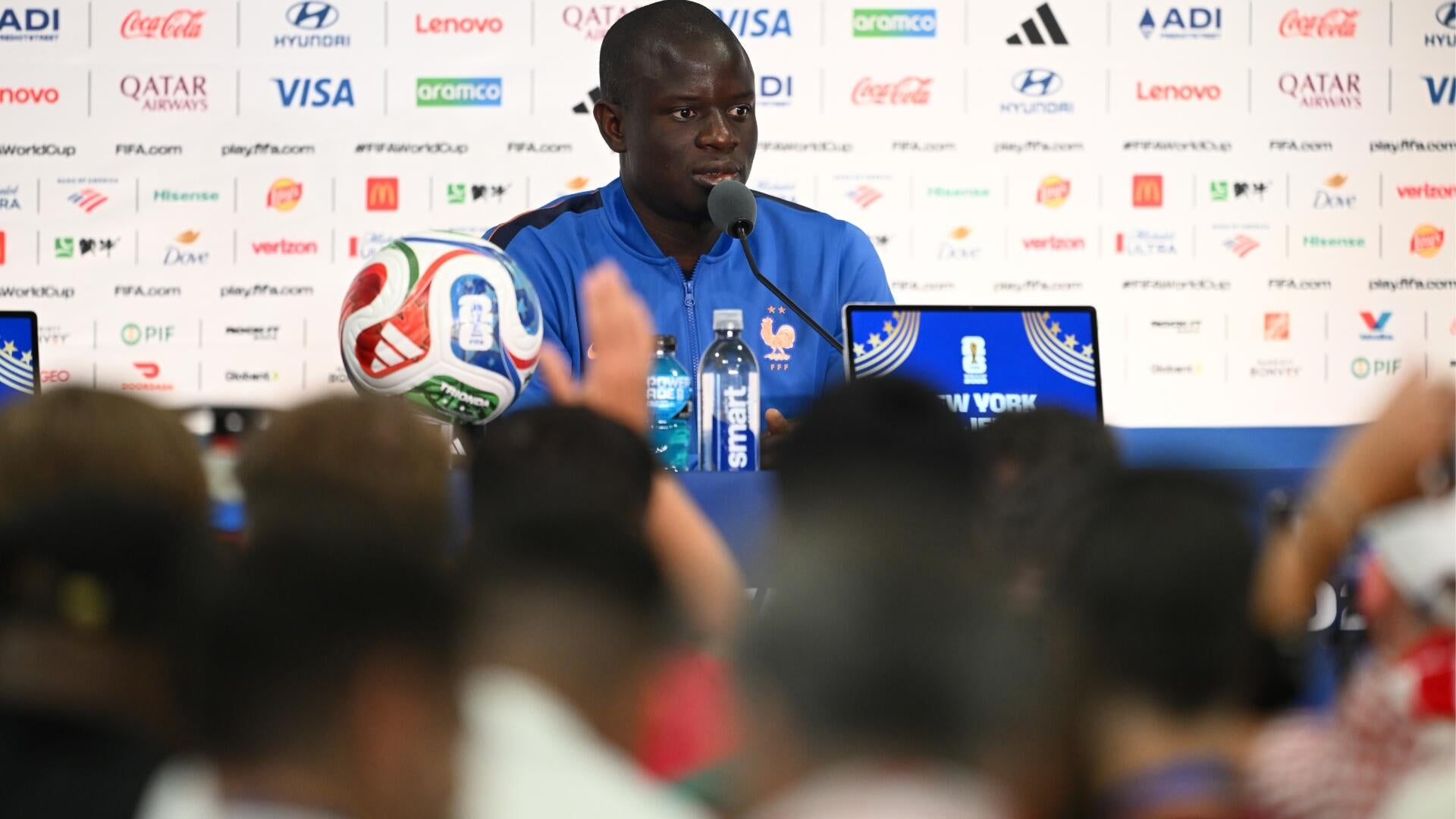
On 16 June 2026, with France deep in their pre-tournament schedule, Olivier Giroud used a BBC Sport column to do something the statisticians and the highlights reels rarely bother with: explain, in plain words, why his old midfield partner N'Golo Kanté still matters. Eight years on from the moment Kanté first told those around him he was ready to walk away from international football, the question is no longer whether he starts for Didier Deschamps. It is who else could possibly do the job he does, and for how much longer Deschamps can keep pretending there is a queue of players waiting to do it.
Giroud's argument is straightforward and unfashionable in equal measure: that Kanté's value to France is not captured in goal contributions or shot-creating actions, but in the rhythm he sets — the press-resistance, the second-ball recoveries, the way opposing attacks die between the lines rather than at the edge of the box. It is the case for a type of midfielder the modern game has spent a decade trying to replace with athletes, and failing.
The case as Giroud makes it
Writing for BBC Sport, the 2018 World Cup winner frames Kanté as indispensable not because of what he produces on the ball, but because of what he prevents. The column leans on a working knowledge of the French dressing room that no broadcaster can match: Giroud played alongside Kanté through the 2018 triumph in Russia, the setbacks that followed, and the long, often bruising rebuild that has carried the squad into the present cycle. He is also explicit about the timeline — that the retirement conversation dates back eight years, to a phase of Kanté's career when injuries and fatigue had begun to bite and the player himself had privately mapped out an exit.
That Kanté is still here, still a name on Deschamps' teamsheet, and still the first player opposition coaches mention when asked to describe the French spine, is the column's quiet thesis. Giroud does not need to oversell it. The premise — that a 34-year-old midfielder remains the squad's most reliable connector — speaks for itself, and it sits awkwardly with a transfer market and a media cycle that have spent the same eight years pricing that kind of role out of existence.
What the frame leaves out
There is, of course, a counter-narrative. The data-led corners of the football internet have long argued that Kanté's defensive numbers have degraded with age and mileage, that his pressing intensity has slipped from the 2016–2018 peak, and that France's recent results owe more to a deep forward line and a maturing back four than to a single midfield anchor. The column does not engage with that critique head-on, and it does not need to: Giroud is not writing a scouting report. He is making a testimonial claim, on the record, about a teammate he has played beside at the highest level of the game.
The more interesting question is structural. France's talent pipeline at the base of midfield has thinned in the same window in which Kanté's age curve has bent. Deschamps has cycled through candidates — Tchouaméni, Camavinga, Fofana — without finding anyone who combines the same screening discipline with the same calm in possession. The fact that the national-team conversation keeps returning to Kanté is less a verdict on his powers and more a verdict on the conveyor belt behind him.
Why Deschamps keeps coming back
There is a temptation, in any international setup, to treat the manager's loyalty to a veteran as sentiment. The Giroud column implicitly pushes back on that read. Deschamps' professional incentive, going into a tournament, is to minimise variance: to put on the pitch the player most likely to make the eleven next to him stable. Kanté, by that test, remains a high-floor selection even if he is no longer the high-ceiling talent he was in Leicester's impossible 2015–16.
The deeper pattern is one that recurs across the elite national teams of this decade. Spain still turn to Rodri as the tempo-setter because no one in La Fábrica has replicated that profile. Argentina protected De Paul through injury windows for the same reason. The defensive midfielder, once treated as the cheapest position on the pitch, has become the most expensive to replace — and the hardest to develop in a system that asks 18-year-olds to play forty-yard line-breaking passes before they have learned to read a 2-v-2.
Stakes for France going into the tournament
If Giroud is right — and the column makes a credible case that he is — then the stakes for Deschamps are not just about one player. They are about succession. A tournament in which Kanté plays seventy-plus minutes a match is, in the optimistic read, the platform for a younger midfielder to learn alongside him; in the pessimistic read, it is the last cycle in which France have a world-class six to lean on, after which the staff must build a midfield identity from scratch.
The remaining uncertainty is medical. Kanté's career has been punctuated by the kind of soft-tissue problems that compound with age, and the column does not pretend otherwise. The simplest reading is also the most honest: Deschamps will use Kanté as long as his body allows, and will not have a ready-made alternative waiting when it does not. On the evidence Giroud lays out on 16 June 2026, that day is not yet here.
Desk note: Monexus frames this as a testimonial column filtered through a structural question about midfield succession — rather than a personality piece — because the source is one player's on-the-record case for another, set against a thinning France pipeline. The fact base is the BBC Sport column itself; broader tactical context is signposted in prose rather than asserted as wire reporting.