The Gulf's quiet refit: what Oman's neutrality is really buying
As the Gulf maps out a post-war settlement, Muscat's decades-old balancing act is being read as either visionary statesmanship or strategic indispensability — and the difference matters for everyone watching the next negotiation.
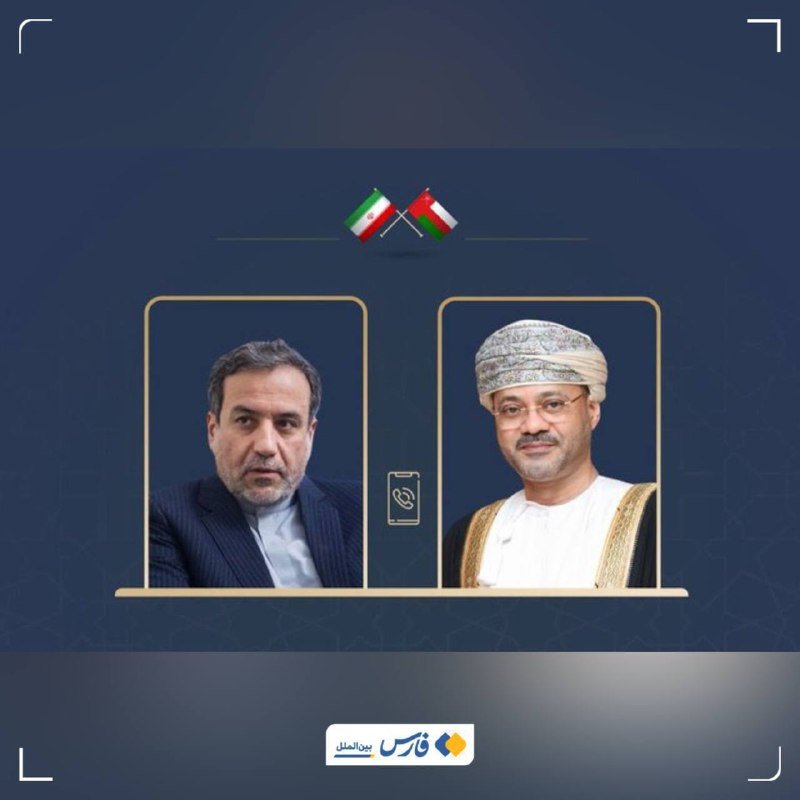
Muscat has spent the better part of two decades perfecting the diplomatic equivalent of a vanishing act: present in every regional negotiation, blamed in none. On 16 June 2026, that posture is being reframed in Western and Middle Eastern commentary alike as something more deliberate — a model for what a post-war Gulf might look like, if such a thing ever actually arrives. The question is whether the read is generous or strategic, and the difference matters.
A piece published by Middle East Eye on 16 June 2026 at 17:01 UTC argues that Oman offers "a glimpse into a post-war Gulf" — outlier, yes, but trailblazer in a regional order that is still mid-renovation. The framing is partly admiring, partly analytical: Muscat's refusal to pick a faction inside the Arab cold wars, its quiet hosting of back-channels between Washington and Tehran, its recent trade-and-investment courtship of both Western and Chinese partners — all of it is being read as preparation for a region in which alignment is no longer binary.
The case for visionary
The charitable read is straightforward. Oman has, for forty years, refused to join the Gulf queue at Western foreign-policy counters. It maintained relations with Israel through its 1995 trade office while its GCC partners ostracised Tel Aviv; it hosted the secret 2012–13 channel that produced the first Obama-era nuclear framework with Iran; it declined to join the 2017 blockade of Qatar and kept the UAE–Saudi axis at arm's length. None of this made Muscat a neutral Switzerland. It made Oman a usable intermediary — the kind of state that can pick up the phone on both sides without the call being treated as a defection.
The case is that this positioning is now structurally valuable. As Gulf states hedge between a wounded-but-still-formidable United States and a Chinese economic presence that has become infrastructural rather than rhetorical, the market for honest intermediaries is, briefly, hot. Muscat sits on the Strait of Hormuz, ports Chinese-built logistics, and has signed security understandings with both Washington and Beijing that do not obviously contradict each other. That is not mysticism. It is a portfolio.
The case for strategic
The less generous read is that Oman is not neutral so much as unaffordable to alienate. A small state of roughly five million people cannot afford a security patron it does not have. Its mediation work is less a moral position than a survival strategy dressed in diplomatic clothing: the only way to keep both Iran and the United States interested in your existence is to be useful to both, and to never let either side believe you are useful to the other.
This framing has its own evidence. Oman's economy remains hydrocarbon-dependent; its fiscal position is tighter than its Gulf neighbours'; its defence spending is small in absolute terms. The room to be even-handed is partly a function of being too modest to be threatening. The same restraint that reads as wisdom in London, Brussels, or Washington reads, in a Riyadh policy memo, as a useful ambiguity to be tolerated until it isn't.
What "post-war" actually means here
The phrase doing the work in the Middle East Eye framing — "post-war Gulf" — is itself contested. The wars that have defined the regional order since 2003 are not over; they have simply shifted shape. Iran has not formally rejoined the Western financial system in the way the 2015 framework imagined. The Israeli military campaign in Gaza continues to set the diplomatic temperature in every Gulf capital. The Houthi maritime campaign in the Red Sea, whatever its proximate resolution, has already restructured the insurance and shipping markets of the entire Arabian Peninsula.
A genuinely post-war Gulf would require settlements — with Tehran, with the Palestinian Authority, with the Houthis, with the Syrian successor state — that are not on the visible calendar. In that gap, Oman's offer is less a vision than a hedge: a small state keeping its diplomatic wires warm for a settlement day that may not arrive on any announced schedule.
Stakes, and what to watch
If the Muscat model is read correctly — as a working template for small-state survival in a multipolar Gulf — the stakes are modest and good. More intermediaries, fewer forced alignments, a region in which Dubai and Riyadh and Doha can each maintain working relationships with Beijing and Washington without that being treated as betrayal. If the read is wrong, the same behaviour is a vulnerability: a state that has bet its strategic relevance on being needed by everyone, and is therefore exposed the moment any one of those parties decides it is no longer needed.
The signal to watch is mundane. It is whether Muscat's hosting of quiet channels produces, in 2026 and 2027, a public deliverable — a prisoner exchange, a de-escalation, a trade corridor announcement — that can be cited. The model survives on results. Without them, the framing collapses back into geography, and geography alone has never been a foreign policy.
Desk note: Monexus frames Oman as a portfolio-position actor, not as a moral exemplar. The Western wire line tends to romanticise small-state neutrality; the Gulf realist line tends to dismiss it. The honest read sits between: a state managing exposure in a region where exposure is rising.
Wire provenance
This editorial synthesis draws on the following public wire/social posts:
- https://t.me/s/TSN_ua
- https://t.me/s/CryptoBriefing