The $400 Billion Question: What's Actually in the US-Iran Deal
A reported $100 billion in frozen funds plus a $300 billion reconstruction pot has Tehran and Washington arguing over arithmetic. The G7 has endorsed the framework. The Strait of Hormuz is still on fire.
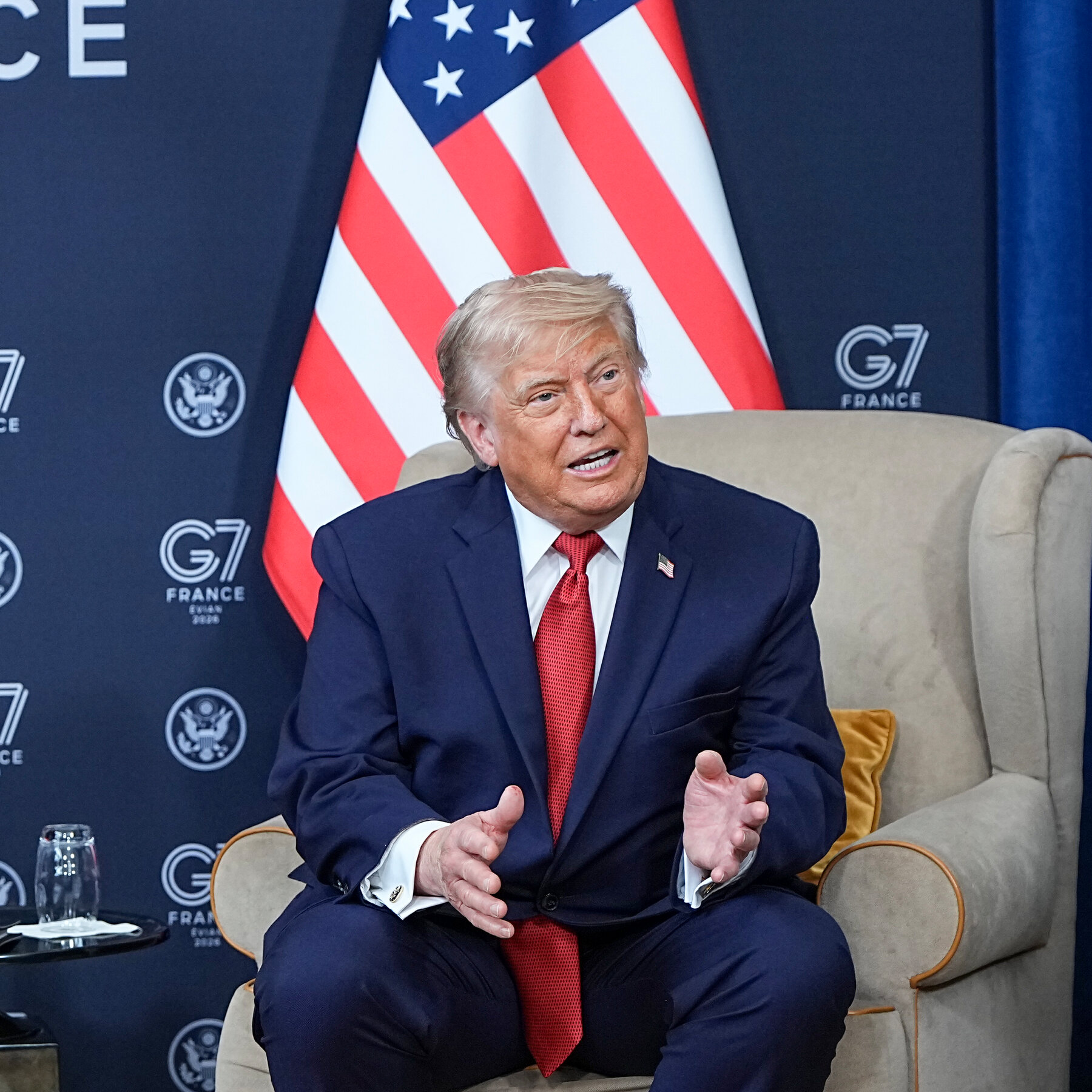
By the time G7 leaders issued their endorsement on the evening of 16 June 2026, two things were already true. The United States and Iran had announced an agreement. And nobody outside a small circle in Washington and Tehran could agree on what the agreement was actually worth. The arithmetic moved between $100 billion and $300 billion depending on which channel was broadcasting, and the disagreement is not cosmetic — it determines whether Tehran is buying economic relief or a reconstruction mandate, and whether Washington is selling a one-off sanctions unwind or underwriting a regional reconstruction project it does not control.
The G7 statement, carried by Al Alam Arabic, said leaders "welcome the announcement of an agreement between the United States and Iran, support its implementation, and are ready to contribute to it." The endorsement is itself a story. The group has spent the last two years unable to speak with one voice on the Middle East. That it managed a single sentence on Iran within hours of the announcement tells you the framework arrived pre-cooked from Washington and was offered, not negotiated, to the allies.
The $100 billion claim
A US officials briefing, reported by the Telegram channel Megatron on the afternoon of 16 June, framed the package as two distinct components: full access for Iran to roughly $100 billion in frozen funds, plus access to a $300 billion reconstruction fund. The framing implies both pots flow to Tehran. It also implies the United States has agreed to underwrite, or at least facilitate, a reconstruction effort roughly three times the size of the frozen-asset release. The numbers are not modest. A $400 billion total, if real, would be among the largest single sanction-easing plus reconstruction packages directed at a single Middle Eastern state in the post-1990 era.
The $300 billion caveat
Within hours, the same agreement was being described very differently. According to posts circulating on Telegram channels tied to AngelList and Product Hunt ecosystems, Vice President JD Vance has pushed back on the $300 billion figure. The reported line: Iran would only gain access to reconstruction funds under specific conditions, and the headline number confuses the total reconstruction envelope with what Tehran can actually draw. The distinction matters. A $300 billion regional fund that Iran can access is one product. A $300 billion figure that includes non-Iranian recipients — Iraq, perhaps the Gulf states, possibly reconstruction inside Iran that is gated to foreign contractors — is a different product. Which one the principals agreed to is the question that will define the next month of diplomacy.
The Strait of Hormuz problem
While officials in Washington and capitals of the G7 were issuing statements, the sea lanes the deal is supposed to stabilise were being tested. NBC, cited by the Telegram channel Witness, reported that Iran launched multiple drones toward commercial ships in the Strait of Hormuz after the agreement was announced on Sunday. US forces reportedly shot down the drones. The symbolism is difficult to overstate. The deal was sold in part as a de-escalation. Within hours, a live-fire incident was unfolding in the strait that handles a fifth of global oil shipments. Tehran's read, per a separate post on X by Unusual Whales, is that the blockade is easing — which may be the same event described from a different vantage point, or may be an attempt to keep the diplomatic package on life support while a splinter command acts independently. The Iranian system is not a monolith, and the post-announcement timing of the drone launches will draw scrutiny from negotiators on both sides.
The structural frame
The deeper pattern here is familiar. A great-power deal gets announced with a round number, the round number travels through channels that have an interest in inflating or deflating it, and the actual text of the agreement becomes less important than the contested headline. The frozen-funds release is real money that already exists in escrow accounts in third countries — disbursing it is a technical exercise. The reconstruction fund is a different beast. It is, by construction, a political object. It requires a donor conference, a governance structure, conditionality language, and a recipient list. Any of those can collapse the headline number without the deal itself collapsing. Which is why the Vance caveat is being read carefully in Gulf finance ministries: it suggests the administration wants to be able to claim the $300 billion figure publicly while retaining the right to release far less.
Stakes
If the $100 billion in frozen funds flows and the reconstruction fund is gated as Vance described, Tehran gets liquidity it badly needs and a promise it can weaponise domestically. Washington gets a non-procession story it can take into the November cycle. The Gulf states get a de-escalation they can price. Iran retains a nuclear program that is the unspoken third rail of the whole package. If the drone launches in the Strait of Hormuz turn out to be a renegade IRGC faction or a proxy acting without cover, the deal absorbs the shock. If they were ordered, the deal is on life support within the week. The G7 endorsement is a confidence vote, not a guarantee.
The honest reading is that this publication will not be the last outlet to walk back a number over the next ten days. The agreement is real. The price tag is contested. The strait is still on fire.
How Monexus framed this vs the wire: most Western coverage will treat the $300 billion figure as the headline and the Vance caveat as a footnote. Monexus is leading with the caveat, because the conditionality is the actual policy content.
Wire provenance
This editorial synthesis draws on the following public wire/social posts:
- https://t.me/megatron_ron
- https://t.me/alalamarabic
- https://t.me/wfwitness
- https://t.me/AngelList