Fedorov's war: Ukraine's defence minister tries to demobilise, de-corrupt, and deliver a missile
Three announcements in a single morning — partial release of long-serving troops, a blunt warning to procurement officials, and a coming Ukrainian ballistic missile — mark the most aggressive attempt yet by Minister of Defence Fedorov to reset the country's war effort from the inside.
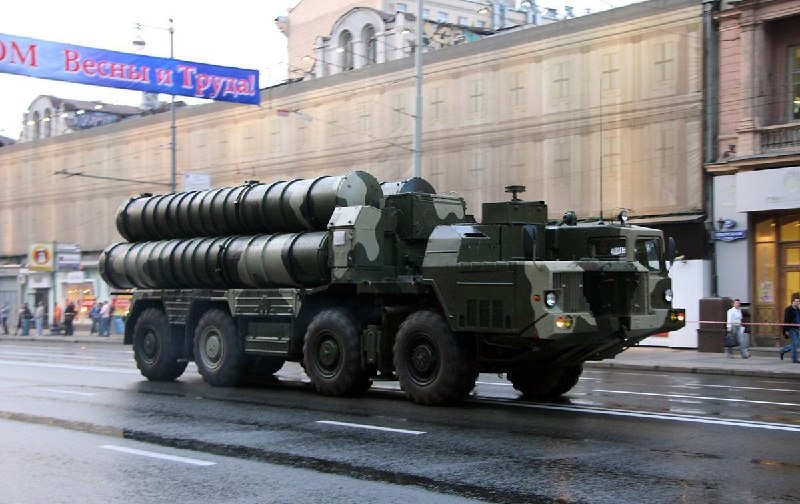
On the morning of 17 June 2026, Ukraine's Minister of Defence Fedorov did something unusual in a government that has spent four years rationing every public word. He tried to solve three of the war's hardest problems at once. He told soldiers who have served since 2022 or earlier that a partial release from the army would begin by the end of autumn. He gathered "thousands of people from the Ministry of Defence ecosystem," according to a Telegram channel that monitors his public statements, and told them point-blank that anyone caught running procurement schemes or stealing would face him personally. And he confirmed, again on the same day, that Ukraine would field its own ballistic missile — a weapons class that has so far defined the gap between Kyiv and Moscow.
Each of those three announcements is, on its own, a story. Together, on a single morning, they amount to a thesis: that Ukraine's defence ministry is no longer willing to manage the war as a frozen crisis, and that Fedorov intends to manage it as a project — with a personnel cycle, a procurement discipline, and a domestic long-range strike complex as the deliverables. Whether the ministry has the bureaucratic capacity to deliver all three at once is the question that runs through the rest of the year.
A demobilisation, on a slow clock
The first of the three messages is also the one with the most obvious human weight. Soldiers mobilised in 2022 — the opening year of the full-scale invasion — are now four years into continuous service. The political cost of asking those men and women to keep fighting without a credible off-ramp has been visible in polling for months and visible in Ukraine's streets in quieter ways: a younger cohort that watches a senior cohort stay in uniform, and asks when the rotation begins. Fedorov's announcement, picked up by Ukrainska Pravda's news feed at 05:38 UTC on 17 June, frames the answer as "a presidential decree" that will activate a process of partial release by the end of autumn 2026.
"Partial" is the operative word. No official casualty or force-size figure has been published in the morning's briefings to anchor the scale of the release. What the statement does commit to is a sequence: a decree, then a schedule, then a defined cohort. That sequence matters because the previous cycle of demobilisation debate, in 2024 and 2025, ran aground on exactly that sequence — everyone agreed in principle that long-serving soldiers should rotate out, and no one could agree on the legal instrument, the eligibility window, or the replacement pipeline. The autumn 2026 deadline is the first time the executive branch has named a clock.
The risk is structural, not political. Ukraine's infantry brigades are not staffed at surplus. Releasing thousands of experienced soldiers in a single window, before a replacement cohort has been trained and equipped, would create a tactical hole at exactly the moment the country is trying to thicken its defensive lines. The announcement is therefore best read as a hostage to performance: Fedorov is binding himself to a calendar, in public, knowing that the same calendar can be used against him if the rotation goes wrong.
The procurement warning, and the procurement problem
The second message, distributed by the Nexta live channel at 05:15 UTC, is the one with the shorter fuse. Fedorov, on the same morning, told a gathering of defence-ministry personnel that anyone in the procurement chain considering kickback schemes would face personal consequences. The phrasing — "if any of you even think about procurement schemes or stealing money, I will do everything to make…" — is truncated in the circulating clip, but the intent is clear. It is a public dressing-down delivered to a closed audience and released to a wider one.
The reason this is more than a soundbite is that defence procurement in Ukraine is no longer a back-office story. Independent investigators and Ukrainian outlets have spent two years documenting inflated contracts, dual pricing, and middlemen who sit between Western suppliers and Ukrainian end-users. The National Anti-Corruption Bureau of Ukraine (NABU) has pursued several senior procurement figures since 2023, with cases involving food, fuel, drone components, and body armour. The political backdrop to that work is the EU accession process, in which the anti-corruption track is formally evaluated and is one of the conditions Kyiv must keep satisfying to keep moving through the negotiating chapters.
Fedorov's warning is therefore also a message to Brussels. By speaking in the procurement register — schemes, stealing money, ecosystem — he is signalling that the ministry is willing to be audited in the language the European Commission uses. The risk of the announcement, again, is performance-versus-reality. Public admonitions are cheap; criminal referrals are expensive and slow. If autumn 2026 arrives with the procurement apparatus demonstrably cleaner, the warning will read as the opening move in a real anti-corruption campaign. If it does not, the same video clip will be replayed in a different register.
The most plausible alternative reading is that Fedorov is also addressing a morale problem inside the ministry. Junior procurement officers who entered the defence bureaucracy in 2022-2023 inherited a system in which informal payments were normalised. Telling them, in front of their peers, that the ministry's political leadership is willing to use the language of criminal law against them raises the cost of doing things the old way. Whether the cost is high enough to change behaviour is the empirical question, and one that only NABU's case docket can answer.
The ballistic missile that will change the status of "something"
The third message is the one that breaks the pattern of the first two. Fedorov's remark — that "Ukrainian ballistics will be. Its appearance will change the status of Ukraine in the world" — is the most expansive claim of the morning, and also the least specified. The minister, in the version of the statement circulated by the Tsaplienko channel at 04:47 UTC, did not name a range, a warhead class, a serial production date, or a contractor. The status-quo reading, given the historical pattern of Ukrainian missile announcements, is that a tested prototype will be presented within months, with serial production on a longer horizon, and that the phrase "change the status of Ukraine in the world" is a target for diplomats rather than a parameter for engineers.
The strategic context, though, is concrete. Russia's full-scale strike complex against Ukrainian cities runs on cruise missiles, ballistic missiles, and a growing drone programme. Ukraine's response, until 2025, was overwhelmingly defensive — air-defence interceptors, drone interceptors, and an indigenous drone strike complex optimised for tactical depth. A domestic ballistic missile closes a category gap. It does not, on its own, give Ukraine the equivalent of Russia's stockpile, and the morning's reporting does not suggest a serial-production timetable that would change that. What it does is move Kyiv from a customer of long-range strike to a producer, which is a different kind of seat at the table in any future negotiation over the country's security architecture.
The counter-read is more cautious. Domestic ballistic missile programmes are technically unforgiving, and the record of similar national efforts elsewhere is uneven. A working prototype is not a working stockpile. And the public framing — "its appearance will change the status of Ukraine in the world" — invites a kind of strategic over-promise that the same morning's other two announcements were careful to avoid. The first two were calendrical and procedural. The third is declaratory. The gap between the two registers is itself part of the story.
Three problems, one ministry, one calendar
The reason these three messages matter in combination is that they each impose a separate deadline on the same institution. The personnel cycle ends in autumn 2026. The procurement warning has no announced end, but the EU accession track on which it sits does — Ukraine's government has set a target of completing negotiations on the relevant cluster before the end of the decade, and the European Commission reviews progress in regular reports. The ballistic missile is the loosest of the three commitments, but it is the one that Fedorov has chosen to attach his name to in the most rhetorical terms.
What is missing from the morning is the connective tissue. How many soldiers will be released in the autumn window, and from which brigades? How will the released cohort be replaced? Which procurement categories will be the first subject of the new enforcement posture, and which NABU cases will be referenced as the model? What is the range, payload, and production timetable of the ballistic missile, and which Ukrainian state enterprise is the prime contractor? The ministry will be pressed for each of those answers in the coming weeks, and the answers it gives will determine whether 17 June 2026 is read, in retrospect, as a turning point or as a communications event.
What also remains uncertain is the relationship between the three moves. The demobilisation argument is strongest if the army believes that those who remain will be properly equipped and properly compensated. The procurement argument is strongest if soldiers and their families believe that the equipment and compensation are reaching them rather than disappearing into a contracting chain. The ballistic missile argument is strongest if it can be delivered on a budget that does not cannibalise the rest of the force. None of those conditions is guaranteed. The morning's three messages are best read as a single package precisely because their credibility depends on each other.
The stakes, in plain terms
The audience for the morning's three messages is not only Ukrainian. It includes Western capitals that fund and supply the defence ministry, EU institutions that score its progress on corruption and rule-of-law indicators, and the defence-industrial partners who are weighing how to integrate a country that wants to be both a customer and a producer of long-range strike capability. For all three audiences, the same question applies: is Fedorov announcing a programme that the ministry can deliver, or is he announcing an ambition that the ministry is hoping will become self-fulfilling by being said out loud?
The honest answer, on the morning of 17 June 2026, is that the source material does not let this publication say. The announcements are dated and attributable. The deliverables are calendrical. The verification points are known. The next six months will produce the data. Until then, the responsible reading is the modest one: a defence minister has, in a single morning, taken public ownership of three of the hardest files in his portfolio, and the calendar he has set himself will be the measure by which he is judged.
This article reports three announcements made by Ukraine's Minister of Defence Fedorov on the morning of 17 June 2026, as distributed by Ukrainian Telegram channels monitoring the ministry. Where the announcements reference future dates, programmes, or capabilities, this publication has not supplemented the primary reporting with independent verification of scale, timetable, or institutional capacity.
Wire provenance
This editorial synthesis draws on the following public wire/social posts:
- https://t.me/ukrpravda_news
- https://t.me/nexta_live
- https://t.me/Tsaplienko