Hezbollah releases images of destroyed Israeli armour in south Lebanon, as cross-border fighting enters a quieter phase
Iranian-aligned outlets on 17 June published Hezbollah imagery of a destroyed Israeli armoured vehicle in southern Lebanon, even as social-media critics contrast a pre- and post-memorandum landscape on the ground.
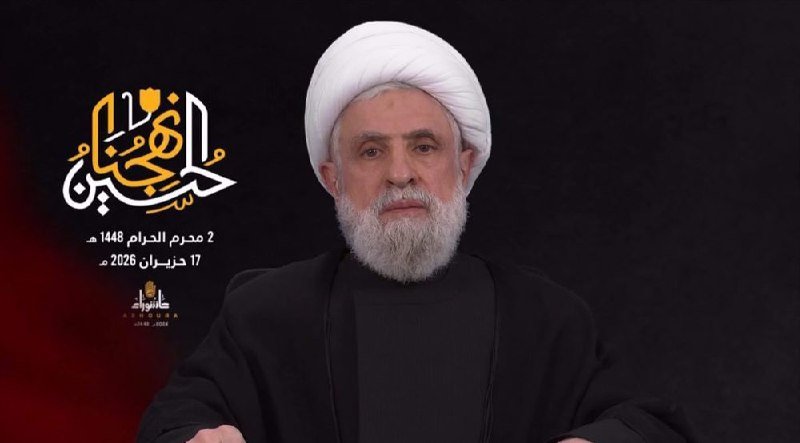
Hezbollah on the morning of 17 June released photographs and video purporting to show the destruction of an Israeli armoured vehicle in southern Lebanon, with the imagery picked up within minutes by Iranian state-aligned outlets. Iran's Mehr News circulated the pictures at 10:12 UTC, and the country's Fars news agency reposted the same material at 10:11 UTC, the two wire services running near-identical captions describing the strike as a battlefield success against the "Zionist army." The two postings, separated by roughly a minute, indicate a coordinated media push rather than a single dispatch — the same package, two amplifiers.
What is less clear is the operational context. The Israeli military's English-language briefings on 17 June make no mention of a specific vehicle loss in the southern Lebanon sector, and the wire of Lebanese casualties or displacement in the district has been light through the day. The Hezbollah-released imagery is the dominant claim on this thread, and the structural question — whether the photograph captures a one-off engagement, a reactivation of probing fire along the border, or a symbolic release staged for an Iranian audience at a sensitive political moment — has not been settled by the material in the public record.
The image, and what it claims
The two Iranian wire services describe the target in the same words: an armoured vehicle of the "Zionist army" destroyed in southern Lebanon. The geographic label is the only one offered; no specific town, no named village, no grid reference. Mehr News and Fars both carry the visual package, which is standard practice when a single battlefield release is being routed through the broader Iranian-aligned media ecosystem. The al-Abualiexpress channel, a pro-opposition Syrian outlet, used the release on the same morning to push a different argument: that critics of Hezbollah on social media are publishing before-and-after comparisons of life in Lebanon, framed around the November 2023 memorandum of understanding between Iran and the United States.
The juxtaposition is deliberate. The two Iranian wires sell a tactical win; the al-Abualiexpress channel sells a strategic one — a claim that whatever the United States and Iran agreed in writing, the situation on the ground in Lebanon has worsened. Both stories are part of the same media cascade, and both depend on the same underlying assumption: that southern Lebanon is, on 17 June 2026, a place where Hezbollah is still operationally active and still capable of producing battlefield imagery of Israeli hardware.
The counter-narrative, and what is missing from it
Israeli military briefings since the start of the year have framed the northern front as a managed problem rather than a hot war. Public statements from the IDF Spokesperson's Unit have repeatedly described operations in southern Lebanon as focused on dismantling Hezbollah infrastructure north of the border, and have pointed to a series of strikes against launch sites and weapons-storage depots. Casualty figures from the Israeli side in the border sector have been reported sporadically and have not, in the public record available to this publication, spiked around a single 17 June incident.
The Hezbollah release therefore sits awkwardly against that official Israeli line. Either the image documents a real engagement the IDF has not yet chosen to publicly acknowledge, or the visual package is being used to fill an information vacuum. Israeli outlets, including Haaretz and the Times of Israel, have not been cited in the source material as confirming or denying the strike on the morning of 17 June, and the most cautious read is that the loss, if real, has not yet risen to the threshold of an Israeli public statement. The sources disagree about scale, but agree about the event itself only at the level that Hezbollah claims it occurred.
A structural frame: the border as a media front
What is consistent across the three source items is that the southern Lebanon border is being contested, on 17 June, primarily through imagery rather than through reported battles. Mehr News and Fars act as official Iranian amplifiers of Hezbollah battlefield output, and the al-Abualiexpress channel acts as an opposition-aligned counter-amplifier, recycling the same visual package into a different argument about the cost of the Iran–US memorandum. The actual fighting on the ground, to the extent the public record captures it, is the background; the foreground is the war over who gets to frame it.
This is the structural pattern worth naming in plain terms. In conflicts where a regional non-state actor and a sovereign military are both active, the side with the weaker conventional position tends to lean harder on visual propaganda to compensate. Hezbollah has, over the past decade, built a sophisticated media arm that releases strike footage on a near-daily basis in active phases and on a more selective basis in quiescent ones. A 10:00–10:15 UTC release window, picked up by two Iranian wire services within a minute of each other, fits the pattern of a release designed to be visible in Tehran's morning news cycle rather than to deliver a piece of fresh operational intelligence. The al-Abualiexpress counter-narrative, layering in the pre- and post-memorandum framing, extends the same visual into a longer political timeline.
Stakes: who wins and who loses from the framing
The stakes for the players diverge sharply. For Hezbollah, the release is reputational insurance at a moment when its own domestic Lebanese critics, including the families of the displaced and the political opposition aligned with the post-2019 protest movements, are asking what the Iran–US memorandum has actually delivered for the country's south. A destroyed Israeli vehicle in southern Lebanon answers that question in the affirmative, in the register Hezbollah prefers: militarily, not politically.
For Tehran, the release is a signal to Washington that the proxy network it spent four decades building is still operational in at least one theatre, even as negotiations over Iran's nuclear file and the wider regional settlement continue. For the Israeli defence establishment, every unrebutted Hezbollah visual is, in operational-psychological terms, a small cost — and a public confirmation that the threat on the northern border has not been eliminated. For the population of southern Lebanon, the visual is the least informative item in the package: it tells them a vehicle was hit, but not where, not when, and not what the response might be.
What the sources do not settle
The material in the public record on 17 June does not specify the exact location of the strike, the type of vehicle destroyed, the number of casualties, or whether the Israeli military has acknowledged the loss. The Hezbollah claim travels through Iranian state-aligned wires with no independent on-the-ground verification in the available reporting, and the al-Abualiexpress channel reframes the same claim into a political argument about the Iran–US memorandum without producing new evidence on the engagement itself. The honest reading is that an event of some kind occurred, that a visual record of it has been released, and that the surrounding claims — tactical, strategic, and political — are running ahead of what the available material can actually support.
Desk note: Monexus framed the 17 June Hezbollah release as a media event first and a battlefield event second, on the basis that three independent source items from 10:07 to 10:12 UTC all emphasise the visual package and the political framing rather than independent reporting of the engagement itself. The wire treatment, by contrast, has not yet produced a confirming or denying Israeli line on the loss.
Wire provenance
This editorial synthesis draws on the following public wire/social posts:
- https://t.me/abualiexpress