India's Telegram ban asks a question its 1.4 billion users will have to answer
A ban threatened over leaked exam papers exposes a deeper fault line: who sets the rules for the messaging infrastructure a billion-plus users now rely on.
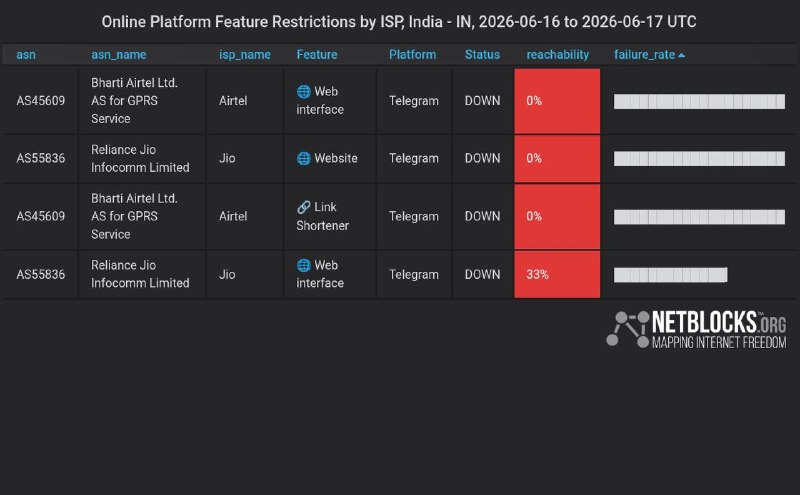
On 17 June 2026, India's government moved to block Telegram nationally, citing the platform's role in the leak of question papers for high-stakes competitive examinations. Telegram's chief executive, Pavel Durov, responded within hours, calling the move a "mistake" that would punish millions of users for the conduct of a small number of bad actors. The exchange, public, immediate, and unusually pointed, marks the moment a long-running argument between New Delhi and foreign platform operators stopped being theoretical.
India is not a country that flinches from regulating the internet. It has already forced TikTok, PUBG, and dozens of Chinese apps out of the market on national-security grounds. But Telegram is a different category of problem. With a user base estimated at more than 1.4 billion people — a figure that includes hundreds of millions of Indians who use the app for everything from family group chats to small-business commerce — the platform has become part of the country's plumbing. A ban is not the digital equivalent of pulling a controversial app; it is closer to cutting a utility.
The trigger, and what the trigger is not
The proximate cause is a scandal that has roiled Indian public life for weeks. Coaching centres in Rajasthan and elsewhere have been accused of systematically leaking the question papers for examinations that determine admission to the country's most competitive engineering and medical colleges — papers for which tens of millions of students sit every year. According to reporting summarised by BBC News on 17 June, Telegram channels were used to distribute the leaked material, exploiting the platform's combination of large group sizes, encrypted messaging, and minimal content moderation.
The temptation, for Indian policymakers, is to treat Telegram as the problem. That framing has the virtue of clarity and the vice of inaccuracy. Leaked question papers are a failure of examination administration, of physical security at printing centres, of an industrial-scale coaching economy that has grown up around the scarcity of university places. Telegram is the channel, not the cause. Block the channel and the next leak will travel through Signal, WhatsApp, or a private Discord server; the underlying market for stolen papers — driven by the desperation of families for whom a single exam result can determine a lifetime of earnings — will not move.
The sovereignty question Telegram cannot answer
Durov's public response is itself a study in the genre. Telegram's terms of service prohibit the platform's use for distributing illegal content, and the company has, in recent years, added mechanisms for takedown requests and moderation cooperation with law enforcement. But the platform was built on a different premise: that end-to-end encryption and minimal content review are features, not bugs. India's proposed workaround — requiring platforms to appoint local compliance officers, store user data domestically, and submit to real-time monitoring — collides head-on with that premise.
This is the part of the story that will outlast the exam-leak scandal. India is now the world's largest internet market by user count, having crossed China on several independent measurements, and its regulators are writing the rulebook that other large markets will study. Whether a foreign platform can operate at Indian scale without accepting Indian jurisdiction over content is the question. The Western consensus, such as it is, holds that encryption is non-negotiable; the Indian consensus, also such as it is, holds that a billion-user market cannot run on the legal terms of a Dubai-registered company whose servers sit in jurisdictions beyond New Delhi's reach.
What Telegram gets right
It is worth saying plainly what the Indian framing underweights. Telegram does host a genuinely enormous volume of illegal and harmful content — the leak channels are one entry on a long list that includes CSAM distribution, narcotics markets, and extremist organising. The company has been criticised, credibly, for a moderation posture that prioritises growth over safety. Any honest assessment of the platform has to start there.
But the same assessment has to acknowledge what Indian users would lose. For migrant workers sending money home through informal hawala networks coordinated on Telegram; for small businesses running customer-service channels; for journalists in states where the mainstream press is cowed; for activists organising against the same government now proposing to ban them — the platform is infrastructure. A blanket block does not distinguish between these uses and the leak channels that prompted the action. That is not a small thing.
The precedent that does not exist
India has form on this kind of move. The 2020 ban on TikTok and 59 other Chinese apps, executed under Section 69A of the Information Technology Act, was challenged, partially reversed on procedural grounds, and then re-imposed. The legal architecture for what New Delhi is now attempting with Telegram is settled. The political question is whether the country's courts, increasingly willing to scrutinise executive action, will treat a ban of this scale as proportionate.
The global stakes are larger than either side is admitting. If India blocks Telegram and the move holds, expect similar actions from Pakistan, Bangladesh, and Indonesia — markets with their own grievances against platforms they cannot control. If the ban is struck down, or watered down into a settlement that gives New Delhi what it wants on exam-related content without a full block, the precedent points the other way: toward negotiated compliance rather than confrontation. Telegram's next move, and India's, will determine which direction the global south tilts.
What remains genuinely unclear, and what no source has yet resolved, is whether the ban announced on 17 June is a negotiating opening or a final position. Indian regulators have, in similar disputes, used the threat of a block as leverage to extract concessions — local data storage, named compliance officers, faster takedown response times — before settling. Telegram has, in similar disputes, conceded the procedural points while holding the line on encryption. The most likely outcome, on the historical pattern, is a settlement that neither party advertises as a climbdown. The question worth watching is whether Telegram's user base in India, the largest in the world, treats any such settlement as legitimacy — or as confirmation that the platform will always fold when a market large enough pushes back.
Desk note: The wire framing of this story — Telegram vs. India, framed as a sovereignty-vs-platform contest — is the right surface read. The structural argument underneath is about the terms on which foreign digital infrastructure is allowed to operate in the global south's largest markets. Monexus is tracking this as a precedent case, not a one-off.
Wire provenance
This editorial synthesis draws on the following public wire/social posts:
- https://t.me/BBCWorldoffl
- https://t.me/BBCWorldoffl
- https://en.wikipedia.org/wiki/Telegram_(software)
- https://en.wikipedia.org/wiki/Information_Technology_Act,_2000