Iran opens Arbaeen pilgrim registration for July 9, weeks before the Karbala march
Tehran's Arbaeen Central Headquarters says pilgrim registration opens July 9, timed to mid-Muharram — a logistical signal for one of the world's largest annual religious gatherings.
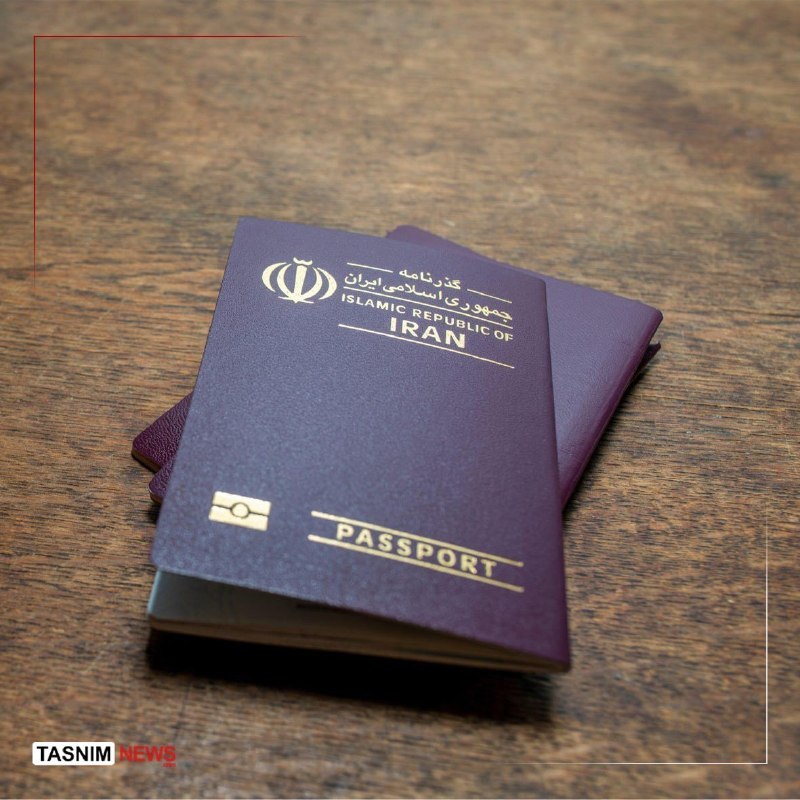
Iran's Arbaeen Central Headquarters will open pilgrim registration on Tuesday, July 9, 2026, synchronising the start of sign-ups with the middle of the Islamic month of Muharram. The announcement, carried simultaneously on 17 June by Tasnim, Mehr News and Fars — three of the Islamic Republic's principal state and semi-official outlets — frames the date as a coordination matter between the domestic religious calendar and the operational lead time required for one of the largest annual gatherings of people anywhere on earth.
The logistical disclosure, modest on its surface, is the first clear Iranian administrative signal of the 2026 Arbaeen season. Each year, an estimated several million Shia Muslims walk on foot from points across Iraq into the holy city of Karbala, marking the fortieth day after the martyrdom of Imam Husayn at the Battle of Karbala in 680 AD. Iranian pilgrims typically form the single largest national contingent, moving overland through border crossings in the south-western province of Khuzestan. The opening of registration sets the practical clock for Iranian travel agencies, transport unions, medical teams and the Iranian Red Crescent Society, all of which stage parallel operations for the march.
What was actually announced
The three Iranian outlets, publishing within roughly twenty minutes of each other on the evening of 17 June 2026, carried the same operative details. Registration opens Tuesday, July 9. The date is set to coincide with the middle of Muharram — the first month of the Islamic lunar calendar, and a period of mourning that culminates in Ashura on the tenth day and, forty days later, in Arbaeen. The headquarter's notice was explicit: registration is mandatory for Iranian pilgrims. None of the three items published detailed the registration portal, the fee structure, or the health-and-security protocols that have shaped Arbaeen logistics since 2020, when the pandemic temporarily suspended the march.
The near-identical text across the three wires — Tasnim, Mehr and Fars — points to a single source statement circulated by the headquarters rather than independent reporting. That is itself a feature, not a bug, of how domestic information in Iran moves: a central authority (here, the Arbaeen headquarters) issues the operative line, and the country's main news agencies reproduce it with the same wording. The signal the headquarters is sending is operational, not political.
Why mid-Muharram is the anchor date
The decision to tie registration to the middle of Muharram is a deliberate calendar choice. The fortieth-day mourning that produces Arbaeen falls on 20 Safar in the lunar calendar, roughly seventy days after the start of Muharram. By opening the books at the half-Muharram mark, Iranian authorities buy themselves a window of approximately six weeks of administrative lead time before the bulk of the overland movement begins. The structure mirrors what Saudi authorities attempt with the Hajj calendar: registration windows are anchored not to the pilgrimage day itself but to the religious observances that bracket it, so that the secular machinery — visas, transport slots, medical clearances, accommodation — can be sequenced around a fixed religious pivot.
There is a second, more practical reason. Iran shares with Iraq a long, porous land border that has been the historic artery of Arbaeen traffic. In recent years Iranian officials have intermittently introduced registration requirements as a soft form of crowd management — to coordinate bus convoys, to channel pilgrims through specific crossings, and to allow consular staff in Baghdad and the shrine cities to pre-stage medical and security assets. Mandatory registration is the administrative handle through which those flows are organised.
What remains unstated
The announcements do not address the conditions under which the 2026 march will be conducted. None of the three wires itemise security arrangements on the Iranian side of the border, the status of Iranian convoys through the Mehran and Chazzabeh crossings, or whether the Iraqi government has signalled reciprocal capacity at the holy sites. The Arbaeen headquarters' brief, operational statement leaves the political and security framing to other agencies.
The omission is consistent with how the Iranian state has handled Arbaeen since at least the 2010s. The pilgrimage is administered as a service to religious citizens and to the broader Shia religious public, with the state's role framed as logistical rather than ideological. Whether the 2026 edition will be marked by extraordinary security or political messaging — Iraqi parliamentary elections and the formation of a new government in Baghdad fell earlier in 2026, and Iran's relations with the federal authorities in Baghdad have cycled through several phases of strain and accommodation in recent years — is not addressed in the registration notice. It will fall to later announcements, and to reporting from the road, to fill in that picture.
The structural frame
Arbaeen is, in scale, one of the largest sustained pedestrian movements on the planet. Iranian and Iraqi estimates have put annual participation in the high single-digit millions, with some years drawing larger. The march is not a tourism event; it is a ritual obligation for many Shia Muslims and a devotional practice for others, and it unfolds across terrain that crosses two sovereign states. That is why an administrative announcement from Tehran matters beyond Iran: a registration window of six weeks translates, downstream, into the scheduling of tens of thousands of buses, the staging of medical tents along roughly 80 kilometres of road, and the rotation of consular shifts in Karbala and Najaf.
For Iran, the Arbaeen season is also a domestic-coordination test. The same infrastructure that moves pilgrims moves the political, charitable and parastatal actors that accompany them — from state-affiliated foundations to medical NGOs affiliated with the armed forces. The opening of registration is the first note of an operational sequence that runs through the summer, and the headquarters' choice to put it in the public record on 17 June suggests a calendar deliberately aligned with the rhythms of a Shia population that takes the ritual seriously and plans around it.
The counter-reading worth flagging: the announcement could also be read as a soft projection of state capacity, signalling to the Iraqi authorities and to Iran's own public that Tehran intends to organise the pilgrimage in an orderly fashion. The wire item itself does not assert that reading, but it sits in the same information space as Iranian public messaging about regional religious tourism — a sector Baghdad and several Iraqi provinces have actively courted. The more cautious read is the operational one: the registration portal is the substantive fact, and the political signalling, if any, is downstream.
This article cites three Iranian state and semi-official news agencies whose coverage of Arbaeen logistics is, by its nature, a reproduction of an official headquarters statement. Monexus treats the announcement as a confirmed administrative fact while flagging that security, consular and overland-bridge arrangements will require separate reporting closer to the date.
Wire provenance
This editorial synthesis draws on the following public wire/social posts:
- https://t.me/tasnimnews_en
- https://t.me/mehrnews
- https://t.me/farsna