Tehran's Strait Deal: What Baqaei Actually Said and What It Doesn't Settle
Iran's foreign ministry spokesman used a Tuesday briefing to claim the oil embargo is being lifted, the Strait of Hormuz is now an Iran-Oman file, and the missiles remain off the table. The claims deserve a closer read.
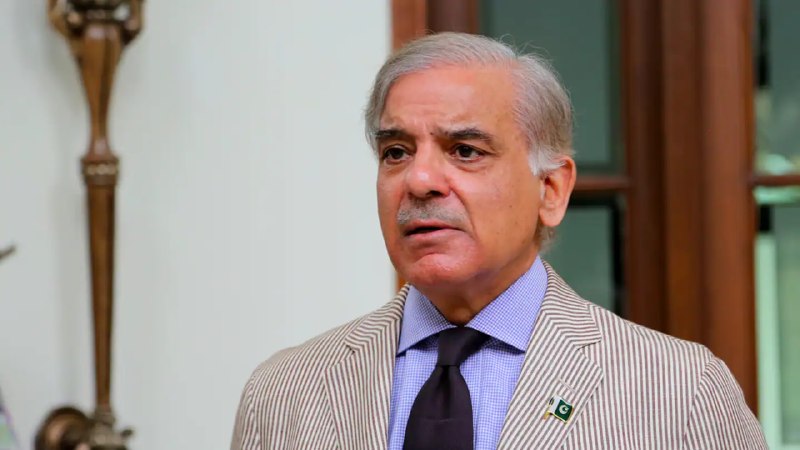
Iran's foreign ministry spokesman Esmail Baqaei used a Tuesday evening press briefing in Tehran to walk the country's public through the implementation phase of a memorandum signed with the United States. The headline claims were sweeping: the oil embargo is being lifted "from today," the Strait of Hormuz is an Iran-Oman file by bilateral agreement, and Iran's missile programme was never on the table in the first place. The text of the memo, Baqaei added, was signed in two languages — Persian and English — and the negotiations covered four issues in parallel, not one.
The briefing, transmitted by the Tasnim news agency and amplified by regional channels, offers the most detailed public readout from the Iranian side of the deal since it was concluded. It also illustrates, line by line, how much of the agreement remains a question of unilateral interpretation.
What Baqaei said the deal actually does
The most concrete claim is also the most consequential for global energy markets. According to Baqaei, "the lifting of Iran's oil sanctions will begin today," and the embargo should be lifted "not on paper, but with all its necessities" — a phrase that, in the Iranian diplomatic register, has come to mean operational access to shipping insurance, correspondent banking, and refuelling services, not merely the legal repeal of secondary sanctions. Baqaei framed the arrangement as reciprocal: Iran would lift its part of a 30-day blockade arrangement once the other side did the same on oil. The two clocks, in his telling, are now running in parallel.
The second pillar is geographic. Baqaei told reporters that "the management mechanisms of the Strait of Hormuz are largely closed with Oman," and that Iran would receive a fee for services in the waterway. He was emphatic that "the issue of the Strait of Hormuz is the responsibility of Iran and Oman. Only Iran and Oman are the two coastal states of the Strait of Hormuz." The phrasing matters: it implicitly excludes the United States, the United Arab Emirates, and the broader Gulf Cooperation Council from a security architecture that has, in practice, been coordinated through the US Fifth Fleet in Bahrain and the joint maritime command structure in Fujairah.
A third claim is defensive in tone. On the country's missile programme, Baqaei said flatly that "Iran's missiles are meant to be fired, not negotiated over," and that Tehran had told Washington from the start that enriched nuclear material would not be transferred outside Iran. The agreement, in this reading, is narrow: sanctions relief in exchange for restraints on the nuclear file, with the missile file untouched.
What the briefing conspicuously does not address
Two gaps stand out. The first is verification. Baqaei said Iran would "monitor the implementation of the obligations of the other party without any appeasement," and warned that "if the Americans fail to fulfill their obligations, we will also fail." That is the language of conditional compliance, not of an agreed inspection regime. The briefing offered no detail on whether the International Atomic Energy Agency will have a defined role in the implementation phase, nor on the timetable for the unfreezing of Iranian assets held in third-country escrow accounts.
The second gap is the question of what happens to the broader sanctions architecture. The Iranian framing treats "the oil embargo" as a discrete object that can be lifted, but the US sanctions regime against Iran is layered — oil, finance, shipping, metals, petrochemicals, and third-country enforcement. The Tasnim readout does not specify which layers Baqaei believes are covered by the 30-day implementation window, and the spokesman's talk of "crimes against the Iranian nation" that Iran intends to "document, follow up and explain" suggests that the broader legal and political confrontation is not, in Tehran's telling, over.
A pattern the briefing fits
The structure of Baqaei's remarks is consistent with a negotiating posture in which Iran claims a maximalist interpretation of the text while leaving room to escalate if implementation stalls. The 30-day clock, the "without any appeasement" formulation, and the reiterated claim that the Strait of Hormuz is now an Iran-Oman bilateral matter all establish a baseline that, if violated, gives Tehran a domestic narrative for renewed pressure. The language on missiles serves a similar function: it locks in a position the Iranian public understands as a red line, and pre-empts any future US attempt to expand the scope of negotiations.
The Strait claim in particular is a piece of diplomatic choreography with material stakes. Roughly a fifth of the world's seaborne oil transits the strait, and any Iranian assertion of fee-collection authority — or, by implication, of the power to disrupt traffic — has direct implications for shipping insurance, naval deployments, and the pricing of Middle Eastern crude benchmarks.
Stakes, and what remains contested
If Baqaei's read of the deal holds, the immediate winners are Iranian oil exporters and the Omani government, which has positioned itself as a diplomatic intermediary. The immediate test is whether Iranian crude flows to Chinese, Indian, and Turkish buyers resume at meaningful volumes inside the 30-day window, and whether the maritime insurance market — currently pricing Iran-linked tonnage at a significant premium — recalibrates. The Tehran framing also puts pressure on the US Treasury and the Office of Foreign Assets Control, which will have to operationalise the lift in a way that survives congressional and allied scrutiny.
What remains contested is the substance beneath the spokesman's claims. The text of the memorandum, said to be signed in Persian and English, has not been published in full. The interpretation that the Strait of Hormuz is now an Iran-Oman file runs against the practice of the past four decades, in which the waterway has been a de facto multinational commons underwritten by the US Navy. The missile file, by Baqaei's own account, was never negotiated — which leaves open the question of whether the United States accepts that carve-out as final, or treats it as an item deferred to a later phase. The Tasnim briefing establishes Tehran's interpretation; whether Washington signs on to the same reading is a separate question, and one the public readout does not settle.
This publication treats the Tasnim readout as a primary statement of the Iranian government's position, not as a neutral factual record. Verification of implementation will depend on independent reporting from wire services, the IAEA, and the maritime data providers that track Iranian tanker movements over the next thirty days.
Wire provenance
This editorial synthesis draws on the following public wire/social posts:
- https://t.me/tasnimnews_en/
- https://t.me/Middle_East_Spectator/
- https://en.wikipedia.org/wiki/Strait_of_Hormuz
- https://en.wikipedia.org/wiki/International_sanctions_against_Iran