Israel draws a line at Somaliland boots on the ground, not at the training mission
Somaliland's defence minister confirms there will be no Israeli military base on his country's soil, even as police training continues — a careful separation that says as much about Hargeisa's diplomacy as it does about Tel Aviv.
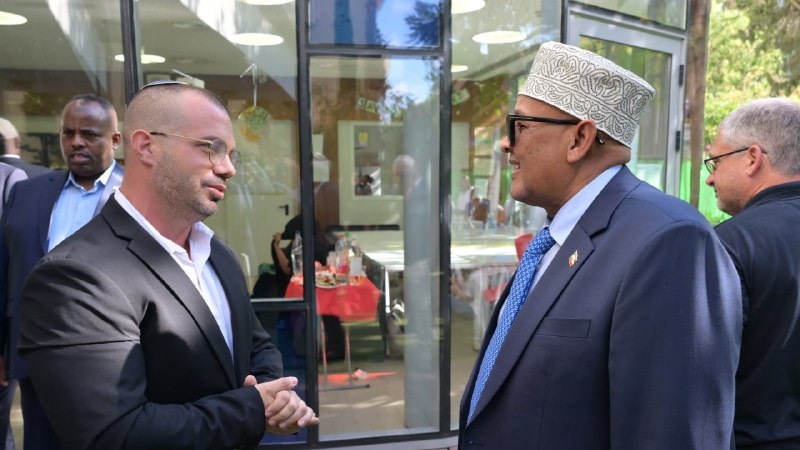
On 17 June 2026, Somaliland's defence minister moved to draw a clean line under a story that has been accumulating weight for months: the breakaway Horn of Africa republic will not host an Israeli military base, even though Israeli personnel have been training Somaliland's police. The clarification, reported on 17 June at 12:30 UTC by The Jerusalem Post, follows months of speculation in regional and Gulf-based outlets about the depth of Israeli security engagement on the Red Sea's southern shore — and it lands at a moment when Hargeisa is unusually exposed to competing suitors.
The distinction the minister is drawing matters. Israeli training of Somaliland's police force is a discrete, technical programme; a permanent IDF footprint is a strategic posture. By publicly ruling out the second while affirming the first, Hargeisa is signalling that it wants the security benefits of Israeli cooperation without the diplomatic cost of being seen as an Israeli client on a coastline that Iran, the United Arab Emirates, Turkey and Egypt all treat as their business.
What was actually agreed
Reporting from The Jerusalem Post on 17 June at 12:30 UTC sets out the basic geometry: Israel has been running training programmes for Somaliland's police, and there will not be a forward Israeli military base on Somaliland territory. The Somaliland defence minister is the named source for the denial, which gives the statement more weight than an Israeli "no comment" would have done. It also flips the framing — the question is no longer whether Israel wants a base, but whether Hargeisa would accept one.
That inversion matters in the Horn of Africa, where small footprint arrangements have a way of acquiring permanence. The UAE's military build-out at Berbera, Assab in Eritrea, and Bosaso in Puntland all began as logistics hubs. Several of them now host foreign airframes and combat troops on rotation. Somaliland's political leadership, which depends on international recognition it does not yet have, cannot afford to look like it is signing away sovereignty in instalments.
The police-training channel is easier to defend publicly. It is technical, capacity-building in language, and produces visible local hires. It also has prior precedent: Israeli police and border-police advisers have worked with counterparts in Kenya, Uganda, Rwanda and Ethiopia over the past two decades, often without provoking the regional blowback that a base would.
Why the Gulf and the Horn are paying attention
Three other actors have a direct stake in the answer. The United Arab Emirates has spent the last decade constructing a network of ports and airstrips from Berbera down to Bosaso, partly in competition with Qatar and Turkey for influence in the Somali-speaking zones. Iran has been rebuilding its Red Sea posture since 2023, with a revived commercial footprint at Assab-adjacent facilities and an intelligence presence in Hargeisa's neighbourhood that regional analysts have flagged repeatedly. Egypt, for its part, treats the Bab el-Mandeb chokepoint as a sovereign-security interest and has signed recent defence agreements with Eritrea that explicitly reference "extra-regional bases."
Each of those capitals has an incentive to either welcome or punish Israeli presence in Somaliland, depending on what it tells their own audience about the balance of forces on the Red Sea. Hargeisa's denial gives them all a face-saving exit: the training mission can continue without triggering a regional security scramble, and the ministers in Abu Dhabi, Ankara, Cairo and Tehran can each claim they have deterred something rather than conceded something.
The counter-narrative to read here is the cynical one: that denial today does not foreclose presence tomorrow, and that the line between a "training cell" and a "facility" is drawn by whoever is doing the photography. Somaliland has, at various points in the past five years, hosted rotated foreign personnel that local officials described as advisers and that visiting journalists described in less ambiguous terms. The minister's statement binds him publicly; it does not bind his successors, nor does it constrain Israeli planners operating under a different government's instructions.
What this says about Israeli strategy in 2026
Israeli security thinking about the western Indian Ocean and the southern Red Sea has hardened since 2024, driven by Houthi strikes on commercial shipping, the disruption of Eilat's port economics, and a stated willingness to strike Iranian-aligned assets far from Israel's borders. The practical implication is a need for staging locations, refuelling rights, intelligence-collection arrangements, and overflight corridors. None of those strictly require a base; all of them are cheaper and politically lighter if there is at least one friendly facility on a nearby coastline.
Somaliland offered one possible node. The denial from Hargeisa does not end that conversation; it relocates it. Israeli planners can still operate from Djibouti (where France, the US, Japan and China all have facilities), from a more discreet arrangement in Puntland or the Somali federal zones, or from offshore arrangements that do not require a signature. The training mission the minister has now publicly blessed gives Israel a continuous in-country presence without the political exposure of a base — a useful compromise if Hargeisa's posture holds.
The structural point is that small-state diplomacy on the Red Sea is increasingly shaped by the security demands of states that sit thousands of kilometres away. Hargeisa, Berbera and Bosaso have become a chessboard for the UAE, Turkey, Iran, Egypt and Israel in roughly equal measure. Each local denial of a foreign base is, in practice, a renegotiation of which foreign power gets the next concession — not an end to the pressure.
What remains uncertain
The reporting on 17 June sets out the denial but does not enumerate the size, location, or rules of engagement of the Israeli police-training programme in Somaliland. The number of Israeli personnel involved, the duration of the rotation, and the specific units being trained are not in the public thread. Neither is the Israeli government's official response to the minister's statement; in past episodes, Israeli officials have declined to confirm or deny the existence of security arrangements in third countries, on the grounds that doing so would expose the personnel involved.
There is also a question of recognition. Somaliland declared independence in 1991 and is not a member of the United Nations, the African Union, or the Arab League. Any Israeli security arrangement with Hargeisa is, technically, with a sub-state entity that most of Israel's partners do not formally recognise. That legal ambiguity has, paradoxically, made Somaliland a useful partner for projects that Tel Aviv's recognised allies cannot openly host. Whether that advantage persists into the second half of 2026 will depend on whether any of the major regional powers choose to push the question.
For now, the message from Hargeisa is one of calibrated independence: training, yes; bases, no. That is the line a small, unrecognised state draws when it wants the benefits of a powerful partner without the diplomatic bill that comes with looking like a proxy. Whether the line holds will be tested the next time the Red Sea gets hot.
Desk note: Monexus has foregrounded the Somaliland defence minister's own denial as the lead, rather than restating the speculative framing that has dominated regional coverage. The article treats the Israeli training programme as a confirmed programme of record and the base question as an open negotiation, which is what the available reporting supports.
Wire provenance
This editorial synthesis draws on the following public wire/social posts:
- https://t.me/The_Jerusalem_Post